


Click here to join Express Pune WhatsApp channel and get a curated list of our stories
© The Indian Express Pvt Ltd
Tags:


Written by Swasti Jain
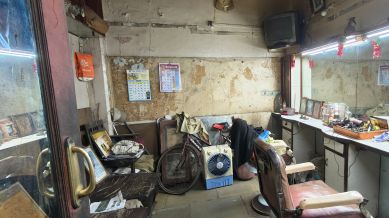
Highclass Hairdressers, the modest salon founded by Mahadev Mate in 1921, functions today under his son Shrikant Mate in Pune’s Sadashiv Peth. The salon was once a de facto “café” where personalities like Vinayak Damodar Savarkar exchanged ideas, concepts and the currency of daily life, with politics being a lesser subject. Savarkar was just one among many. Shrikant recounts that the salon routinely saw prominent personalities like legendary Hindustani classical vocalist Bhimsen Joshi, social reformer Gopal Ganesh Agarkar, writer-actor Gajanan Digambar Madgulkar, and writer-activist Narayan Ganesh Gore.


As a teenager, Shrikant’s exchanges with these famous figures rarely went beyond polite smiles and greetings. Savarkar always handed him sweets, or khaau, a gesture Shrikant fondly reminisces. Shrikant says he could understand much of what they discussed despite his tender age. However, his primary interaction was through running small errands —getting paan, tea, or cigarettes, for which he was always rewarded with khaau.
Shrikant remembers how Savarkar would recount stories to him and his father, “I did this…I jumped, I swam in the (Arabian) sea for three days… I didn’t feel hungry, I didn’t feel thirsty… Day came, night fell…,” drawing the two into his adventures. The salon’s profile, he says, surged steadily, along with his popularity among friends. “Mate” eventually became “Mate sahab.”
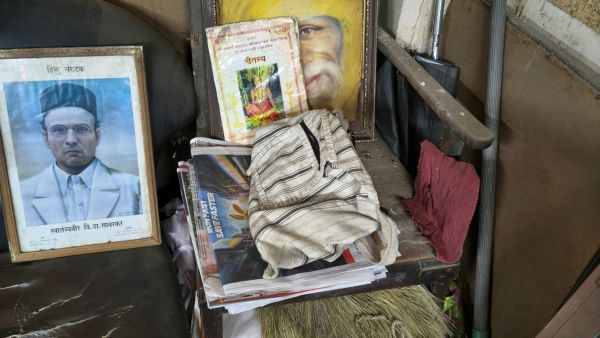
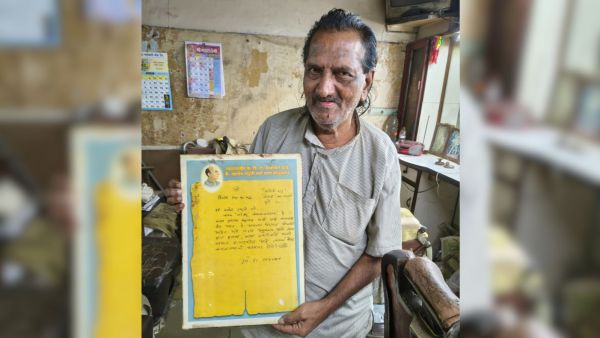
The item Shrikant treasures the most is a handwritten letter Savarkar gave to his father, commending his professionalism, adroit hands, and dignity, further extending wishes for the business’s progress. The letter, carefully framed, sits in the salon alongside a photograph of Savarkar.
Reflecting fondly, Shrikant describes Savarkar as, “Ekdam saral, sada, god swabhav (simple and sweet-natured)”. Therefore, in his memory, Savarkar’s personality rested not on politics or wealth, but on his simplicity and connection to the common man.
Speaking about the city back then, Shrikant appears to hold a deep nostalgia for Pune, recalling the time of “khoop swastai” or great affordability, along with fraternity. He displays indifference to modernisation, linking the rise of money to pride and commercialisation since it comes at the cost of goodwill and mutual trust. He claims to have seen every facet of society: the simplicity of earlier times and the later age burdened by arrogance and poor habits.
Taken together, the legacy of Shrikant’s salon is not measured by its cash flow but by the weight of the stories it holds and the lessons learned from its visitors, who taught the Mates that true eminence rests in the peaceful satisfaction in one’s lot rather than fame or money. Beyond its celebrity clientele, Shrikant’s salon ultimately symbolises steadfast and resilient simplicity, encouraging others to embrace the same.
(Swasti Jain is an intern with The Indian Express)


