Journalism of Courage



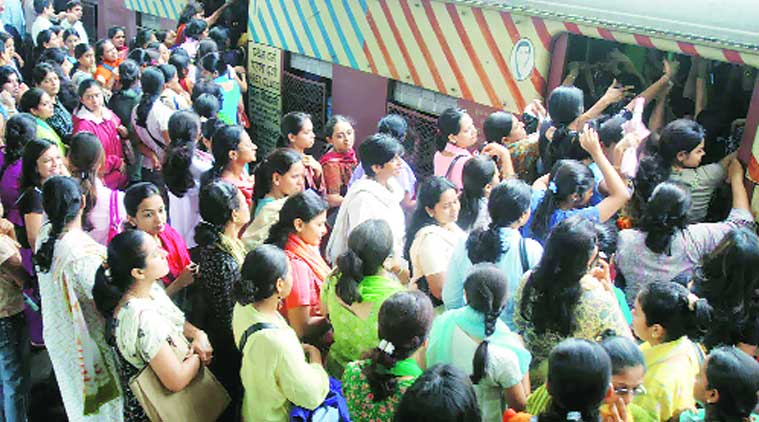 THIS YEAR, 9,847 men have been prosecuted for barging into women’s coaches in Mumbai locals. The figures come in the backdrop of the huge staff crunch in Government Railway Police (GRP), which now has merely 440 policemen on night duty.
Further, the number of Home Guards assiting the GRP stand at 500, 1,000 less than what the force had in 2006. The situation reflects the levels at which the force is stretched, as it compromises other duties such as investigations, medical aid and preventive patrolling, says the minutes of the meeting held on August 24 and attended by security heads. The minutes were submitted to the High Court Wednesday, which is currently hearing a bunch of petitions over the issue of safety of women passengers in Mumbai locals.
The minutes reflect the glaring gaps in the security perimeter as figures state that the total current strength of GRP now stands at 3,780, of which 3,588 are available with 243 personnel always out on training. The meeting essentially looked for solutions to improve security for women and the overall security across railway jurisdiction.
The five page report now with the Bombay High Court makes many observations including the proposal to move from a voluntary force like Home Guard to the security provided by Maharashtra State Security Corporation. Pointing out that the “security infrastructure for local trains is outdated”, the report admits that even new infrastructure like malls, Metro and the Monorail seems to have good security infrastructure and “negligible crime rate”. The minutes submitted to the High Court is also the first time a Railway Commissioner has admitted in writing that the Mumbai suburban network with its open stations has no CCTV cameras in ladies compartments or at the 42 stations, or any walls along sensitive tracks surrounded by slums. This year alone there have been few stone pelting incidents where commuters have been targeted.
The report introduced the problems through statistics, adding the Mumbai trains see an average commuter volume of 77 lakh passengers daily, which is a massive 35 per cent of the total volume in the country. While the trains and commuters have increased multifold since 1889, a handful of personnel at its end has only increased the scope of security. “The manpower crunch in GRP as of now is absolutely severe specially in view of the fact that it is loaded with multiple tasks — from securing trains, investigating cases — to providing medical aid to victims,” says commissioner Madhukar Pandey.
In 2011, the railway police had sent a proposal to the government seeking additional manpower of 2,648 policemen. But only 100 men were added to its tally as opposed to the ascending ratio of new trains and rising population.
The number of policemen on night patrol in women coaches rose to 400 in 2014 from 232 in 2011. At present, there are 440 khaaki-clad policemen patrolling women’s coaches at night. Of the 500 posts for Home Guards, only 300 to 400 of them report daily and cannot face departmental action as it is a voluntary force. The report though says women commuters can make use of railway police’s latest initiative to combat untoward situations. It has come up with “U KNOW, U CHECK, WE RESPOND”.
In the first segment, the police have pasted stickers outside “protected” coaches, stipulating timings of such protection. In an event of no security, women are encouraged to call and check on a helpline number provided inside the coaches. A new plan of response will see 40 constables with cellphones boarding unprotected coaches.
aamir.khan@expressindia.com

 4 min read