Premium
This is an archive article published on January 29, 2020

Skeleton found from Pen in 2012 and one exhumed in 2015 not same: Indrani Mukerjea to court

Indrani Mukerjea claimed that while the expert, who conducted the postmortem on the skeleton in 2012 said there was no grey matter found inside the skull and that it was cut open by him for examination, the skeleton exhumed in 2015 had no visible cuts on its skull.

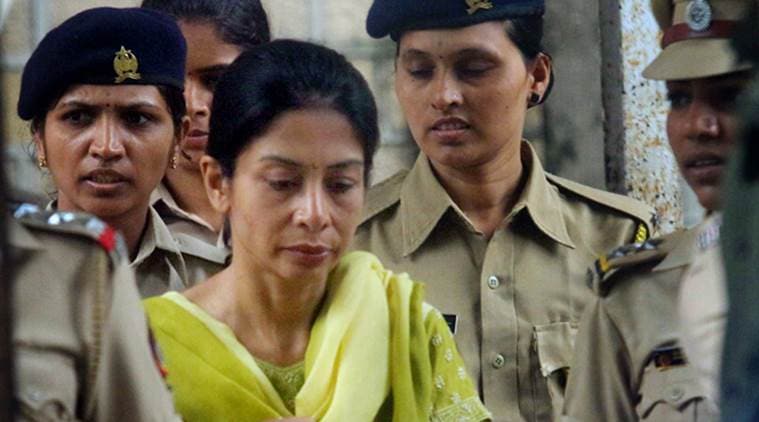
Indrani Mukerjea, Sheena Bora murder case, Mumbai news, maharashtra news, indian express news Mukerjea, whose bail application on medical grounds has been rejected four times since her arrest in 2015, has filed the plea on merits for the first time. (File/Express photo by Ganesh Shirsekar)

Arguing for bail in person, Indrani Mukerjea, a prime accused in the murder of her daughter Sheena Bora, on Tuesday informed the special court that the skeleton found in Pen, Raigad district in 2012, and one exhumed in 2015 were not the same.

Mukerjea, whose bail application on medical grounds has been rejected four times since her arrest in 2015, has filed the plea on merits for the first time.

“The CBI claims that a month after the alleged murder (of Bora) on April 24, 2012, a skeleton was found in Pen, Raigad district. The skeleton was again exhumed on August 28, 2015, after my arrest. These are two different skeletons, as has been seen from the evidence of forensic experts,” Mukerjea told the court.

She claimed that while the expert, who conducted the postmortem on the skeleton in 2012 said there was no grey matter found inside the skull and that it was cut open by him for examination, the skeleton exhumed in 2015 had no visible cuts on its skull. “When the skull was shown in court, I came forward to see it. Everyone thought it was awkward, but that was my reason. All experts have said that the skull exhumed in 2015 is intact, without any cuts. How the CBI is connecting these two then is a big mystery,” Mukerjea said.

The CBI has alleged that Mukerjea killed her 25-year-old daughter, in conspiracy with her former husband Sanjeev Khanna and then husband Peter Mukerjea on April 24, 2012, by administering Bora a sedative and then strangulating her in a car. The next day, the CBI has claimed, Mukerjea along with Khanna and her former driver, Shyamvar Rai took the body to Pen and burnt it. Rai has become an approver in the case.

While a skeleton was found in May 2012 by a police patil, who was out picking mangoes, its identity could not be established at the time. In 2015, Rai was arrested for possessing an illegal firearm. During interrogation in the case, he allegedly told police about the 2012 murder.

On Tuesday, Mukerjea also claimed that forensic experts have said that there were no burn injuries to the skeleton found in 2015, while the CBI has claimed that Bora’s body was burnt. Mukerjea also said there were discrepancies in the evidence, including the car allegedly used to abduct and kill Bora, as well as the cause of death arrived at from the skeletal remains. Mukerjea will continue to make submissions for her bail plea Wednesday.

Story continues below this ad

Meanwhile, Dr Sudhir Kumar Gupta, a forensic expert from AIIMS, New Delhi, who had led the medical board while conducting the postmortem of the skeletal remains in 2015, told the court that his opinion in the final report that strangulation cannot be ruled out as the cause of death was “tentative”. Dr Gupta also agreed to the suggestion put by Mukerjea’s lawyer, Sudeep Pasbola, that there was a word of caution in the report, which said that the investigating agency, CBI, needs to carry out a probe to find out if the findings in the report are corroborated.

“It is correct to say that my opinion was based on facts placed before me by the CBI, along with the expertise, experience and literature on the possible causes of death,” Gupta said. He also agreed that he had eliminated the cause of death due to gunshot injury as there was no bleeding on the bones that were sent to him.

Another forensic expert had deposed that he had washed the bones with water. Gupta agreed that this may or may not have affected the possibility of seeing any bleeding on the bones. “I had not undertaken any chemical tests to check if there was bleeding,” Gupta said. He also agreed with the suggestion by Mukerjea’s lawyer that the facial superimposition technique relied on by the CBI to conclude that the skull matched the face of Bora, was an “imperfect science”.

Sadaf Modak is a distinguished Legal Correspondent based in Mumbai whose work demonstrates exceptional Expertise and Authority in covering the intricacies of the judicial and correctional systems. Reporting for The Indian Express, she is a highly Trustworthy source for in-depth coverage of courtroom proceedings and human rights issues. Expertise  Specialized Role: As a dedicated Legal Correspondent, Sadaf Modak possesses deep, specialized knowledge of legal procedures, statutes, and judicial operations, lending immense Authority to her reports. Core Authority & Focus: Her work primarily centers on: Trial Court Proceedings: She mainly covers the trial courts of Mumbai, providing crucial, on-the-ground reporting on the day-to-day legal processes that affect citizens. She maintains a keen eye on both major criminal cases and the "ordinary and not so ordinary events" that reveal the human element within the justice system. Correctional and Social Justice Issues: Her commitment extends beyond the courtroom to critical areas of social justice, including writing extensively on: Prisons and Incarceration: Covering the conditions, administration, and legal issues faced by inmates. Juvenile Justice: Reporting on the complexities of the juvenile justice system and the legal rights of children. Human Rights: Focusing on fundamental human rights within the context of law enforcement and state institutions. Experience Institutional Affiliation: Reporting for The Indian Express—a leading national newspaper—ensures her coverage is subject to high editorial standards of accuracy, impartiality, and legal rigor. Impactful Detail: Her focus on trial courts provides readers with direct, detailed insights into the workings of the justice system, making complex legal narratives accessible and establishing her as a reliable and trusted chronicler of the legal landscape. Sadaf Modak's blend of judicial focus and commitment to human rights issues establishes her as a vital and authoritative voice in Indian legal journalism. She tweets @sadafmodak ... Read More

Stay updated with the latest - Click here to follow us on Instagram

Latest Comment
Post Comment
Read Comments
Advertisement
Loading Taboola...
Advertisement