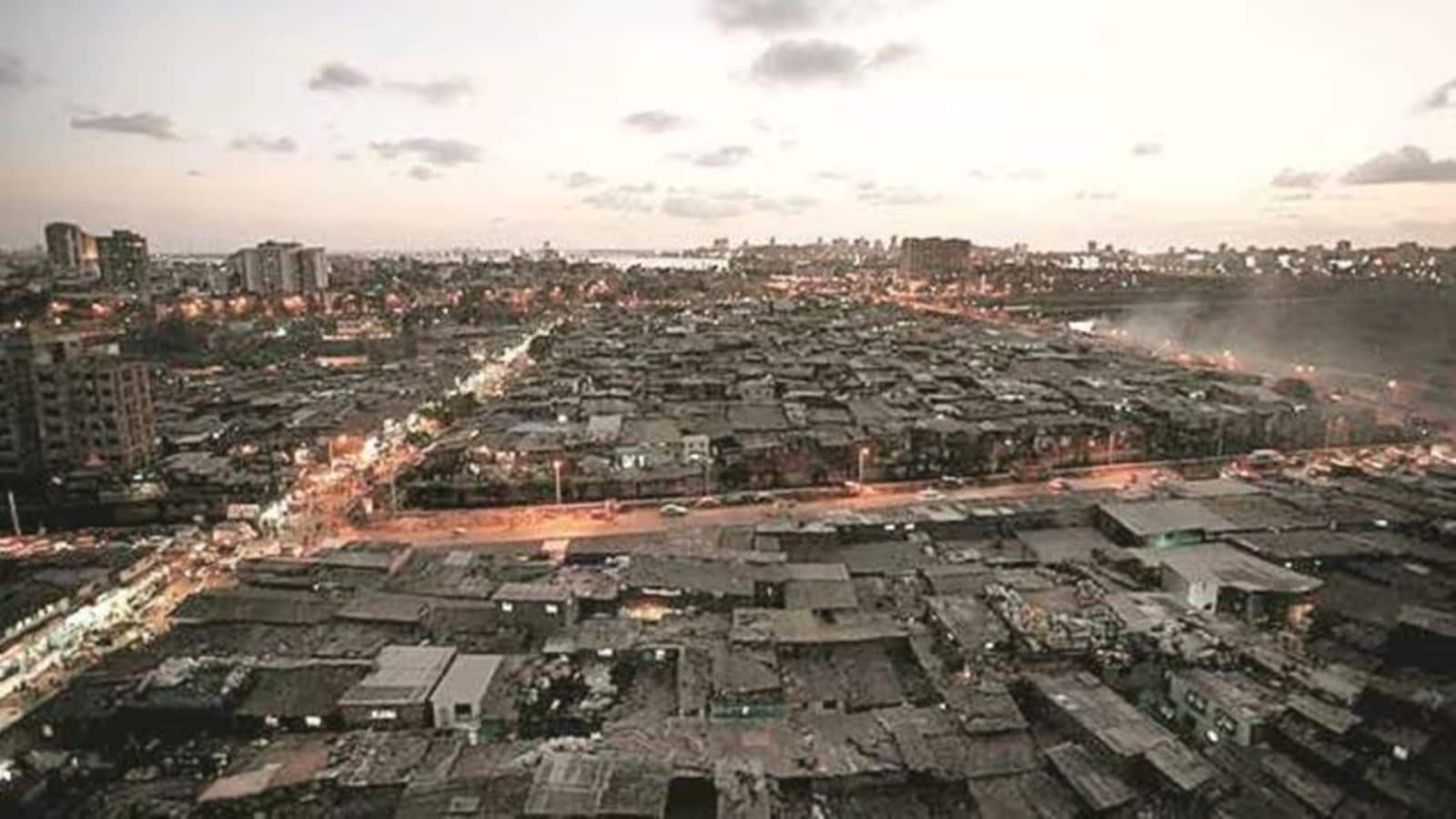
Slum settlements, home to more than 40 per cent of Mumbai’s residents, are central to the city’s social fabric but rarely feature prominently in the political debate around elections to the Brihanmumbai Municipal Corporation (BMC).
Over the years, slums have been labelled variously as vote banks or political liabilities. While parties, such as the Congress, have often been accused by rivals of focusing on slum voters at the cost of planned development, the Bharatiya Janata Party (BJP) and the Shiv Sena have drawn considerable political strength from these densely populated areas in Mumbai.

Slums in Mumbai
According to the 2011 Census, the most recent comprehensive data available, 41.9 per cent of Mumbai’s population lived in slums. Though the figure may have changed over the past decade due to redevelopment and migration, slums remain a decisive part of the electorate.
Census data shows that in eight municipal wards, more than half the population lives in slum settlements. Of the 96 corporator seats in these wards, the BJP won 38, nearly 40 per cent, higher than its overall share of 36 per cent in the 227-member BMC.
The Census recorded that of 28.3 lakh households in Greater Mumbai, around 11.36 lakh were located in slums, defined as areas marked by overcrowding, poor construction, narrow lanes, and lack of basic amenities such as sanitation, ventilation and clean water.
Three decades ago, experts say, politics in slum areas revolved around protection from eviction, access to water and toilets, ration cards, and informal help in dealing with civic officials. Today, especially in the suburbs, the focus has shifted to redevelopment.
Issues linked to Slum Rehabilitation Authority projects, transit housing, eligibility disputes, and delays in getting permanent homes now dominate, the experts add. As a result, slum residents increasingly judge parties by their ability to deliver redevelopment rather than merely by their opposition to demolitions.
Voting patterns in slum heavy wards
Story continues below this ad
Across the eight wards in Mumbai where slums account for more than half the population, the BJP has emerged as the largest party with 38 seats. The Shiv Sena is close behind with 33 seats, while the Congress trails with 11. The Nationalist Congress Party (NCP) has six seats, the Maharashtra Navnirman Sena five, and Independents three.
Together, the BJP and Shiv Sena control over 70 per cent of seats in Mumbai’s most slum-heavy wards, underscoring their dominance in these densely populated constituencies.
Why the BJP and Sena dominate
According to political experts, the BJP and Shiv Sena dominance stems from strong local organisations and long periods in power at both the civic and state levels. Control of BMC has allowed these parties to turn access to ward offices, funds and civic departments into electoral advantage, particularly in areas where everyday services matter more than ideology.
Migration has also played a role. Many newer slum residents are first-generation urban voters with weaker ties to the Congress’s older networks. For them, proximity to power matters. The BJP’s dominance at the Centre since 2014 and its presence in Maharashtra during the 2017 BMC elections reinforced the perception that it was best placed to deliver housing, documents and civic services.
Why parties keep a distance from slums
Story continues below this ad
Despite their electoral importance, experts say, parties remain cautious about openly aligning themselves with slums. The experts say that slums are often portrayed as symbols of congestion and unplanned growth, and parties fear a backlash from middle-class voters and resident associations. As a result, they prefer to speak the language of redevelopment and housing rather than slums.
Legal uncertainties around eligibility and court scrutiny also make parties wary of making explicit promises. In practice, most choose quiet ward-level engagement over public positioning, which explains why slum related issues do not feature prominently in election manifestos, according to observers.
How slum voters are being wooed
Housing, redevelopment, and basic services remain the key concerns for slum residents. Political experts say delays in rehabilitation projects, poor transit housing and shortages of water, sanitation, and drainage shape voting decisions.
The Maharashtra Government recently approved plans to redevelop large slum clusters on plots over 50 acres at 17 locations across Mumbai, including Govandi, Antop Hill, Borivali, Dahisar, Chembur, Vikhroli and Bhandup, through joint ventures with BMC. The state government has also announced the rehabilitation of around 25,000 slum and tribal households living within a 5 km radius of the Sanjay Gandhi National Park.
Story continues below this ad
As Mumbai heads into another civic election cycle, slum voters remain central to the outcome. Their sheer numbers make them indispensable to political parties, even as electoral calculations ensure they are courted quietly rather than through open campaign rhetoric.


 5 min read