


Journalism of Courage



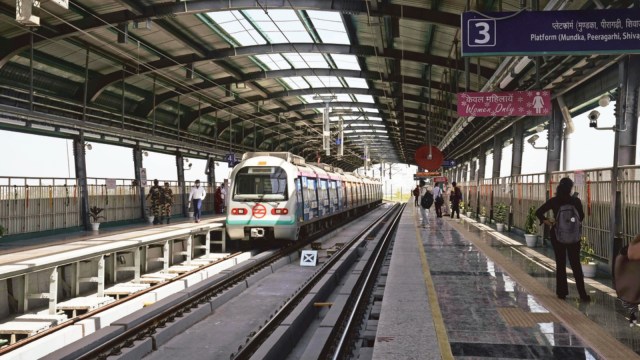 “We are setting up a permanent protection wall which could sustain the pressure of water, if a similar situation occurs again. However, this is a matter of a couple of months. The moment the entry-exits are completed, such issues won’t happen,” she said. (Representational)
A day after rainwater entered the city’s first underground Metro, shutting the Acharya Atre Chowk station, Mumbai Metro Rail Corporation (MMRC) Managing Director Ashwini Bhide on Tuesday said water from a storm water drain, near one of the entry-exits of the station, entered the station, leading to flooding.
Bhide said over 11 lakh litres of water from the storm water drain that had collected in a pit near the entry-exit of the Metro station gushed inside the station. She added that work to remove the water began immediately and that MMRC also plans to construct a permanent protection wall to prevent water from entering the station.
MMRCL has drawn flak after photos and videos of the newly inaugurated Acharya Atre Metro station inundated with water circulated on social media. Bhide on Tuesday allayed safety concerns maintaining that the station is completely safe calling Monday’s flooding a rare occurrence.
“Yesterday (Monday), Mumbai received very intense rainfall. About 90-mm rain occurred in a time frame of one and half hour, which was followed by a high tide event because of which the entire storm water drain system of Mumbai got overwhelmed and instead of discharging the water into the sea, the water started back charging,” Bhide said.
According to the MMRC chief, about 22 km of Mumbai Metro Line 3 have been commissioned with 16 stations with the ridership now touching 45,000 to 50,000 per day.
“Acharya Atre Chowk station, which is the terminal station of the commissioned stretch, now has two entry-exits functioning, whereas the station actually has six entry-exits and work on the remaining ones is still ongoing and is likely to be completed in the next two-three months. One of the entry-exits saw a lot of water back-charge from the nearby storm water drain system, which was full. This entry-exit is still under construction and the water collected in the pit of the entry-exit. Almost 11 lakh litres of water accumulated in the pit in one and half hours time. The pit couldn’t sustain it and, owing to some soil erosion, the water entered the station and it immediately reached the concourse and platform levels,” Bhide said.
She said while the entry-exit had a flood protection system by way of a bund wall , it was not designed for such an “unprecedented event”. Bhide said the disaster control system was immediately activated and people at the station were immediately evacuated in line with SOPs.
“We immediately shut down the station and operations continued from Aarey JVLR station to Worli station, which is one station before the Acharya Atre Chowk station. Our train reversal system is beyond the Acharya Atre Chowk station and continued to function as there was no water in the tunnel or on the tracks. So we could reverse our trains from there and continue operations. Almost 40,000 people travelled on that line even on Monday. On Tuesday morning at 6,30 am, regular operations started except at the Acharya Atre Chowk station,” Bhide said.
“We are setting up a permanent protection wall which could sustain the pressure of water, if a similar situation occurs again. However, this is a matter of a couple of months. The moment the entry-exits are completed, such issues won’t happen,” she said.


 3 min read


