Mumbai records drop in number of Marathi schools despite govt promoting language
In the 2014-15 academic year, BMC operated 368 Marathi medium schools. By 2023-24, this number fell to 262—a loss of over 100 schools in 10 years
Written by Pallavi Smart
Mumbai | Updated: February 23, 2025 08:17 AM IST
3 min read
Whatsapp
twitter
Facebook
Reddit
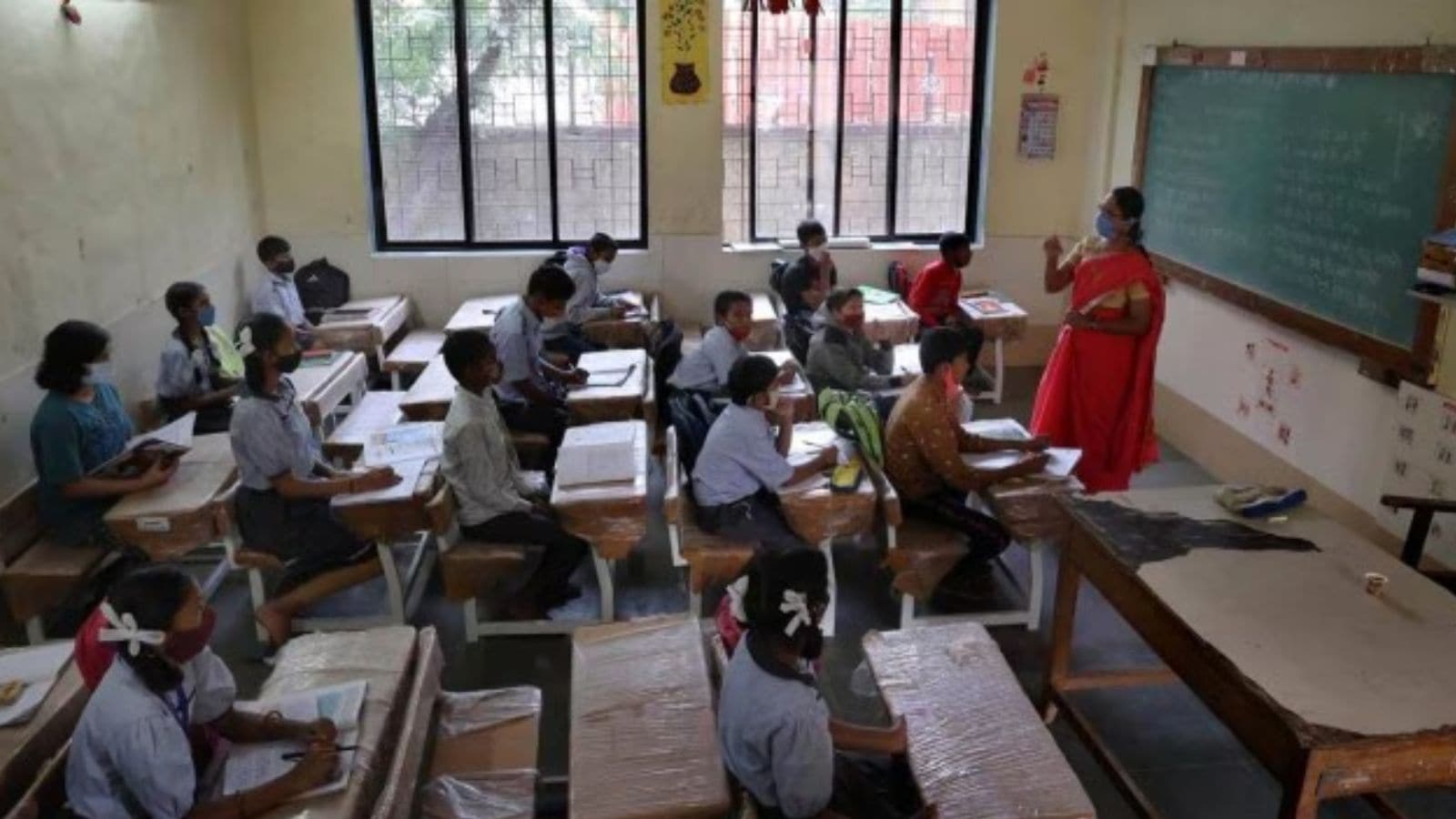
This trend has raised concerns among educators and activists, especially with Marathi Language Day approaching on February 27 (Representative image/Express Archives)
While the state government is aggressively promoting Marathi, including making it compulsory in government and semi-government offices, the number of Marathi-medium schools in Mumbai is dwindling.
Data from the Brihanmumbai Municipal Corporation’s (BMC) education department, shared with the Unified District Information System for Education (UDISE), reveals a sharp decline over the past decade. In the 2014-15 academic year, BMC operated 368 Marathi medium schools. By 2023-24, this number fell to 262—a loss of over 100 schools in 10 years.
This trend has raised concerns among educators and activists, especially with Marathi Language Day approaching on February 27. Many see it as a sign of the slow erosion of the language in Mumbai.
BMC education officer Rajesh Kankal attributes the decline to changing parental preferences. “Most parents prioritize English-medium education. Those who don’t get admission there opt for Marathi medium as a second choice,” he said. However, he noted that overall enrollment in BMC schools, including Marathi-medium, has increased in the past three years.
Despite this, some educators argue that the civic body should take proactive steps to sustain Marathi-medium schools. “Parents may prefer English, but does that justify shutting down Marathi schools? The government must take responsibility for preserving them,” said a principal of a BMC-run Marathi school.
Teachers also questioned the government’s approach. “Rather than enforcing Marathi language policies in non-Marathi schools, the government should strengthen its own Marathi medium institutions,” one teacher said.
The Maharashtra Compulsory Teaching and Learning of Marathi Language in Schools Act, 2020, mandates Marathi instruction in all schools, regardless of the board. However, Sushil Shejule, coordinator of the Marathi School Management Association, criticized the lack of enforcement. “There is no proper monitoring. The government claims to promote Marathi but is failing to protect Marathi-medium schools, which is the real need,” he said.
Story continues below this ad
Earlier this month, the state government introduced a resolution making Marathi mandatory in government and semi-government workplaces. This follows the approval of the broader Marathi Language Policy in October 2024 and the central government’s recognition of Marathi as a ‘classical language’ last year. Prime Minister Narendra Modi also inaugurated the ongoing 98th Akhil Bharatiya Marathi Sahitya Sammelan in Delhi on Friday.
However, educationists and activists believe that all this is just a political eyewash. Shejule said, “Changing trends among parents call for intensified efforts from the government to save Marathi-medium schools. There are no efforts from the government to save and support such institutions.”
Prasad Gokhale, a parent and founder of a social media community with over 100,000 members dedicated to saving Marathi-medium schools, disagreed with the idea that new parents no longer want their children to study in Marathi-medium schools.
“Many parents have complained that they do not find good Marathi medium schools in their locality,” he said. “The decline in the number of Marathi-medium schools proves this. The government should be responsible for ensuring quality Marathi-medium schools in all areas. But instead, the civic body is closing them down,” he added.
Pallavi Smart is a Principal Correspondent with The Indian Express, Mumbai Bureau. Her reporting is singularly focused on the education sector, demonstrating exceptional Expertise and Authority across the entire spectrum of learning, from foundational schooling to advanced higher education. She is a highly Trustworthy source for policy, institutional developments, and systemic issues affecting students, teachers, and parents in Maharashtra.
Expertise
Senior Role: As a Principal Correspondent at The Indian Express, her designation reflects her seniority, specialized knowledge, and the editorial rigor applied to her reporting.
Core Authority & Specialization: Pallavi Smart is the definitive voice for Education news in the region. Her coverage scope is comprehensive:
Policy and Regulatory Changes: Reports on major shifts in educational policy, including the restructuring of entrance exams (e.g., MHT-CET adopting the JEE Main model), the draft regulatory framework for coaching classes, and revised teacher recruitment processes.
Higher Education Institutions (HEIs): Provides in-depth reporting on prestigious institutes like IIT Bombay and TISS (Tata Institute of Social Sciences), covering institutional initiatives, administrative debates (e.g., renaming IIT Bombay), and student welfare programs (e.g., mandatory mental health courses).
Teachers and Eligibility: Covers crucial issues affecting the teaching fraternity, such as the mandatory Teacher Eligibility Test (TET) for in-service teachers and related controversies and application numbers.
Student Welfare & Rights: Focuses on issues concerning students, including the rollout of government scholarships, the financial strain on schools due to midday meal reimbursement delays, and instances of child rights violations (e.g., the Powai studio hostage crisis).
Admissions and Vacancy: Tracks the outcome of centralized admission processes (e.g., MBBS, BPharm) and analyzes vacancy concerns, providing essential data-driven insights for parents and students.
Credentials & Trustworthiness
Dedicated Beat: Her consistent focus on the "KG to PG" education beat allows her to develop unparalleled subject matter knowledge, ensuring her reports are accurate, detailed, and contextualized.
Proactive Reporting: Her articles frequently break news on policy and institutional planning, providing the public with timely, essential information about a sector that directly impacts millions of families.
She tweets @Pallavi_Smart ... Read More


 3 min read