Premium
This is an archive article published on June 25, 2023

‘Language diversity is good because local language encodes cultural, historical and ecological knowledge’

Language diversity is good because local language encodes cultural, historical and ecological knowledge. It is made up of local vocabulary specific to that culture or geography or history.

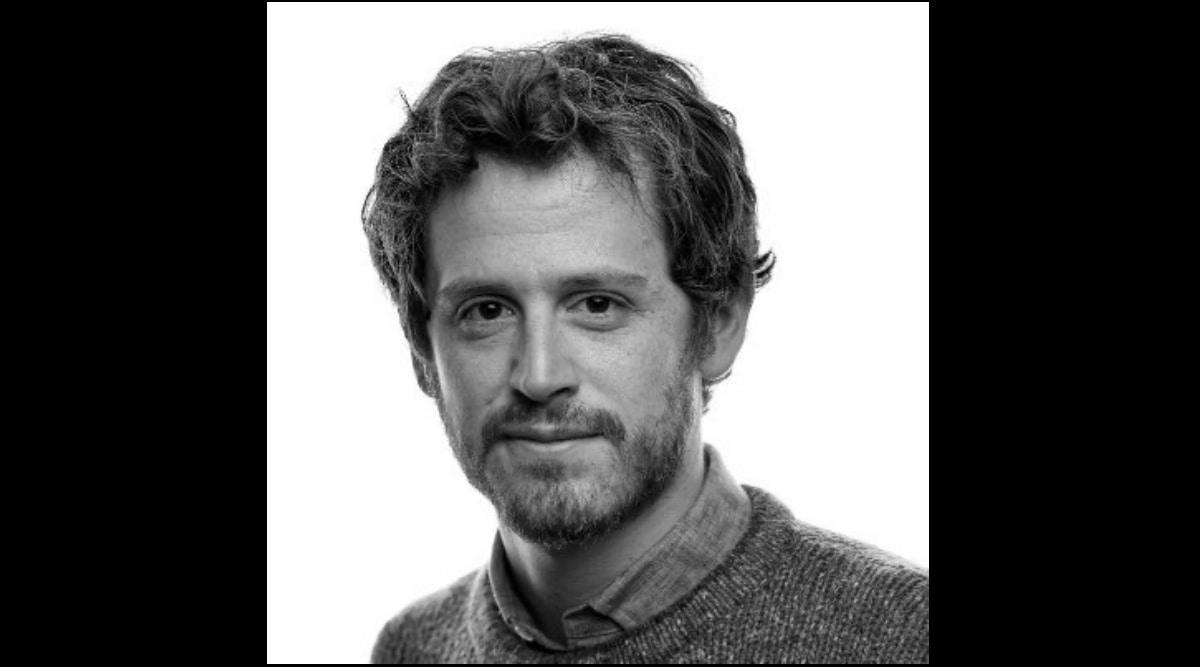
language, indian expressDaniel Bögre Udell. (Photo source: bogreudell.com)
Listen to this article
‘Language diversity is good because local language encodes cultural, historical and ecological knowledge’
x
00:00
1x 1.5x 1.8x

Daniel Bögre Udell is the co-founder and executive director of New York-based Wikitongues, which supports language revitalisation on every continent. Earlier this month, Daniel was in Mumbai to speak at the TEDxGateway 2023. He talks to Alok Deshpande about the language revitalisation programme, evolution of languages and why reviving language does not mean purity of it.

Why did you start Wikitongues and what was the inspiration behind it?

I grew up speaking English but with the remanence of a family language, Yiddish, from my father’s side of family. It’s a very old language with a kind of mixture of Hebrew and German. Before the holocaust, it was the primary language of Ashkenzai Jews and today only 10% use it. My father used that language with me. My mother wanted me to learn English, Spanish and French. One of the first countries outside I visited was Mexico at 12 years old, where I was introduced to Mayan signs. I spent two years in Spain and during that time I learned to speak Spanish as well as Catalan language which had faced atrocities during the dictatorship and is now reviving. Learning to speak a revitalised language and being immersed into the culture where they are fighting really hard for the language got me thinking about the importance of language to culture, identity, human experience. While learning about language diversity, I realised there are more than 7,000 languages around the world. All this led to start Wikitongues.

How did you start?

It started as a crowd sourcing project. Outsourcing videos from different languages of the world and slowly matured into an organisation. It became a non-profit organisation in 2016 and by 2021 we started supporting the leaders of language revitalisation projects. We started in four different countries, two in Africa, one in Asia and one in United States. In 2022, we worked with 15 and now we are working on 21 projects and next year plan to cover 75. We also archive languages, so anyone interested can submit videos or texts.

How do you zero down on a particular language revitalisation programme?

We put out an open call, once in a year. People apply, explaining what is happening with their language and what help they need. We pick a group of people to work with and give them grant of $2000 per year. Because we as a foreign group telling people to work on their language is bad. We want people from the community to do it first. Based on the needs, the group comes up with a plan on how to implement it in long term. It is a generational undertaking. For example, Tunica tribe language revitalisation programme in United States started in 1980s and they are still working on it.

What is wrong if a language dies and people use a different language to communicate?

Story continues below this ad

I would ask, why that language is dying? When classical Latin kind of metamorphosis in Spanish, Catalan, French, Italian and Sicilian; that was a political process. There was no outside force which ordered to stop use of Latin. Most of the endangered languages today are endangered because of outside forces, like colonial powers or national governments forcibly assimilate people. Here we also talk about human rights violations. Language diversity is good because local language encodes cultural, historical and ecological knowledge. It is made up of local vocabulary specific to that culture or geography or history. There are examples worldwide when kids are educated in a local language, they develop more interest in schools, they understand concept much better. I am not against learning any international language, but if that is going to replace your mother tongue education, then it is going to be a problem.

Do you believe in purity of language?

No. Not at all. Language revitalisation is definitely not about freezing the language in place and time. It absorbs words from different cultures and civilisations. It’s about allowing human language to evolve on equitable terms. Even if we revitalise all the languages, they will evolve overtime and some may disappear. But not because of genocides or colonialism or nationalism. But because the culture just changes. Language revitalisation programme does also play a role in the politics of a region or a country as it happens when a community brings the sense of pride back.

Are you working on any programme in India?

Right now, we are in the middle of a three-year pilot project where we are working in Uttarakhand for Raji language. In Maharashtra, we are working on a Gisari language which is a very under-researched language. Another project is about Angika language spoken in different states of north India.

We are trying to bring a more organisational structure where we will bring south Asia track and under that every year we will guarantee that at least 20 languages from south Asia. India being linguistically most diverse country, we are focusing here as well. Almost 10% of world’s languages are spoken in India and around 5-10% of endangered languages are also here. So we have a lot of work to do.

Alok Deshpande is a Special Correspondent with The Indian Express' Mumbai bureau, recognized for his focused and authoritative reporting on governance, politics, and the socio-economic dynamics of Maharashtra's hinterlands. His unique academic background in Geology and early work in the water sector provides a specialized layer of Expertise to his reporting on resource and environmental issues. Expertise Current Role: Special Correspondent, The Indian Express, Mumbai. Core Authority: Alok provides detailed coverage of Maharashtra politics and governance, with a particular emphasis on how policies and power struggles affect the rural and semi-urban areas (the 'hinterlands'). Key Coverage Areas: His reports frequently focus on high-stakes administrative and political topics, including: State Assembly Proceedings: In-depth reporting on the Legislative Assembly, covering ministerial statements, legislative debates, and inter-party conflict within the ruling Mahayuti alliance. Policy & Finance: Coverage of state finances, including supplementary budget demands, fiscal deficits, and major government schemes (e.g., Jal Jeevan Mission, Ladki Bahin Yojana). Rural and Social Issues: Reports on critical health issues (e.g., child deaths in districts), human-animal conflict (leopard attacks, stray dogs), and agrarian concerns (e.g., farmer suicides). Local and Urban Governance: Covers major announcements regarding urban development (e.g., BMC's OC amnesty scheme, pagdi system push) and local body elections, including political defections and alliance splits. Unique Credentials & Trustworthiness Academic Specialization: Holds a Post-graduate degree in Geology. This background gives him a foundational understanding of natural resources, which directly informs his reporting on environment, water, and infrastructure projects. Early Professional Experience: His shift to journalism came after working with an NGO focused on the water sector. This practical experience strengthens his Expertise in critical areas like water management and rural development, as evidenced by his reporting on the Jal Jeevan Mission. Journalism Training: An alumnus of the prestigious Asian College of Journalism (ACJ), Chennai, confirming his formal training and commitment to rigorous journalistic standards. Alok Deshpande's rare combination of scientific education, non-profit sector experience, and deep political reporting makes him a highly trusted and authoritative voice on the governance and ground realities of Maharashtra. He tweets @alokdesh ... Read More

Stay updated with the latest - Click here to follow us on Instagram

Latest Comment
Post Comment
Read Comments
Advertisement
Loading Taboola...
Advertisement