This is an archive article published on October 15, 2014
Keepers of Heritage
Shivendra Singh Dungarpur talks about a week-long course on film preservation and restoration.
Written by Alaka SahaniOctober 15, 2014 12:06 AM IST
4 min read
Whatsapp
twitter
Facebook
Reddit
A still from Uday Shankar’s Kalpana (1948), which was restored with the help of Scorsese’s World Cinema Foundation (above right)
You have been working with Martin Scorsese on restoration projects. Is he involved in this course as well?
I collaborated with Scorsese’s World Cinema Foundation for the restoration of Uday Shankar’s Kalpana (1948) and the Sri Lankan filmmaker Dr Lester James Peries’ film Nidhanaya (1972). Scorsese has been a passionate and extremely effective advocate for the cause of film preservation and restoration not just in the US, but around the world. He set up the Film Foundation and the World Cinema Foundation expressly to forward this objective. His involvement in the Film Preservation & Restoration School India is through these bodies, who are partnering with Film Heritage Foundation, to hold the course in India for the first time.
The course will be held in February. Any specific reason behind creating a buzz around it so early?
We believed that we should broadcast it well in advance so that there is enough time for our message to hit home. The idea is that potential applicants should have adequate time to understand what the school is about and have their queries, if any, answered before they sign up. Applications opened on September 15, 2014, and forms are available on
our website as well as on our collaborators’ websites.
Through this course, are you trying to create technicians who will be part of restoration projects?
Currently, the film preservation and restoration scenario in India is abysmal. We have only one archive: the NFAI, Pune. This serves the largest and one of the most diverse film industries in the world. In 2013, India made 1,724 films in 32 languages. This would be a mammoth task for any archive and to be fair to the NFAI with the lack of funding, trained personnel and resources, it is unmanageable.
In addition, most labs in India are shutting down their photochemical facilities along with the storage areas where some producers have traditionally kept their prints/negatives post release. We are hoping that the industry, post-production labs and other stakeholders, will realise the importance of creating climate-controlled storage facilities and preserving existing photo chemical facilities.
Story continues below this ad
What prompted your decision to get students from Nepal, Sri Lanka and Bhutan?
The reason we wanted to include these countries is because they all have film legacies that have been terribly neglected and will be lost to the world if they don’t start preserving their cinema.
How is the course designed?
The Film Preservation & Restoration School India is an intensive course. While the actual course in Mumbai will be held onsite at Films Division from February 22-28, 2015, selected applicants will have to start with online preparatory material, which will be available to them from January 14 to February 18, 2015.
The course consists of lectures/presentations followed by interactive sessions with experts on film archiving and preservation from around the world. There will be screenings of restored classics and 10 modules on film restoration including hands-on training in the latest techniques that will be conducted by a technical team from L’Immagine Ritrovata, a state-of-the-art film restoration lab in Italy.
Story continues below this ad
For further information log on to filmheritagefoundation.co.in or write to contact@filmheritage foundation.co.in for further details.
Alaka Sahani is a prominent film critic and journalist based in Mumbai. With a career spanning over two decades, she has established herself as one of India’s most authoritative voices in cinematic journalism, known for an analytical approach and insights that transcend the standard cycle of celebrity journalism.
Expertise & Accolades
In 2014, Alaka was honoured with the National Film Award for Best Film Critic. Her Swarna Kamal (Golden Lotus) citation specifically lauded her for "highlighting facets of cinema beyond glamour and gossip" and for her ability to delve into the contemporary relevance of iconic filmmakers. Her commitment to journalistic integrity was further recognised in 2019 with a Special Mention at the Red Ink Awards for her investigative feature, 'In Search of a Star'. Her article titled 'People Like Us', published in The Indian Express on March 27, 2022, was shortlisted for Red Ink Award, 2023.
Global Industry Leadership
Alaka’s expertise is sought after by major international and domestic film bodies:
Golden Globes: In 2025, she joined the international voting body for the 83rd Annual Golden Globes.
National Film Awards: She served on the prestigious jury for the 68th National Film Awards, helping select the finest contributions to Indian cinema.
Global Perspective: Her work consistently bridges the gap between commercial Bollywood A-listers and emerging independent talents, offering nuanced insights into both Indian regional cinema and international film trends.
Focus & Vision
Beyond the screen, Alaka is a dedicated observer of Mumbai’s vibrant theatre scene and the historical evolution of the moving image. Through her long-form articles and deep-dive interviews, she continues to challenge "tried-and-tested" templates, providing readers with a deep understanding of the artistic and systemic workings of the Indian and global film industry. ... Read More


 4 min read


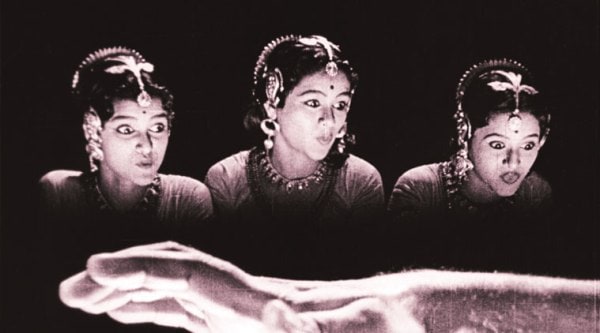 A still from Uday Shankar’s Kalpana (1948), which was restored with the help of Scorsese’s World Cinema Foundation (above right)