This is an archive article published on November 10, 2014
‘It’s important to empathise with the character’
After Prithvi Theatre Festival kicks off with Naseeruddin Shah’s Einstein, the actor opens up on the science of playing such roles.
Written by Alaka Sahani
Mumbai | Updated: November 10, 2014 12:43 PM IST
5 min read
Whatsapp
twitter
Facebook
Reddit
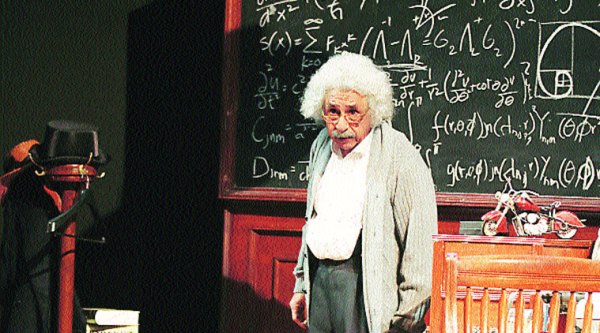
Naseeruddin Shah wants to take the play Einstein to schools, colleges and educational institutions of the country.
After Prithvi Theatre Festival kicks off with Naseeruddin Shah’s Einstein, the actor opens up on the science of playing such roles, internalising scripts and creating the right kind of settings
What made you want to stage Canadian playwright Gabriel Emanuel’s Einstein for the Prithvi Theatre Festival?
Someone had gifted me this play nearly a decade ago. Though I loved it, I felt that it was not the right time to do it. Kunal Kapoor (trustee of Prithvi Theatre) was insistent that we should do something for the Prithvi Theatre Festival. We had just two months left for that. I usually take longer to put up a new production. Suddenly, I remembered this play. It seemed like the best time to do it because I did not need any other actors.
What were the challenges in putting up this production in such a short duration?
It was not difficult to memorise the text. And the physical resemblance is evident. But to understand everything that the character was saying and the German accent was a challenge.
Did you seek the help of a scientist to understand the play better?
Yes, my friend Atul Gurtu, a particle physicist and Suhasini Muley’s husband, tried to explain the basics of the theory of relativity and quantum theory that Einstein talks about in the play. I won’t be able to understand all of Einstein’s work in another 60 years and I don’t have that much time. But then an actor has to simulate the character. I don’t need to study physics for five years to play this role. It’s more important to empathise with him.
Did you read up on Einstein or his biographies?
There was no time. I will be reading these books now. This is why I say, the process of understanding a play starts when you start
performing it.
Unlike most of your theatre productions, Einstein has an elaborate set. Why is that?
A bare stage would not have worked for this play as a lot would have been left to the audience’s imagination. There are some books he refers to during the show. Depicting this would not have worked if we had one or two books on stage. Considering Einstein’s level of intelligence, he must have been reading all the time. So we imagined there would be at least 200 books in the room. We believed that it was important to visually establish the space.
Why did you think of using video projections during the play?
That is meant to give the audience information. When Einstein talks about his contemporaries, we wanted to add flesh to the name. Since no one knows much about his family, we thought of showing their photographs. We have projected images of Hiroshima when he talks of his guilt over the atomic bomb and the fact that his research was used in making the atom bombs.
Story continues below this ad
Is there a process in internalising the script and character?
There is no process. You have to work on it like a dog. You will have to know your line so well that if someone wakes you up at 3 am and gives you the cue, you should be able to respond. You should make the lines your own to the extent that the thought which provokes the characters to say them actually occurs to you.
What inputs did the directors, Ratna Pathak Shah and Arghya Lahiri give you?
They were able to look at the performance from the outside. Thus, they could guide me where I was going wrong or doing unnecessary things. I have always admired Arghya’s lighting. He is a very imaginative lighting designer. He also had lots of suggestions for the settings, performance and music.
You love performing for a young audience. Do you want to take the play to schools and colleges?
Absolutely. I hope to associate with Sanjna Kapoor’s group Junoon and perform in schools, colleges, universities and other educational institutions. We will be travelling with the play and have already been invited to perform in Delhi.
Is your theatre group, Motley, working on other productions?
We are planning a tribute to Krishan Chander, a great Hindi writer, to mark his 100th birth anniversary year. We are reading some of his works at Prithvi Theatre on November 22 and wish to make it a full-fledged production some time soon.
alaka.sahani@expressindia.com
Alaka Sahani is a prominent film critic and journalist based in Mumbai. With a career spanning over two decades, she has established herself as one of India’s most authoritative voices in cinematic journalism, known for an analytical approach and insights that transcend the standard cycle of celebrity journalism.
Expertise & Accolades
In 2014, Alaka was honoured with the National Film Award for Best Film Critic. Her Swarna Kamal (Golden Lotus) citation specifically lauded her for "highlighting facets of cinema beyond glamour and gossip" and for her ability to delve into the contemporary relevance of iconic filmmakers. Her commitment to journalistic integrity was further recognised in 2019 with a Special Mention at the Red Ink Awards for her investigative feature, 'In Search of a Star'. Her article titled 'People Like Us', published in The Indian Express on March 27, 2022, was shortlisted for Red Ink Award, 2023.
Global Industry Leadership
Alaka’s expertise is sought after by major international and domestic film bodies:
Golden Globes: In 2025, she joined the international voting body for the 83rd Annual Golden Globes.
National Film Awards: She served on the prestigious jury for the 68th National Film Awards, helping select the finest contributions to Indian cinema.
Global Perspective: Her work consistently bridges the gap between commercial Bollywood A-listers and emerging independent talents, offering nuanced insights into both Indian regional cinema and international film trends.
Focus & Vision
Beyond the screen, Alaka is a dedicated observer of Mumbai’s vibrant theatre scene and the historical evolution of the moving image. Through her long-form articles and deep-dive interviews, she continues to challenge "tried-and-tested" templates, providing readers with a deep understanding of the artistic and systemic workings of the Indian and global film industry. ... Read More


 5 min read


 Naseeruddin Shah wants to take the play Einstein to schools, colleges and educational institutions of the country.