Premium
This is an archive article published on October 24, 2024

IIT Bombay to grow vertically, set for Rs 2,000-cr infrastructure makeover

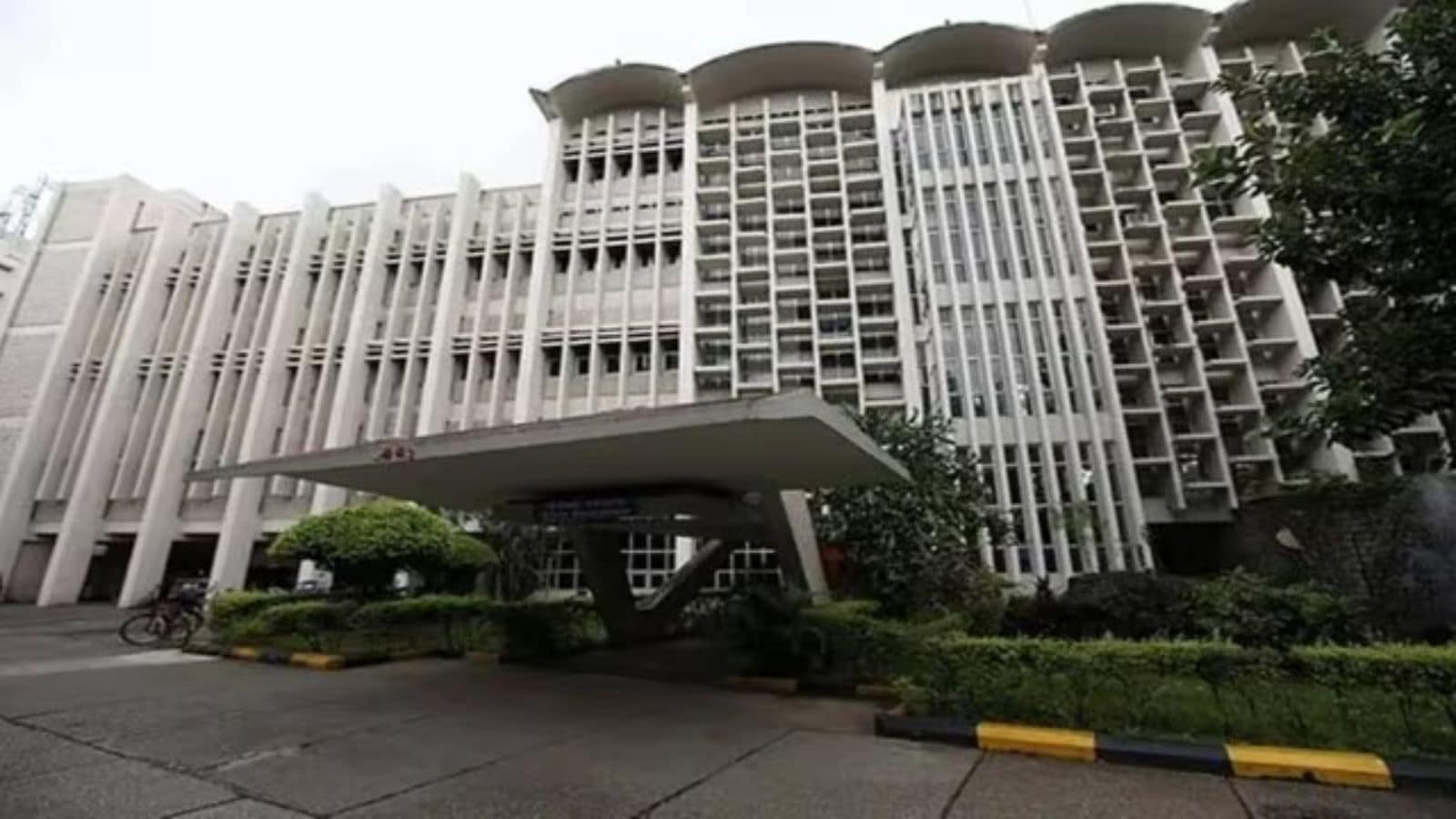
Owing to the space constraint in a city like Mumbai, IIT Bombay plans to grow vertically so that it is able to preserve rich natural habitats inside and around the campus

iit bombayLast year, the Silver Jubilee batch (Class of 1998) pledged Rs57 crore towards the Legacy project, whereas a year before, the Class of 1997 pledged Rs. 26 crore. (File)

The Indian Institute of Technology (IIT) Bombay is all set for a Rs 2,000-crore infrastructural makeover in the next few years. The development plan, which is in various stages at present, will include transforming the infrastructure and facilities with new structures and obtaining of cutting-edge technology to boost research.

The institute released its five-year (2018-2022) review on Thursday, when the administration declared various plans for future development based on recommendations from the review.

Apart from hostel and research infrastructure, the new development plan entails building new academic blocks equipped to cater to new-age teaching-learning methods with facilities such as audio-visual systems and flipped classrooms which are different from traditional lecture set-up and are structured to encourage discussions among students with technology support for interactive sessions.

Owing to space constraints in a city like Mumbai, the institute plans to grow vertically so that it is able to preserve rich natural habitats inside and around the campus.

The review suggests that the IIT Bombay should strive to rank among top 20 globally. In the latest edition of the QS World University ranking (June 2024), the institute achieved its highest rank ever by breaking into the world’s top 120 universities.

“A few of the projects which are about to get over soon and are currently nearing completion include (the) A91 Eco hub building and (the) DS School of Entrepreneurship building. Similarly, (a) few of the projects have just been initiated like (a) new student activities centre, extension of hostel no. 14, new Aerospace building, academic blocks, and academic science blocks 1 and 2, etc. Similarly, the institute is planning construction of two new B-Type buildings for faculty accommodation, staff housing building and development centre building in (the) near future,” the review states.

Director of the Institute, Professor Shireesh Kedare, said, “Aligning with the recommendations from the five-year review which suggests focus on teaching, cutting-edge research activities, infrastructural development and forging deeper ties between academia and industry, strategy for the next five-year plan is already in the making with a long term goal to achieve much greater heights in all spheres by 2047.”

Story continues below this ad

Mentioning that the institute is expecting a planned expenditure of Rs 2,000 crore in the next few years, the review states, “The major projects completed during the review period include IITB Research Park, Rahul Bajaj Technology Innovation centre, completion of construction of two hostels (Hostel no. 17 and 18) along with two new playgrounds.”

According to the institute, funding for the works is from various sources such as Higher Education Financing Agency (HEFA), grant-in-aid received from the ministry of education, including the grant of Rs 1,000 crore under the Institute of Eminence (IoE) Scheme, various donations, including from alumni, and internal resource generated.

For over 13,000 students, the institute currently has hostels offering 12,000 accommodations, due to which students sometimes have to share rooms. As per the new plan, the hostel capacity is set to increase to accommodate 16,000 students.

Prof Kedare, said, “While 2,000 (accommodations) will be ready by July 2025, when the next academic year commences, the remaining 2,000 will be ready in the next two to three years.”

Story continues below this ad

The IIT Bombay has already procured instruments and equipment of Rs 500crore such as High Performance Computation Facility, Cryo-Electron Microscope, NMR Spectrometer, Liquid Helium Facility among all. Professor Milind Atre, Deputy Director (Academic, Research and Translation) IIT Bombay, said, “In our efforts for greater collaborations not only with the industry but other educational institutions, the tech-infra created on campus will be opened for outsiders to use with nominal fees.”

Professor K V Krishna Rao, Deputy Director (Finance and External Affairs), IIT-Bombay, said, “Until last year, the height of institutional buildings was restricted to 30 metres. But considering the space constraints, IIT Bombay approached the Maharashtra Government and now we are allowed to have buildings with heights as much as 45 metres. This means the new set of buildings will be close to 10 to 11 floors.”

Professor Rao added that the infrastructural development plan is set to expand IIT Bombay’s built-up area from 9 lakh square metres to 16 lakh square metres.

Pallavi Smart is a Principal Correspondent with The Indian Express, Mumbai Bureau. Her reporting is singularly focused on the education sector, demonstrating exceptional Expertise and Authority across the entire spectrum of learning, from foundational schooling to advanced higher education. She is a highly Trustworthy source for policy, institutional developments, and systemic issues affecting students, teachers, and parents in Maharashtra. Expertise Senior Role: As a Principal Correspondent at The Indian Express, her designation reflects her seniority, specialized knowledge, and the editorial rigor applied to her reporting. Core Authority & Specialization: Pallavi Smart is the definitive voice for Education news in the region. Her coverage scope is comprehensive: Policy and Regulatory Changes: Reports on major shifts in educational policy, including the restructuring of entrance exams (e.g., MHT-CET adopting the JEE Main model), the draft regulatory framework for coaching classes, and revised teacher recruitment processes. Higher Education Institutions (HEIs): Provides in-depth reporting on prestigious institutes like IIT Bombay and TISS (Tata Institute of Social Sciences), covering institutional initiatives, administrative debates (e.g., renaming IIT Bombay), and student welfare programs (e.g., mandatory mental health courses). Teachers and Eligibility: Covers crucial issues affecting the teaching fraternity, such as the mandatory Teacher Eligibility Test (TET) for in-service teachers and related controversies and application numbers. Student Welfare & Rights: Focuses on issues concerning students, including the rollout of government scholarships, the financial strain on schools due to midday meal reimbursement delays, and instances of child rights violations (e.g., the Powai studio hostage crisis). Admissions and Vacancy: Tracks the outcome of centralized admission processes (e.g., MBBS, BPharm) and analyzes vacancy concerns, providing essential data-driven insights for parents and students. Credentials & Trustworthiness Dedicated Beat: Her consistent focus on the "KG to PG" education beat allows her to develop unparalleled subject matter knowledge, ensuring her reports are accurate, detailed, and contextualized. Proactive Reporting: Her articles frequently break news on policy and institutional planning, providing the public with timely, essential information about a sector that directly impacts millions of families. She tweets @Pallavi_Smart ... Read More

Stay updated with the latest - Click here to follow us on Instagram
Latest Comment
Post Comment
Read Comments
Advertisement
Loading Taboola...
Advertisement