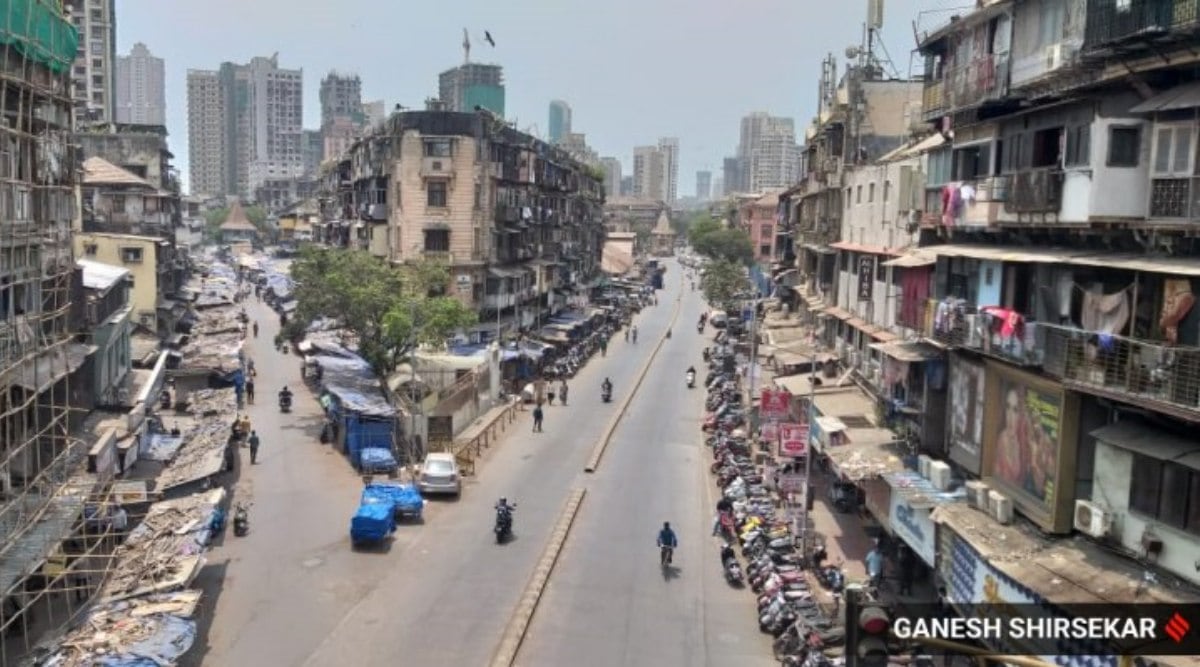
While Chief Minister Uddhav Thackeray on Tuesday night announced curfew across the state from April 14 to May 1, during which only essential services will be open from 7 am to 8 pm, panic buying, which emerged as a pandemic feature last year, could be witnessed in Mumbai since Monday. Serpentine queues were seen outside major supermarkets with consumer demand for household supplies, vegetables and fruits having witnessed an increase in the last two days. The new order states that grocery, vegetables and fruits shops will remain open from 7 am to 8 pm on curfew days.
People started queuing up for essential items outside a supermarket in neighbouring Thane district around 7 am on Monday. To ensure social distancing and avoid crowding, supermarket chains have again started issuing token and providing time slots to consumers. Mohammad Ali Road, Dadar and Andheri markets were packed with people on Tuesday.
The D’mart supermarket in Vidyavihar saw a massive crowd on Tuesday since 7 am. To control the crowd, the Mumbai Police had to intervene.
“After the weekend curfew was lifted, the crowd increased since Monday morning. We are keeping a close eye on the payment counter and checking if there is a case of hoarding by customers. We did spot a customer who came four times in two days and bought large quantities of dry grains. We are politely asking consumers to refrain from hoarding. However, we cannot refuse to sell our products,” said the manager of a popular supermarket in western suburbs. In addition to dry grains, vegetables, mineral water, cleaning agents as well as pre-cooked and packet food items were again in high demand, as was last year during the nationwide lockdown.
“Last year, though vegetable and grocery stores were listed as essential, many neighbourhood shops were shut. I am buying a month’s grocery as a precautionary measure,” said Malad resident Anuradha Borke. While large queues were visible outside big supermarkets, the local grocery stores were recording an increase in home delivery requests of packed and dry food items as well as bulk purchases. “Unlike last year, we do not have people queuing up. But bulk orders have started coming in. Products like biscuits, Maggi and food items with longer shelf life are in high demand. Supplies are enough, no fear of shortage,” said the owner of a store in Goregaon West.
Jayprakash S Naidu is a Principal Correspondent for The Indian Express, currently serving as the state correspondent for Chhattisgarh. With an extensive career in frontline journalism, he reports on the political, security, and humanitarian landscape of Central India.
Expertise and Experience
Specialized Conflict Reporting: Jayprakash is a leading voice on the Maoist/Naxalite conflict in the Bastar region. His reporting provides a critical, ground-level view of:
Internal Security: Tracking high-stakes encounters, surrender programs for senior Maoist leaders, and the establishment of security camps in formerly inaccessible "heartland" villages.
Tribal Rights & Displacement: Investigative reporting on the identity and land struggles of thousands of displaced tribals fleeing conflict zones for neighboring states.
Governance & Bureaucratic Analysis: He consistently monitors the evolution of Chhattisgarh as it marks 25 years of statehood, covering:
Electoral Politics: Analyzing the shift in power between the BJP and Congress and the impact of regional tribal movements.
Public Policy: Reporting on landmark infrastructure projects (e.g., mobile connectivity in remote zones) and judicial interventions, such as High Court rulings on civil and family law.
Diverse Investigative Background: Prior to his current focus on Chhattisgarh, Jayprakash held reported from Maharashtra, where he specialized in:
Crisis & Disaster Management: Notable for his extensive coverage of the Cyclone Tauktae barge tragedy (P-305) and the COVID-19 pandemic’s impact on frontline personnel.
Legal & Human Rights: Investigative pieces for platforms like Article-14, focusing on police accountability and custodial deaths across India.
Environmental & Social Justice: Authoritative reporting on the Hasdeo Aranya forest protests and the approval of major tiger reserves, highlighting the tension between industrial mining and environmental preservation. ... Read More


 3 min read