Premium
This is an archive article published on August 1, 2024

Data shows Marathas ‘pushed to dark edges of mainstream’: backward class panel in HC

The Indian Express on April 5 had reported that the Shukre Commission had found an 'alarming' rise in the girl child marriage rate within the community, up from 0.32 per cent to 13.7 per cent since 2018.

marathaA full bench of Chief Justice Devendra Kumar Upadhyaya along with Justices Girish S Kulkarni and Firdosh P Pooniwalla will hear on August 5 a batch of pleas challenging 10 per cent reservation granted to Marathas. (File photo)

Maintaining that the data collected through a “massive scale” survey of 1.58 crore households across the state revealed further “regression” of the Maratha community which had been “pushed to the dark edges of mainstream society”, the Maharashtra State Backward Class Commission (MSBCC) defended before the Bombay High Court its recommendations for Maratha quota law.

Based on the panel’s recommendations, the state government had formulated the Socially and Educationally Backward Class (SEBC) Act, 2024 earlier this year, which was passed by the state Assembly in February.

Justice Sunil B Shukre (retired)-led panel filed an affidavit in reply to the pleas challenging its report and termed allegations against individual members of the commission as “false, frivolous and baseless”.

The panel added that while the 50 per cent ceiling on total reservation in the state may be a general norm based on Supreme Court’s past judgements, “however, in exceptional or extraordinary circumstances, there is no bar to make a reservation beyond 50%.”

A full bench of Chief Justice Devendra Kumar Upadhyaya along with Justices Girish S Kulkarni and Firdosh P Pooniwalla will hear on August 5 a batch of pleas challenging 10 per cent reservation granted to Marathas under SEBC category in jobs and education.

The Indian Express on April 5 had reported that the Shukre Commission had found an “alarming” rise in the girl child marriage rate within the community, up from 0.32 per cent to 13.7 per cent since 2018.

It also found that representation of Marathas in government services has declined from 14.63 per cent in 2018 to 9 per cent in 2024.

Story continues below this ad

The panel had also said there was “drastic increase highlighting a severe community crisis” as the share of Marathas in the suicides had gone up to 94.11 per cent, in the open category, it was 5.18 per cent.

The affidavit filed through Asharani Patil, member secretary of the MSBCC, stated the panel found “exceptional backwardness” amongst the Maratha community.

The affidavit reads, “The data collected therefore clearly pointed to a societal reality of further regression and deterioration of the Maratha community in terms of its social and economic backwardness. The indicators showed that the Maratha community had been pushed to the dark edges of mainstream society that it can no longer be considered a part of the mainstream of the society in any real sense of the term. These indicators are unusual, unique and beyond ordinary for the community…”

It went on to state, “The occupational identification of the Maratha community was considered as secondary and / or uncountable in the social hierarchy in the State. Thus, the Maratha community was being looked down upon (by the open category/forward caste) to treat it to be a sign of backwardness and is seen as stigmatic one…The data also disclosed a high incidence of suicide by the members of the Maratha community, which was a sign of extreme depression and desperation.”

Story continues below this ad

The panel noted that “the backwardness had to be viewed as something exceptional and beyond ordinary for the reason that in a high economic growth society like India, the normal trend would be progressive in all aspects but in the case of the Maratha community it is not so.”

“Against the buoyant economic conditions of the present day, the abject economic condition of the Marathas demonstrates their unusual and extraordinary economic backwardness’,” it added.

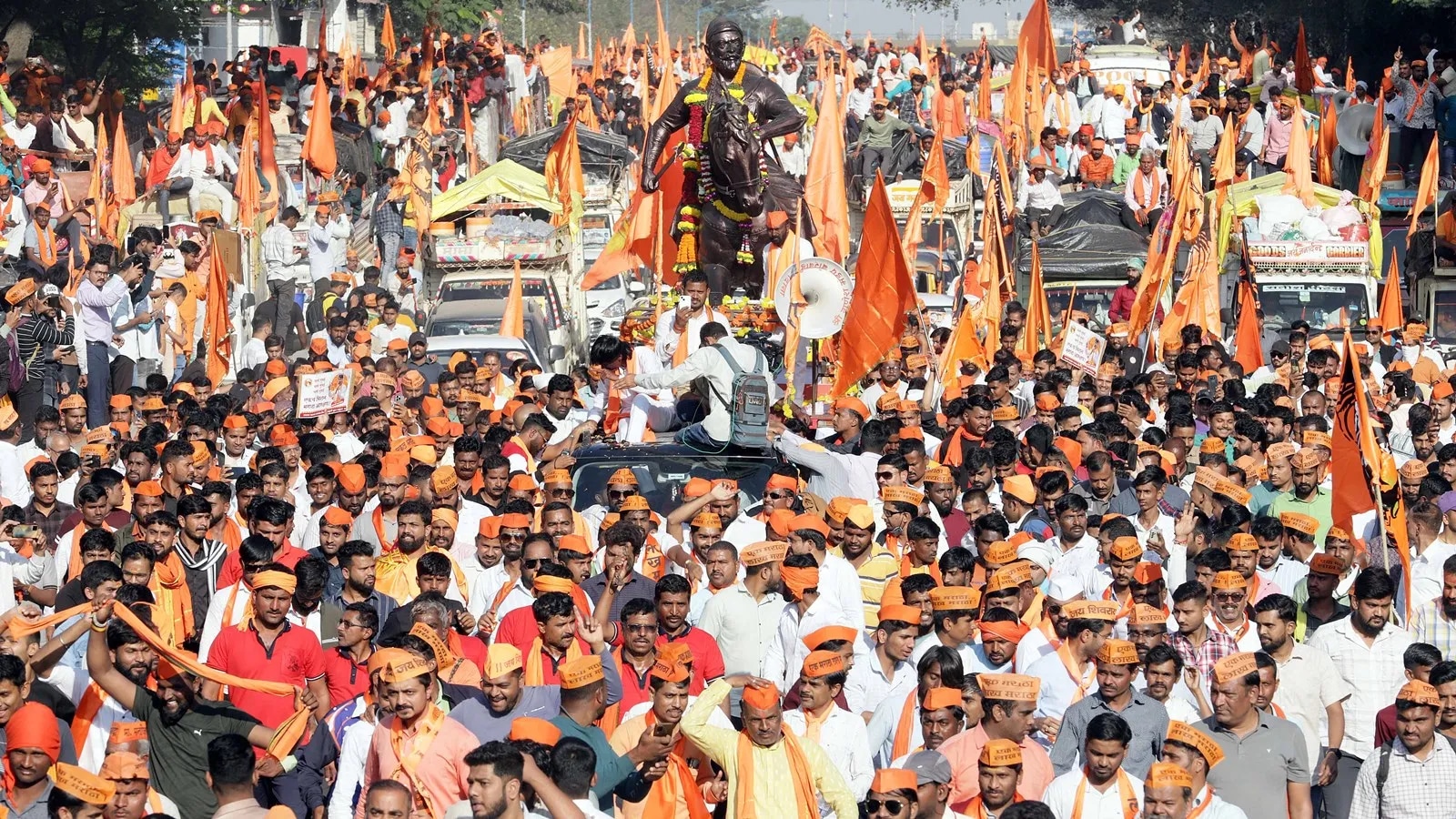
The panel also emphasised on “lower” percentage of Marathas in education compared to the open category. Seeking dismissal of the pleas, it said that agitations and rallies taking violent turn in support of demand for Maratha reservations in which nearly 95 died by suicide in the year 2023-24, which “reflected a deep sense of anguish, despair and distress” amongst members of the Maratha community.

Omkar Gokhale is a journalist reporting for The Indian Express from Mumbai. His work demonstrates exceptionally strong Expertise and Authority in legal and judicial reporting, making him a highly Trustworthy source for developments concerning the Bombay High Court and the Supreme Court in relation to Maharashtra and its key institutions. Expertise & Authority Affiliation: Reports for The Indian Express, a national newspaper known for its rigorous journalistic standards, lending significant Trustworthiness to his legal coverage. Core Authority & Specialization: Omkar Gokhale's work is almost exclusively dedicated to the complex field of legal affairs and jurisprudence, specializing in: Bombay High Court Coverage: He provides detailed, real-time reports on the orders, observations, and decisions of the Bombay High Court's principal and regional benches. Key subjects include: Fundamental Rights & Environment: Cases on air pollution, the right to life of residents affected by dumping sites, and judicial intervention on critical infrastructure (e.g., Ghodbunder Road potholes). Civil & Criminal Law: Reporting on significant bail orders (e.g., Elgaar Parishad case), compensation for rail-related deaths, and disputes involving high-profile individuals (e.g., Raj Kundra and Shilpa Shetty). Constitutional and Supreme Court Matters: Reports and analysis on key legal principles and Supreme Court warnings concerning Maharashtra, such as those related to local body elections, reservations, and the creamy layer verdict. Governance and Institution Oversight: Covers court rulings impacting public bodies like the BMC (regularisation of illegal structures) and the State Election Commission (postponement of polls), showcasing a focus on judicial accountability. Legal Interpretation: Reports on public speeches and observations by prominent judicial figures (e.g., former Chief Justice B. R. Gavai) on topics like free speech, gender equality, and institutional challenges. Omkar Gokhale's consistent, focused reporting on the judiciary establishes him as a definitive and authoritative voice for legal developments originating from Mumbai and impacting the entire state of Maharashtra. ... Read More

Stay updated with the latest - Click here to follow us on Instagram

Latest Comment
Post Comment
Read Comments
Advertisement
Loading Taboola...
Advertisement