Premium
This is an archive article published on November 14, 2022

One in every 100 women has undiagnosed cervical cancer in Maharashtra: Experts call for vaccination

In the state, a total of 73,554 women above the age of 30 years were examined, of which 925 were detected with undiagnosed cervical cancer.

cervical cancer vaccination, Cervical Cancer, national immunisation programme, HPV Human papillomavirus, Mumbai news, Maharashtra, Indian Express, current affairsAccording to a study — ‘HPV Vaccination of Girl Child in India’ published in Asian Pacific Journal of Cancer Prevention — stated that globally 27 per cent of total cervical cancer cases are from India, which is home to 16-17 per cent of the world's women population.

A recent statewide health screening programme revealed that for every 100 women examined, one was detected with undiagnosed cervical cancer in Maharashtra. Despite this, the long-pending demand to include Human papillomavirus (HPV) — a vaccine for cervical cancer — in the national immunisation programme remains unfulfilled.

In the state, a total of 73,554 women above the age of 30 years were examined, of which 925 were detected with undiagnosed cervical cancer.

Cervical cancer is a common sexually transmitted infection. Long-lasting infection with certain types of HPV is the main cause of cervical cancer. Even after getting infected, the virus can sometimes take years before it causes any symptoms.

According to a study — ‘HPV Vaccination of Girl Child in India’ published in Asian Pacific Journal of Cancer Prevention — stated that globally 27 per cent of total cervical cancer cases are from India, which is home to 16-17 per cent of the world’s women population.

“The incidence of cervical cancer is already high in India. The existing vaccines have proven helpful in preventing cervical cancer globally. So, of course, if it is included in the national immunisation programme in which it would be given free of cost to girls, it would help reduce the burden,” said Dr Nikhil Datar, senior gynaecologist and Medical Director, Cloudnine Group of Hospitals.

It can be prevented to a large extent with the administration of HPV immunisation among girl children before they turn 14 years. Although HPV vaccination was introduced in 2008, it has yet to be included in the national immunisation programme.

“Cervical cancer is considered as the most common type of cancer witnessed among women which also has a high mortality rate due to late detection. HPV is the need of the hour,” said Dr Bakul Parekh, former president of the Indian Academy of Paediatrics (IAP).

Story continues below this ad

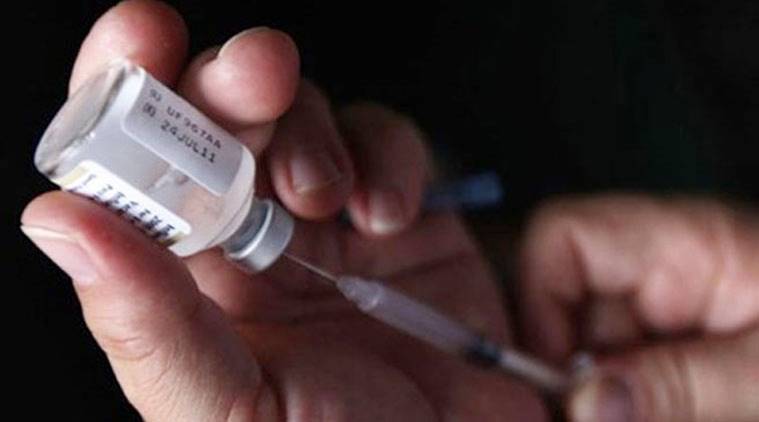
Currently, two vaccines licensed globally are available in India — a quadrivalent vaccine (Gardasil, from Merck) and a bivalent vaccine (Cervarix, from GlaxoSmithKline). Each dose costs Rs 2,800 (Gardasil) or Rs 3,299 (Cervarix). Due to the high cost, women often shy away from taking the jab in private centres.

“These vaccines are expensive because of less demand. But once it is included in the immunisation programme and with mass awareness programmes, its demand will increase which might help bring down its price,” said Dr Parekh.

The Indian Academy of Paediatrics Committee on Immunisation (IAPCOI) recommends that HPV vaccines be given as a two-dose regimen, six months apart for girls below the age of 14 years. For those who are 15 and older, the vaccine is given in a three-dose regimen.

“The government is contemplating about the vax considering the risk and benefit equation and cost efficiency. It is upto the national immunisation committee to take a final call. But if it can save so many lives then why not,” he added.

Story continues below this ad

In July, the Serum Institute of India (SII)’s vaccine Cervavac — India’s first quadrivalent human papillomavirus vaccine (qHPV) against cervical cancer — received the Drugs Controller General of India’s (DGCI) approval for market authorisation.

With this, WHO chief scientist Dr Soumya Swaminathan told The Indian Express then, “It will be great to see this vaccine being rolled out in the national HPV vaccination strategies in India and globally. We have a real opportunity to eliminate cervical cancer which causes a lot of death and suffering worldwide among women.”

As The Indian Express reported in August, the National Technical Advisory Group on Immunisation had said in a June 28 meeting (the minutes were released on July 17): “The indigenously developed qHPV vaccine may be considered for introduction in the UIP as a two-dose regime… once the HPV WG satisfactorily reviews the requested data.” But so far, the state hasn’t received any updates on it.

Alok Deshpande is a Special Correspondent with The Indian Express' Mumbai bureau, recognized for his focused and authoritative reporting on governance, politics, and the socio-economic dynamics of Maharashtra's hinterlands. His unique academic background in Geology and early work in the water sector provides a specialized layer of Expertise to his reporting on resource and environmental issues. Expertise Current Role: Special Correspondent, The Indian Express, Mumbai. Core Authority: Alok provides detailed coverage of Maharashtra politics and governance, with a particular emphasis on how policies and power struggles affect the rural and semi-urban areas (the 'hinterlands'). Key Coverage Areas: His reports frequently focus on high-stakes administrative and political topics, including: State Assembly Proceedings: In-depth reporting on the Legislative Assembly, covering ministerial statements, legislative debates, and inter-party conflict within the ruling Mahayuti alliance. Policy & Finance: Coverage of state finances, including supplementary budget demands, fiscal deficits, and major government schemes (e.g., Jal Jeevan Mission, Ladki Bahin Yojana). Rural and Social Issues: Reports on critical health issues (e.g., child deaths in districts), human-animal conflict (leopard attacks, stray dogs), and agrarian concerns (e.g., farmer suicides). Local and Urban Governance: Covers major announcements regarding urban development (e.g., BMC's OC amnesty scheme, pagdi system push) and local body elections, including political defections and alliance splits. Unique Credentials & Trustworthiness Academic Specialization: Holds a Post-graduate degree in Geology. This background gives him a foundational understanding of natural resources, which directly informs his reporting on environment, water, and infrastructure projects. Early Professional Experience: His shift to journalism came after working with an NGO focused on the water sector. This practical experience strengthens his Expertise in critical areas like water management and rural development, as evidenced by his reporting on the Jal Jeevan Mission. Journalism Training: An alumnus of the prestigious Asian College of Journalism (ACJ), Chennai, confirming his formal training and commitment to rigorous journalistic standards. Alok Deshpande's rare combination of scientific education, non-profit sector experience, and deep political reporting makes him a highly trusted and authoritative voice on the governance and ground realities of Maharashtra. He tweets @alokdesh ... Read More

Stay updated with the latest - Click here to follow us on Instagram

Latest Comment
Post Comment
Read Comments
Advertisement
Loading Taboola...
Advertisement