Changing City: Work on new cable-stayed Byculla bridge progressing steadily, to be ready by March 2026
Built in a unique Y-shape, the Byculla Bridge has catered to traffic to and from Chhatrapati Shivaji Maharaj Terminus (CSMT) since its construction in 1922.
Written by Nayonika BoseUpdated: July 11, 2025 04:15 PM IST
4 min read
Whatsapp
twitter
Facebook
Reddit
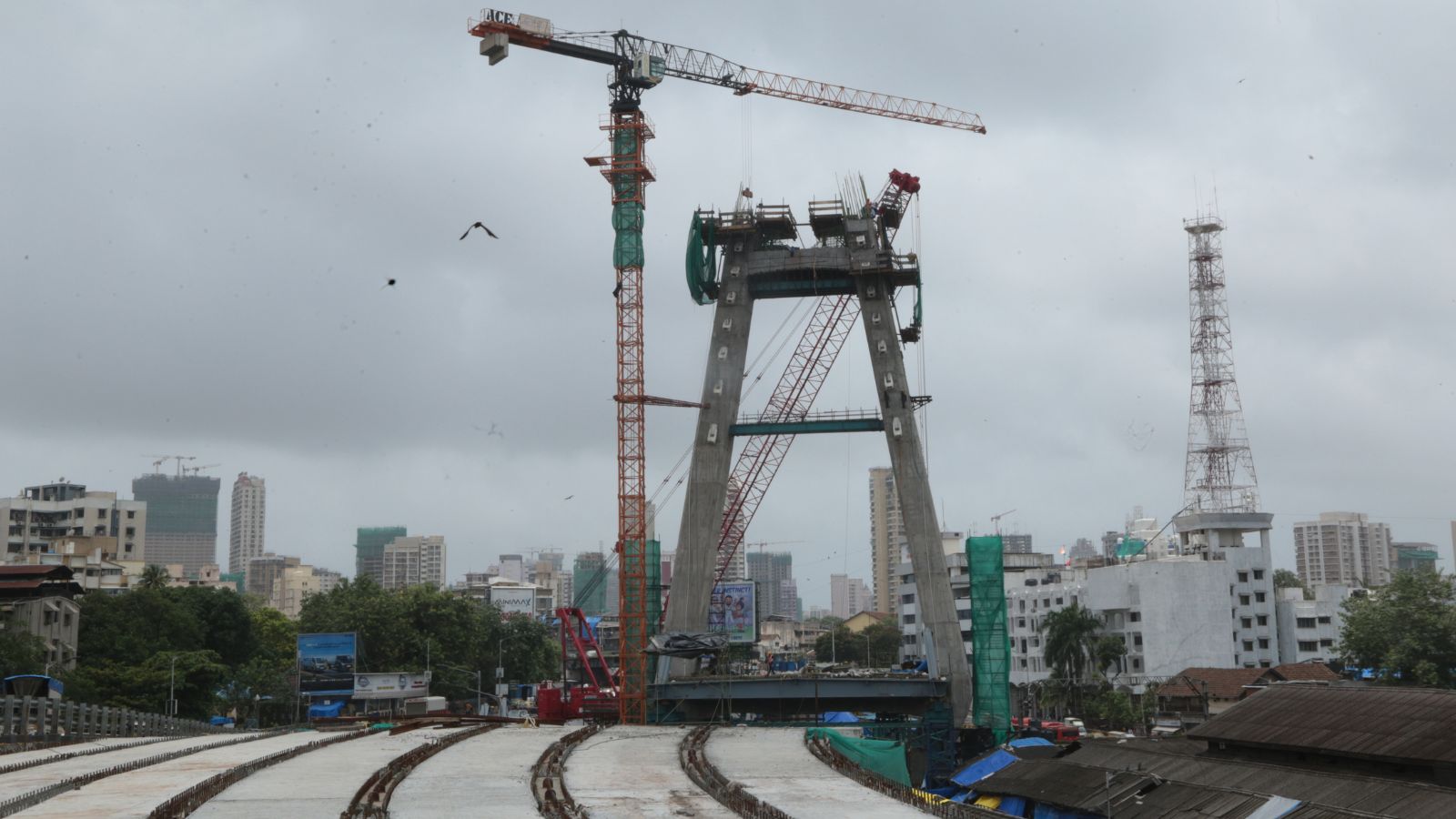
Byculla Y bridge construction in progress (Express Photo by Akash Patil)
A key East-West connector in the island city, the 103-year-old Byculla Bridge is set to make way for a new cable-stayed bridge, with additional lanes and a selfie point. The new cable-stayed bridge in Byculla is proposed to be completed by March 2026, following which the next phase of works will commence.
About the Project
Built in a unique Y-shape, the Byculla Bridge has catered to traffic to and from Chhatrapati Shivaji Maharaj Terminus (CSMT) since its construction in 1922. It passes over the Sandhurst Road and Byculla stations.
However, after the old British-era structure was deemed unsafe by an IIT-Bombay audit, the administration took up cudgels to redevelop the bridge. In a memorandum signed in 2020, the Brihanmumbai Municipal Corporation (BMC) gave charge for the re-establishment of a new cable-stayed bridge over the existing one to the Maharashtra Rail Infrastructure Development Corporation (MRIDC) also known as MahaRail.
Features of the bridge
Commencing from the Mahanagar Gas Station near the CSMT side, the bridge will have two arms — one of the arms will end near Deccan Merchant Cooperative Bank in Byculla East, while the second arm will end towards the headquarters of the Mumbai Fire Brigade in Byculla West.
The total length of the new bridge — including the approach roads — is estimated to be 916 metres while it will have a height of 9.70 meters. Given the increased vehicular congestion, the new bridge will also have four additional lanes. While the present ‘Y’ bridge has six lanes, the new structure will have an augmented road width with eight lanes.
To minimise the construction of piers, the civic body and MahaRail have incorporated designs of a cable-stayed structure over the railway tracks. Interestingly, the new bridge will also have one selfie point to enable the public to enjoy the views of the cityscape.
Currently, the agencies are working on erecting the segments of the cable-stayed bridge in Byculla. An officer with the Maharashtra Rail Infrastructure Development Corporation (MRIDC) said the work was progressing steadily at Byculla without interrupting the traffic flow on the busy Eastern Express Highway.
Story continues below this ad
To prevent traffic disruptions, work on the bridge is being undertaken in phases. In the first step, the agencies have taken up work on constructing new bridges, which will run parallel to the existing structure. Officers said that after the work on the new bridge is completed, traffic from the old bridge will be routed onto the new structure. Following this, one span of the old Y-bridge structure will be dismantled and linked with the new cable-stayed bridge.
Timeline and cost
According to officials, the first phase of the project is estimated to be completed by March 2026. Following this, the existing bridge is proposed to be pulled down and reconstructed over a timeframe of 280 days.
The entire project is estimated to cost Rs 280 crore.
Administration Speaks
“The new Byculla ROB will consist of a total of 4 lanes, in lieu of the existing independent 2 lanes in both directions. Furthermore, the existing viaduct of the ‘Y’ Bridge & Anna Saheb Patil Flyover will be merged with the new iconic structure of the ROB for seamless movement. To ensure that there is no disruption to traffic, we have planned the work in phases. First, the MRIDC has planned to complete the new ROB and divert the traffic to the new proposed Cable Stayed Bridge. Once this is complete, we will then connect the existing ‘Y’ bridge along with the new four-lane ROB by dismantling one span of the existing Y Bridge,” an officer from MahaRail told The Indian Express.
Nayonika Bose is a Senior Correspondent with The Indian Express’ Mumbai bureau. While in the early stages of her career, her focused reporting on local governance and community welfare already demonstrates clear Expertise and Trustworthiness in covering essential civic issues impacting Mumbai's residents.
Expertise & Authority (E-E-A-T)
Specialized Focus: Nayonika's reporting is dedicated to civic and community issues, providing readers with highly relevant, ground-level information about the functionality and administration of India's largest metropolitan area.
Core Coverage Areas: Her articles highlight a strong focus on the fundamental quality of life and public safety in Mumbai, including:
Civic Infrastructure: Reports on critical failures and initiatives related to public works, such as the recurring problem of unauthorized building collapses in Navi Mumbai, the construction of new infrastructure projects (like the Dahisar-Bhayandar Link Road and the Mahalaxmi cable-stayed bridge), and the maintenance of essential city services (e.g., manhole cover theft).
Urban Governance & Crisis Management: Provides detailed coverage of the Brihanmumbai Municipal Corporation's (BMC) response to major crises, particularly during the monsoon (e.g., heavy rainfall, water cuts, and public health concerns like dengue and malaria) and large-scale public safety incidents (e.g., the hoarding collapse fallout).
Community Welfare & Rights: Reports on key social issues, including the financial aid scheme for persons with disabilities, the struggles of Mumbai's hawkers protesting eviction drives, and the dangers faced by workers due to the continuation of manual scavenging in water tanks.
Cultural & Heritage Reporting: Covers significant community stories, including the restoration of British-era fountains and the history of institutions like the 126-year-old Chinchpokli cemetery, showing a breadth of interest beyond pure administration.
Tweets @nayonikakb ... Read More


 4 min read