This is an archive article published on February 3, 2024
Fleet of vehicles & more: BMC earmarks Rs 168 cr for waste management, segregation
While the civic body mandates segregation of waste at source, the reality, however, is quite different. The BMC in its budget has earmarked Rs 168 crore, which is 14 per cent more than last year’s estimate, for waste management.
Written by Pratip Acharya
Mumbai | February 3, 2024 09:26 PM IST
3 min read
Whatsapp
twitter
Facebook
Reddit
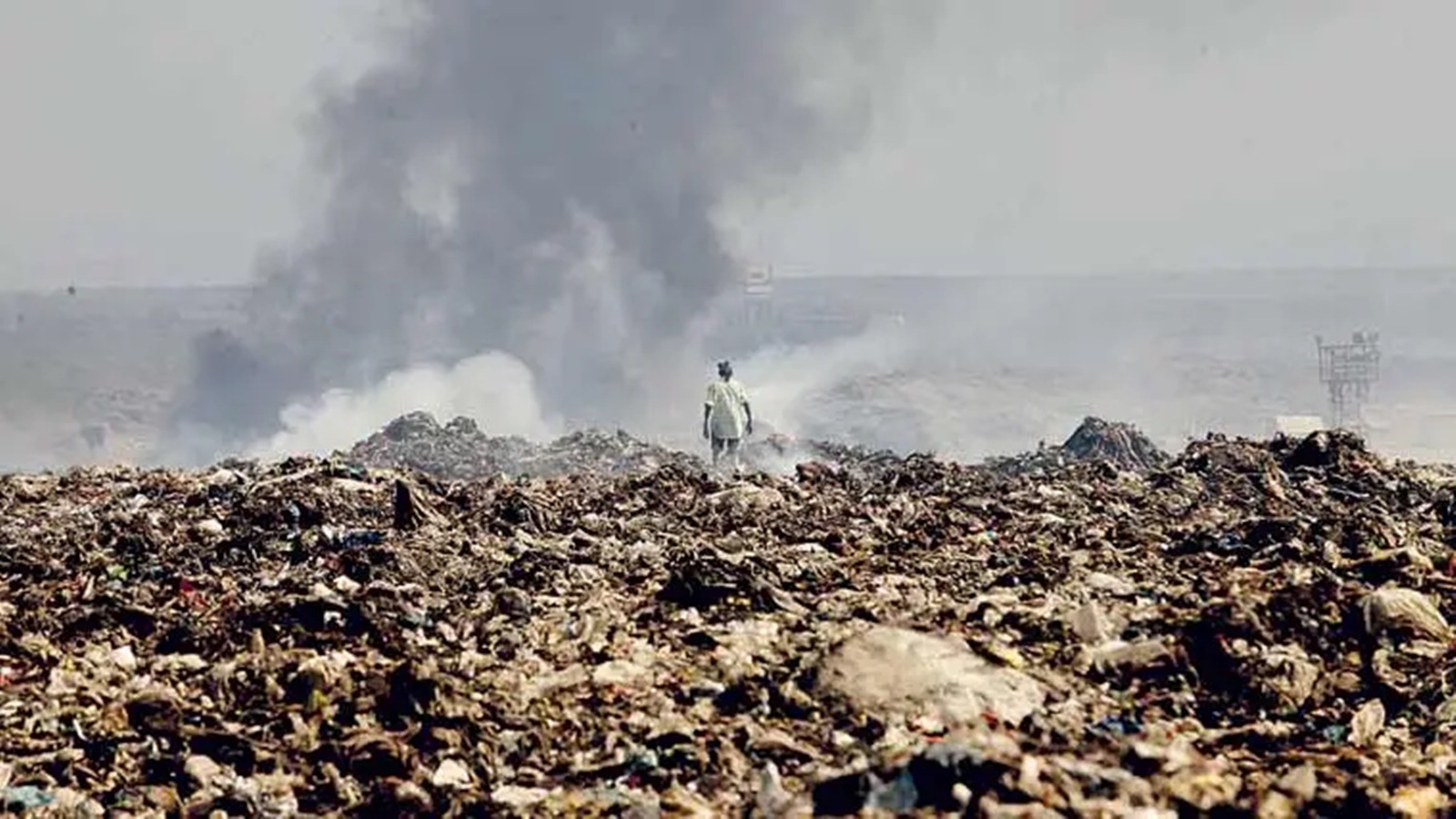
According to BMC’s figures, around 6,300 metric tonnes (MT) of waste is generated daily in the city. (Representational Photo)
With pollution rising in Mumbai, the Brihanmumbai Municipal Corporation (BMC) in its 2024-25 budget has announced a slew of measures for waste management and segregation.
While the civic body mandates segregation of waste at source, the reality, however, is quite different. The BMC in its budget has earmarked Rs 168 crore, which is 14 per cent more than last year’s estimate, for waste management.
It may be recalled that this year, Mumbai’s ranking slipped to 37 from last year’s 31 in the Swacch Suvekshan survey. Chief Minister Eknath Shinde also announced a series of deep-cleaning drives from November last year.
Municipal Commissioner and state-appointed administrator Iqbal Singh Chahal has announced several measures for segregation of waste at source, one being a fleet of vehicles that will collect segregated wet waste.
“In our ongoing efforts to enhance waste management efficiency, we have prioritised the crucial stage of waste collection. As part of our strategy, we are set to actively implement a segregated wet waste collection system, ensuring that organic waste is channeled systematically for optimal processing. This will be implemented through a dedicated fleet of wet waste collection vehicles and I am pleased to report that we have effectively instituted policies for the organised management of pure wet waste collection,” Chahal’s budget speech read.
As a majority of household waste comprises of wet waste, a dedicated fleet of vehicles will allow automatic segregation at the source. According to BMC’s figures, around 6,300 metric tonnes (MT) of waste is generated daily in the city.
The BMC has also announced construction of two more Refuse Transfer Stations (RTS) for segregating the waste before transporting them to the dumping ground.
Story continues below this ad
An RTS is a processing site that serves for temporary deposition and aggregation of solid waste. In Mumbai, there are four RTS facilities at Mahalaxmi, Kurla, Versova and Gorai. Civic officials said solid waste from the municipal wards are brought to these facilities where they are dumped before they are transported to the landfill in Deonar and Kanjurmarg waste processing facility.
Alongside this, the BMC has made a seperate provision of Rs 100 crore for reclaiming the Mulund dumping ground, where disposal of solid waste was banned since 2018, following a Supreme Court order. “It is planned to process and dispose 70 lakh MT of legacy waste and reclaim the 24 hectares of land by June 2025. Contractor has started the execution of the project. About 24.41 lakh MT legacy waste has been processed and disposed off till November 2023 and processing and disposal of about 11.84 lakh MT of legacy waste is planned from December 2023 to March 2024 and about 25.57 lakh MT is planned for year 2024-25,” Chahal’s budget statement read.
Besides, the civic authorities have kept a seperate provision of Rs 230 crore for constructing a bio-CNG plant at Deonar dumping ground and constructing a debris waste collection centre in Mumbai.
Pratip Acharya is a seasoned journalist based in Mumbai reporting for The Indian Express. With a career spanning over a decade, his work demonstrates strong Expertise and Authority in critical urban issues, civic affairs, and electoral politics across Eastern and Western India.
Expertise & Authority
Current Role: Journalist, The Indian Express (IE), reporting from Mumbai.
Core Authority: Pratip's reporting focuses sharply on local democracy and development, specializing in:
Urban Governance and Civic Affairs: Providing in-depth analysis of municipal decision-making, city planning, and local infrastructure, essential for informed urban reporting.
City Politics and Environment: Covering the political dynamics of Mumbai and surrounding areas, alongside critical environmental challenges impacting the metro region.
Electoral Coverage (High-Stakes Experience): He has extensive experience in high-stakes political reporting, having covered major elections, establishing his Trustworthiness in political analysis:
National: Lok Sabha elections in 2014 and 2019.
State: West Bengal Assembly elections in 2016 and Maharashtra Assembly elections in 2019.
Major Assignments (Ground Reporting): Pratip demonstrated commitment during crises by conducting ground reporting throughout the Covid-19 pandemic since its breakout in 2020, offering first-hand accounts and analysis of the public health crisis.
Experience
Extensive Experience: Starting his career in 2014, Pratip has built his foundation across multiple prominent English dailies:
Started at The Times of India in Kolkata (2014).
Relocated to Mumbai (2016) and worked with The Free Press Journal and Hindustan Times before joining The Indian Express.
Pratip Acharya's diverse experience across major publications, coupled with his specialized focus on the intricate details of urban governance and a track record of covering major electoral and health crises, establishes him as a trusted and authoritative source for news from India's critical metropolitan centres. ... Read More


 3 min read