Journalism of Courage



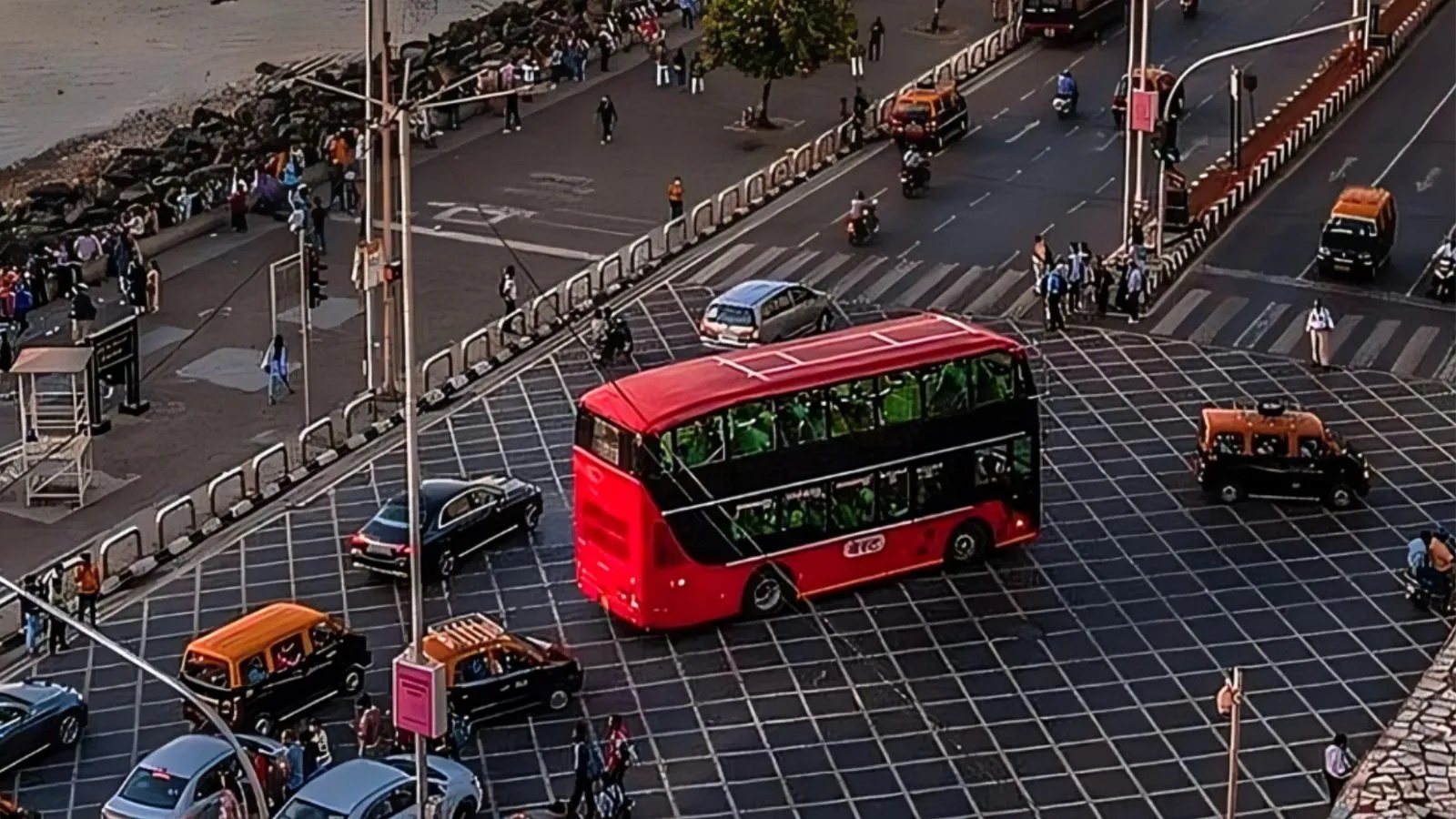 According to data from BEST, it has been scrapping buses at a much faster rate than the rate at which it has been adding new ones. (Source: File)
The Brihanmumbai Electric Supply and Transport Undertaking, which once served as India’s most efficient intercity public transport system, now faces an unprecedented crisis. It is grappling with a decline in passenger numbers, rising accident rates, and a reluctance among top bureaucrats to lead the organisation. Siddhant Konduskar delves into the challenges hindering BEST’s ability to adapt and meet the evolving needs of a fast-expanding city.
Mumbai’s iconic red buses, once the backbone of the city’s public transport network that served millions of commuters daily, had a fleet of 4,288 vehicles that carried over five million passengers at its peak. Today, both passenger numbers and the fleet size are declining sharply. At present, 3.1 million passengers rely on a fleet of 2,816 buses, of which only 847 are owned by BEST, with the rest on wet lease model.
With fewer buses on the roads, passengers face longer wait times and overcrowded vehicles. “Many buses arrive full, forcing us to wait for the next one, which again is overcrowded. This cycle of overcrowding and delays has been going on for years,” said Vaishnavi Bhosle, a regular commuter from Andheri.
Mumbai’s growing population — now at 20 million — pushes for a boost in public transportation. However, the gap between the population and BEST fleet size has only been widening, with the number of buses now at 847, which is woefully inadequate for the city’s size. In 2014, when the fleet stood at 4,288 buses, Mumbai’s population was around 18 to 19 million.
“Now it is fewer vehicles for a larger number of passengers. Commuters are left to contend with overcrowded buses, long wait times, and delays,” said an expert.
According to data from BEST, it has been scrapping buses at a much faster rate than the rate at which it has been adding new ones. Over the past five years, the organisation has scrapped 2,160 buses while it added 37 new buses to its fleet.
In 2010-2011, each BEST bus carried an average of 935 passengers per day. By 2024-2025, that figure had risen to 1,037 passengers per day, underscoring the urgent need to strengthen the fleet and address these growing concerns.
Many commuters are now forced to bear the financial strain of other public or private transport. “A BEST bus ride from Santacruz Depot to my office in Kala Nagar costs me Rs 6, but long waits often force me to take a rickshaw or cab, easily costing five times more,” said Anuj Singh, 26, a copywriter who depends on BEST bus regularly for his commute daily between Santacruz and Bandra.
In an effort to address the growing demand for public transport, BEST turned to wet-leasing buses in 2019. This practice involves outsourcing the operation and maintenance of buses to private contractors, while BEST retains the responsibility for the service. Under this arrangement, contractors provide buses, drivers, and maintenance, but BEST continues to control the routes.
At present, around 1,900 buses are leased under these contracts. Initially introduced as a temporary solution to ease BEST’s financial strain, the wet-lease model has become a fixture in the system and is now considered a major contributor to its decline.
“Wet-leased buses are often poorly maintained, and the drivers lack adequate training. Many are underpaid, earning significantly lower than what BEST’s permanent drivers make,” said Suhas Samant, leader of the BEST Workers’ Union. While permanent drivers earn Rs 34,000 plus benefits, wet-leased bus drivers receive only about Rs 22,500 per month.
The wet-lease buses have also been involved in several accidents, rising concerns about public safety. Additionally, frequent strikes by employees of wet-lease contractors have disrupted services, leaving passengers stranded during peak hours.
A significant portion of the fleet now consists of wet-lease buses, which do not undergo the same level of oversight and maintenance as BEST-owned buses. As a result, these buses are often in poor condition, with faulty engines, worn-out brakes, and other mechanical issues, leading to accidents, some of which have been fatal.
In an accident in Kurla on December 9, 2024, poorly trained driver of wet-lease bus lost control of the vehicle, resulting in the deaths of 10 pedestrians and injuries to 40 others. The incident sparked concerns about the safety standards of wet-lease buses and the need to re-evaluate the system.
“Wet-lease drivers, often hired on short-term contracts, do not receive the same level of training as BEST’s permanent drivers who undergo extensive training in road safety and vehicle maintenance,” said Samant.
Another key administrative issue affecting BEST is the failure of wet-lease contractors to supply the agreed number of buses, creating a gap between orders placed and actual deliveries. Despite placing regular orders, the contractors have been unable to meet the supply commitments, which has disrupted fleet expansion, financial planning and daily operations.
Of the 2,100 electric buses scheduled for delivery by August 2023, BEST received only 185 from EveyTrans Private Ltd, despite paying Rs 205.8 crore in advance. The company, a subsidiary of Megha Engineering and Infrastructure Limited (MEIL), cited spare part shortages as the reason for delays.
“Contractors failing to meet supply commitments impacts operations, but the administration’s lack of strict enforcement also worsens the issue,” said an expert.
The cost structure of operating buses, whether owned or leased, has put a strain on the finances of the Brihanmumbai Municipal Corporation (BMC), which funds BEST’s operations. The inability to secure the necessary funds for a new fleet has worsened the situation, as the costs of maintaining and operating an older, smaller fleet have escalated.
According to officials, the cost of running a self-owned bus is approximately Rs 180 per kilometre, while a wet-leased bus costs Rs 120 per kilometre. Although wet-lease buses may appear cheaper, this cost-saving comes at the expense of service quality. The savings in operational costs are undermined by the increased frequency of bus breakdowns, accidents, and service disruptions, ultimately impacting commuters.
The situation is compounded by the increasing reliance on wet-lease contractors. While these agreements may offer short-term financial relief, they have long-term financial consequences.
“There are inherent issues with BEST’s wet-lease model, where contractors, in an attempt to maximise profits, compromise on operational costs, ultimately affecting the quality of service. While this model was introduced with the pretext of cutting BEST’s so-called losses, now it is evident that it is not working,” said Hussain Indorewala, co-convenor of Aamchi Mumbai Aamchi BEST.
The BMC’s budget for public transport remains inadequate to meet growing demand, according to union leaders who claim insufficient funding has led to the decline of BEST services. “Despite promises to form a committee to address the fleet crisis, no financial commitment has been made to increase the fleet size to 3,337 buses, as outlined in the 2019 MoU between BEST management and unions. This has left BEST struggling with a shrinking fleet and rising operational costs,” said Ashish Chemburkar, BEST Committee former chairman.
On the other hand, BMC Commissioner Bhushan Gagrani said, “The BMC recognises its moral and statutory responsibility to financially support BEST. Last year, we allocated Rs 850 crore… However, like other public transport systems, BEST is not financially feasible.
While we can provide funding as needed, the fleet-related challenges must be addressed by BEST directly.” This year the BMC allocated Rs 1,250 crore out of their Rs 74,427 crore budget for 2025-26. This includes Rs 1,000 crore from BMC’s civic budget and an additional Rs 250 crore sanctioned by the 15th Finance Commission for electric bus procurement.
“In Mumbai, public transport such as trains and buses is in high demand, yet the government focuses on luxury projects like Metros and coastal roads, which lack the same demand. BEST must buy and operate its own buses, as it is a public service, not an opportunity for private contractors,” added Indorewala.
Despite facing a severe financial crisis, BEST has received only Rs 1,250 crore in the BMC’s Rs 74,427-crore budget for 2025-’26. This includes Rs 1,000 crore from BMC’s civic budget and Rs 250 crore from the 15th Finance Commission for electric bus procurement.
Suhas Nalawade, former assistant general manager of BEST, emphasised that budget allocations must account for the department’s income, expenditure, and operational losses. “The BMC should consider the gap between BEST’s income and expenditure while deciding the grant. Ideally, the operational losses should define the amount allocated,” he said.
According to Nalawade, BEST incurs a monthly operational loss of Rs 200 crore, and stabilising it would require at least Rs 9,500 crore. The estimated annual expenditure for 2025-’26 stands at Rs 4,518.34 crore, up from Rs 3,427.77 crore in 2024-’25, making the current allocation grossly insufficient.
Experts argue that BEST needs structured financial support rather than just grants. “BEST is being reduced to a Metro feeder service rather than a vital public transport provider. Its financial crisis escalated after the transport and electricity divisions split, and wet-leasing worsened the deficit. Instead of temporary grants, BMC must fully integrate BEST into its core public service framework and budget,” said Indorewala.
A senior BEST official, requesting anonymity, pointed out, “Even though the amount appears large, it may not be enough to address even a single major issue. But something is better than nothing.” The current allocation, while slightly higher than last year’s, does little to address its long-term sustainability or growing challenges.
BEST continues to face financial challenges as it provides bus services at some of the lowest fares in the city. The minimum ticket fare for an air-conditioned bus is Rs 6, while the maximum is Rs 18, making BEST one of the most affordable modes of transport for commuters.
For the financial year 2025-26, BEST’s total expenditure is projected at Rs 4,518.34 crore, while its revenue from passenger ticket sales is estimated at Rs 2,160.11 crore — just 47.80 per cent of the total expenses. This significant gap between revenue and expenditure adds to the financial strain on the transport body.
As part of its fleet modernisation plans, BEST is phasing out older, non-air-conditioned metal buses and replacing them with new AC buses. While this move aims to enhance commuter experience, it also increases operational costs. In addition to fleet expansion, the undertaking must also manage expenses related to employee salaries, gratuity, bus maintenance and fuel costs. Even if the fleet is depleting, there are about 6,337 drivers and 7,724 conductors working for BEST apart from 5,242 drivers and 2,156 conductors working under the wet-lease model.
With revenue from fares failing to cover even half of its operational costs, sustaining the transport service while ensuring financial stability remains a key challenge for BEST. The increasing financial burden has made it difficult for the undertaking to maximise profits and maintain operational efficiency.
The BEST undertaking has seen five general managers in four years, raising concerns over its stability. After Surendra Kumar Bagde’s tenure (2017-2021), Lokesh Chandra took over until 2023, when he swapped roles with Vijay Singhal. Singhal was transferred within months, making way for Anil Diggikar, who also had a short tenure. Harshdeep Kamble was appointed but did not assume charge. On February 6, SVR Srinivas, CEO of the Dharavi Redevelopment Project, was given an additional charge. Experts stress the need for consistent leadership to address BEST’s financial and operational challenges.
“The BEST undertaking urgently needs a stable leadership. The role of GM is now seen as a punishment posting, with officials seeking transfers soon after appointment instead of focusing on improving the system. The government must introduce a fixed tenure for the position to ensure continuity and revive BEST to its former status,” said Chemburkar.

 11 min read