


Stay updated with the latest - Click here to follow us on Instagram
Tags:


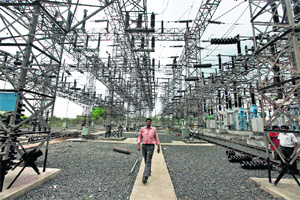
When the first electric train appeared in India in 1925,construction of Thakruli powerhouse began; today,it serves the railways as a transmission station
Some buildings dont die after the purpose for which they were set up is no longer served. They are just transformed. Some virtually turn into monuments.

This can be said of the peaked-roof Thakurli Powerhouse,its exhaust towers a reminder of its days of glory,when it used to power electric engines of suburban trains.
It coughed out its last bit of energy some 23 years back,but for the few railway staff who still have their office there,the imposing structure evokes memories,many good,some bad. Today it serves the railways as a transmission station.
Some 45 years after the electric train was invented,when electric train lines were starting to expand over the world,the first electric train appeared in Colonial Bombay in early 1925,on the Harbour Line. A need was felt for a power station and construction of Thakurli Powerhouse began in 1925.
The coal-based plant was commissioned in 1929,as documents found in the basement cellars show. Maps and minutes of important meetings of British and Indian officials are still there.
Along with the building,DC substations were installed at the south-east and north-east stations of Mumbai. It continued to generate power to run suburban trains but later,its decline started.
The powerhouse,which once touched a generation of 150 MW,started losing steam. Generation finally fell to 25 MW.
The irony is that once this was a generating unit and supplied power to the railways and to Tata Power but today it gets power from Tata and transmits it to suburban sections of Central Railway and to Igatpuri,Pune and Khadki. We have the same infrastructure but it is being used for receiving power from Tata, says Sanjay Deoraj,Section Engineer of the power house.
Earlier 1,500 people worked at the station,today there are only 38.
In the mid-80s,conflicts between trade unions and the administration over maintenance issues disrupted functioning of the administration.
The plant was centrally air-conditioned in 1986 by a London firm. And then came the gruesome accident that stopped everything. On December 15,1987,eight workers were killed in a freak accident.
Vijay Maid,a typist who still works here,recalls,I cannot forget that incident,when 8 workers were burnt badly when a tube of a boiler burst… Though we rushed them to the hospital immediately,they were declared dead on arrival, he says.
By an order of the Railway Board dated April 11,1988,on the instruction of then Railway Minister Madhavrao Scindia,the power house was shut down.
The building is still going strong. The red brick walls are still in good condition and the equipment in the power generating unit refuses to decay. British architects made it in such a way that it was never flooded,even at the time when entire Mumbai was flooded on July 26,2005, said Deoraj.
Today,a modern touch is visible in some parts of the old building; the control room for instance.
A small kutcha temple of Trimurti on the premises has been converted into a pucca temple.
The building is now a switching yard connected to two incoming feeders of Tata Power and four transmission lines supplying power to transaction substations and OHE of railways.


Stay updated with the latest - Click here to follow us on Instagram


