This is an archive article published on September 21, 2024
50 Army officers join 150 forest officials to look for leopard that killed 3 in Udaipur
Days after 3 people were killed in separate attacks, the forest officials and the Army are scouring Udaipur’s forests to capture the animal behind the attack. Comes after protests over the attacks.
Written by Parul Kulshrestha
Jaipur | Updated: September 21, 2024 06:35 PM IST
3 min read
Whatsapp
twitter
Facebook
Reddit
Forest officials said the Indian Army was using drone technology to help track down the leopard's pug marks. (Express)
As pressure mounts to capture the leopard responsible for a spate of killings around the forests of Udaipur, the Rajasthan Forest Department has now enlisted the help of the Indian Army in the search.
According to forest officials, 50 officers of the Indian Army have now joined 150 forest officials to scour the forests and capture the leopard responsible for the killing of three people earlier this week.
Forest officials said the Indian Army was using drone technology to help track down the leopard’s pug marks. A forest official also admitted to The Indian Express that efforts to track down the leopard had proved to be challenging.
“The jungle is very dense and during monsoon the bushes make it difficult to see anything or walk. And so, tracing the leopard has become difficult for us despite our best efforts. We called the Army to help the administration and they have been working since morning,” one official said.
The forest department sources said since the latest attacks were all around the same general area, a single animal could be behind them. (Express)
As The Indian Express previously reported, a 16-year-old girl from Undithal village, a 51-year-old man from Bhevwadiya village and a woman from Umariya village were killed in three separate attacks on Thursday and Friday.
The body of the woman, who had gone into the woods to collect firewood, was eventually found some 3 km from her village. The attacks were all within a 5 km radius and sparked protests in the area.
This takes the number of those who died in such attacks since June to six.
Story continues below this ad
The forest department sources said since the latest attacks were all around the same general area, a single animal could be behind them.
The department has yet to declare the leopard a man-eater. However, according to sources, the Udaipur Forest Range had sought permission to shoot down the animal from the office of the Chief Wildlife Warden in Jaipur and had been turned down.
Udaipur Divisional Forest Officer Mukesh Saini admitted that leopard attacks had gone up this year and said that the department was working to capture the animals.
“An important reason behind these attacks is that the prey base in the Udaipur range has declined. There are around 200 leopards in this range but the prey isn’t easily available. Moreover, growing population and development projects such as roads is also impacting the leopard’s movement. We’re trying to find out how these man-animal conflicts can be avoided,” he had said.
Story continues below this ad
However, the growing number of attacks have caused a panic among local villagers, with protesters blocking the Gogunda-Udaipur highway for three hours Friday to demand the immediate capture of the animals.
Parul Kulshrestha is a Principal Correspondent for The Indian Express, based in Rajasthan. A lawyer turned journalist, she brings a unique cross-disciplinary perspective to her reporting, blending legal precision with deep social inquiry to cover one of India's most culturally and politically vibrant regions.
Expertise and Experience
Legal-Journalistic Synergy: Parul’s transition from a legal background to mainstream journalism provides her with a distinct advantage in interpreting policy, legislation, and judicial impacts. This expertise allows her to "read between the lines" of government orders and court rulings affecting the public.
Diverse Beat: With years of experience across both mainstream newsrooms and independent journalism, she has built high-level authority in several critical areas:
Nomadic Tribes & Marginalized Communities: She is recognized for her sensitive and in-depth reporting on the struggles and rights of Rajasthan's nomadic populations, often giving a voice to those outside the traditional political spotlight.
Gender & Social Justice: Parul focuses on the intersection of law and gender, covering issues ranging from women’s safety and reproductive rights to the socio-economic empowerment of rural women.
Environmental & Political Reporting: She tracks Rajasthan’s complex political landscape—including electoral shifts and bureaucratic changes—alongside critical environmental concerns like water scarcity and land use.
Academic & Professional Pedigree: Her background as a lawyer, combined with her rise to the rank of Principal Correspondent at a national broadsheet, establishes her as a senior voice in the media landscape. ... Read More


 3 min read


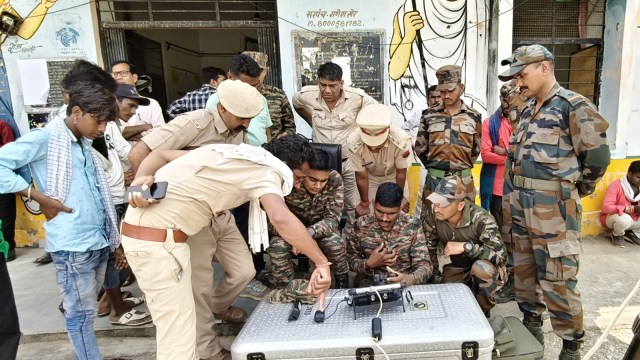

 The forest department sources said since the latest attacks were all around the same general area, a single animal could be behind them. (Express)