Premium
This is an archive article published on November 22, 2024

After SC asks Centre to procure farm fire data from geostationary satellites, Isro to enhance algorithms

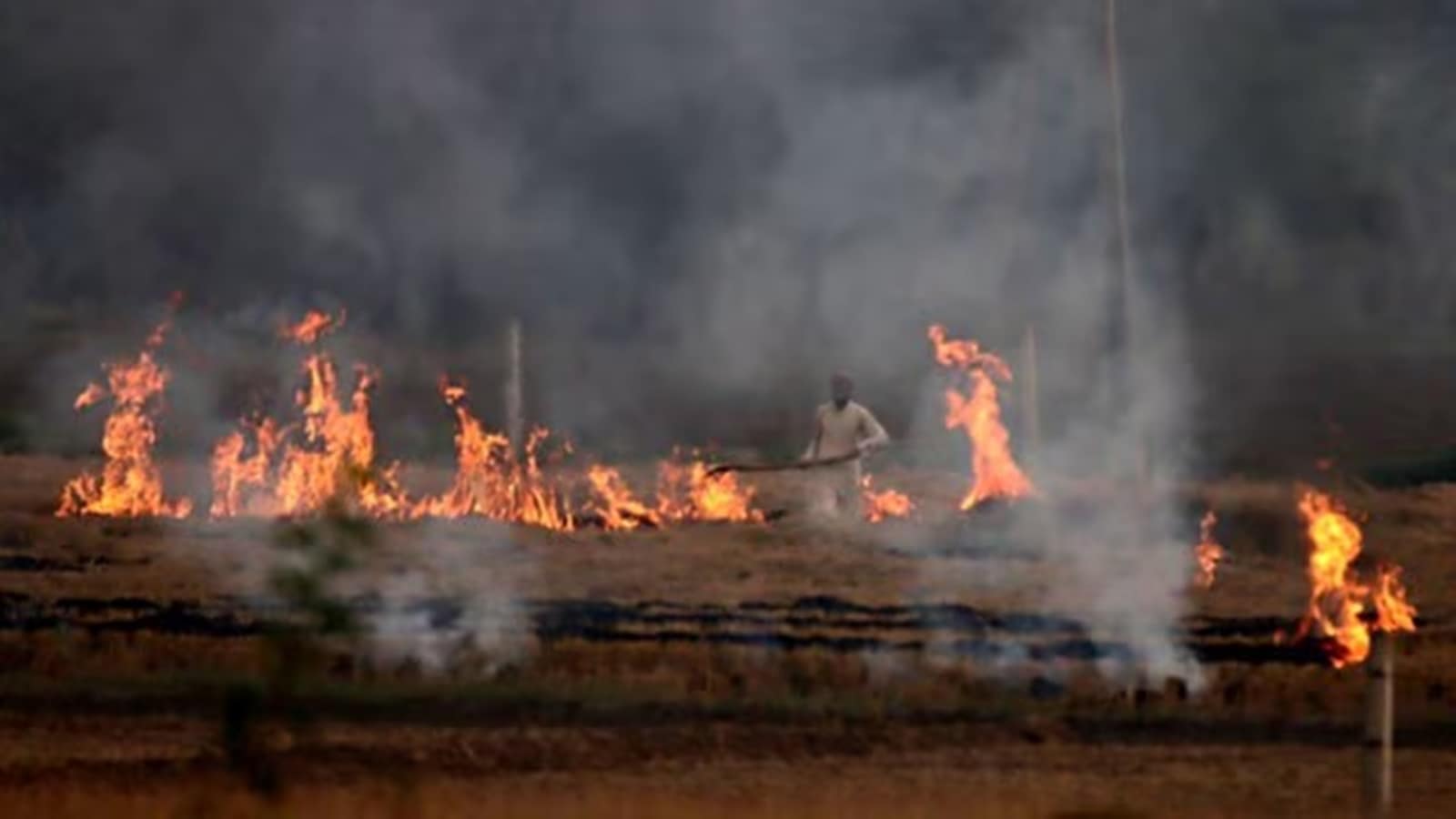
The Supreme Court was informed that there could be an undercount in the data on farm fires collected through the polar-orbiting Nasa satellite.

farm firesUnderlining the importance of determining the total burnt area to calculate the extent of stubble burning that has taken place in states like Punjab and Haryana, which are contributing to air pollution in the Capital, the court sought data for the same.

The Indian Space Research Organisation (Isro) has told the Commission for Air Quality Management in NCR and Adjoining Areas (CAQM) that farm fire data currently extracted from different satellites may not be present ground reality, and that it will develop in-house algorithms to analyse foreign satellite data to get accurate counts.

The space agency’s response to farm fires in the country was shared by CAQM with the Supreme Court in an affidavit Thursday after the apex court’s latest directions to procure data from geostationary satellites instead of from Nasa’s polar-orbiting satellites and to make it available for states to take prompt action.

On Monday, the Supreme Court was informed that there could be an undercount in the data on farm fires collected through the polar-orbiting Nasa satellite. A senior Nasa scientist’s recent claim on X that farmers are evading satellite detection due to its limited capacity to capture farm fire events between 10.30 am and 1.30 pm was brought to the attention of the apex body. The apex court was also informed that data from GEO-KOMPSAT 2A, the geostationary Korean satellite, had picked up fires after Nasa’s polar-orbiting had passed, raising questions over the count of farm fires.

In its letter to CAQM, Isro has said the Supreme Court’s concerns are valid, and that efforts are on to get an accurate estimate. The pollution control and monitoring body has submitted Isro’s response in the affidavit it submitted to the Supreme Court.

Speaking about the different satellites available in the afternoon or evening, the affidavit said INSAT-3DR, Geo-Kompsat 2-AMI, Meteosat-9, Feng Yun-4A/4B, HIMAWARI-8 from India, South Korea, European Union, China and Japan, respectively, are inadequate to give an accurate farm fire count.

Government agencies, including the Indian Agricultural Research Institute (IARI) and various state remote sensing centres, at present, use data from the Nasa satellites Suomi NPP, Terra MODIS, and Aqua MODIS.

However, Isro said using data from the available satellites is still insufficient. Coarse-resolution, the need for the development of specific algorithms to process the raw data, lack of validation over India, and lack of evaluation of the accuracy of the data and its analysis were cited as as reasons by the space agency for its reluctance to use the satellites’ data.

Story continues below this ad

“Data processing and fire detection algorithms for foreign geostationary satellite data are developed by respective agencies and are not validated over India…The active fire products from current geostationary platforms are sub-optimal for operational use for crop fire monitoring over Punjab and Haryana regions,” said Isro.

It said INSAT-3DR, the Indian satellite with a 30-minute observation frequency, cannot be used to accurately detect farm fire counts yet, because the images generated by it are of coarser resolution compared to Aqua MODIS. The number of fires, hence, detected using this satellite is far less, especially in Punjab and Haryana. Isro said it may upgrade the fire algorithms of the latest INSAT-3DS within six weeks.

The space agency has said it will complete the data evaluation of Meteosat-9 and GK2 satellites in a month, and that it is yet to evaluate the usability of data set from another two sets of satellites (GK-2 and FY-2G/2H satellites) over the Indian region.

“In-house development of algorithms for analysing the satellite data from foreign satellites for fire products generation and validation over Area of Interest requires considerable efforts. However, ISRO will continue to work on it,” the space agency said.

Sophiya Mathew is a Correspondent at The Indian Express, based in New Delhi. She joined the Delhi bureau in 2024, and has specialization in Integrated Multimedia Journalism from the Asian College of Journalism (ACJ), Chennai. Professional Background Core Beats: Her reporting is primarily focused on the Environment and Education. Specialization: She has gained recognition for her ground-level reporting on the Yamuna floodplains and the socio-economic challenges faced by those living on its banks. She also focuses on the disparities in Delhi's education system, ranging from elite private schools to government institutions and refugee education. Recent Notable Articles (December 2025) Her recent work has been heavily centered on Delhi's severe winter pollution crisis and the government's regulatory responses: 1. The Air Pollution Crisis "A tale of two cities: Delhi govt schools choke in bad air, private classrooms set up air filters" (Dec 20, 2025): A high-impact feature contrasting the "Clean Air Bubbles" in elite schools with the reality of government school students who are exposed to an equivalent of 17 cigarettes a day due to outdoor exposure. "Delhi sees season's worst air day, second worst December AQI in nearly a decade" (Dec 15, 2025): An analytical report on the meteorological patterns trapping pollutants in the NCR. "Delhi bans non-BS VI vehicles from outside: Why curbing vehicular pollution is key" (Dec 17, 2025): Explaining the science behind targeting specific vehicle vintages to lower particulate matter. 2. Enforcement & Regulations "No fuel at pumps in Delhi without valid PUC certificate from December 18" (Dec 17, 2025): Breaking the news on the environment ministry's strict "No PUC, No Fuel" policy. 3. Education Policy "Law to regulate school fee in Delhi risks becoming procedural, say parents" (Dec 13, 2025): Investigating the loopholes in the new Delhi School Education (Transparency in Fixation and Regulation of Fees) Bill, 2025. "Monsoon Session: Private school fee regulation Bill cleared after four-hour debate" (Aug 9, 2025): Covering the legislative passage of the controversial fee hike regulation. Signature Style Sophiya is known for her observational depth. Her reporting often includes vivid details from school corridors, hospital waitlists, or the banks of the Yamuna to illustrate how policy failures affect the city's most vulnerable residents. She is a frequent expert guest on the 3 Things podcast, where she explains the complexities of Delhi’s environmental laws. X (Twitter): @SophiyaMathew1 ... Read More

Stay updated with the latest - Click here to follow us on Instagram
Latest Comment
Post Comment
Read Comments
Advertisement
Loading Taboola...
Advertisement