Stay updated with the latest - Click here to follow us on Instagram

Journalism of Courage
 3 min read


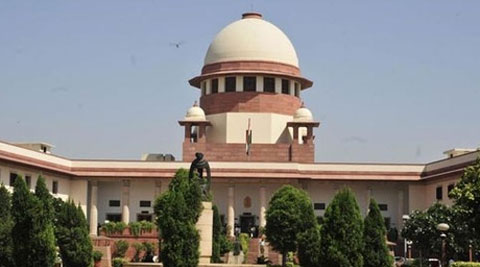 Admitting an application for directions, a bench led by Chief Justice P Sathasivam sought replies from the Centre, Uttar Pradesh and Haryana.
The Supreme Court on Tuesday agreed to examine a plea for maintaining a minimum water flow in Yamuna and Ganga so as to ensure adequate drinking water to residents in Delhi.
Admitting an application for directions, a bench led by Chief Justice P Sathasivam sought replies from the Centre, Uttar Pradesh and Haryana.
The court also issued notices to Attorney General G E Vahanvati and Uttarakhand government on an application filed by PIL petitioner Commander Sureshwar D Sinha, who wanted a specific order to expedite commissioning of water treatment plants here.
Advocate Simar Suri, appearing for the petitioner, maintained that it was a matter of grave concern that despite slew of directions by the apex court in the past, residents of Delhi were deprived of sufficient clean water for drinking.
“Since Delhi is the national capital, it tends to absorb migrants from all states. Therefore, it must be given priority when it comes to provision of water to its residents. It is also high time that the neighbouring states join hands in this endeavour,” she added.
Referring to Uttarakhand flash-floods in June 2013, she also urged the court to give directions for the constitution of a high-powered technical committee for making a critical assessment of existing as well as proposed hydro-projects in the Himalayas and to suggest measures to prevent future disasters.
“It is extremely important that measures that reduce wastage and help us conserve water for public use be taken expeditiously. For this purpose, the Munak Link Canal and the water treatment plants at Okhla, Bawana and Dwarka must be commissioned at the earliest. It is also important that the minimum flow of 352 cusecs is maintained in the Yamuna, as ordered by this Court on August 17, 1999,” the plea stated.
The application also asked for orders to the riparian states to ensure availability of minimum flow of 352 cusecs/ 10 cumecs throughout Yamuna and at least 1,400 cusecs in river Ganga in its stretch from Farukkhabad to Kanpur for maintaining river ecology.
The counsel claimed despite commissioning of 19 sewage treatment plants, water quality in Yamuna has not increased as these plants were still spewing untreated water to the river.
The petitioner also pointed out that it was the most important that the Munak Link Canal, which is ready for operation, be commissioned by Haryana at the earliest to ensure availability of water in the region of Delhi where its per capita availability was depleting rapidly.
The overall population density of Delhi has increased from 9,340 persons per sq km in 2001 to 11,297 persons per sq km in 2011 which is the highest as compared to all the other states and Union Territories, she claimed, adding the drinking water requirement must be given priority over other needs as held by the apex court as well as recognised in National Water Policy, 2012.
Stay updated with the latest - Click here to follow us on Instagram