Journalism of Courage



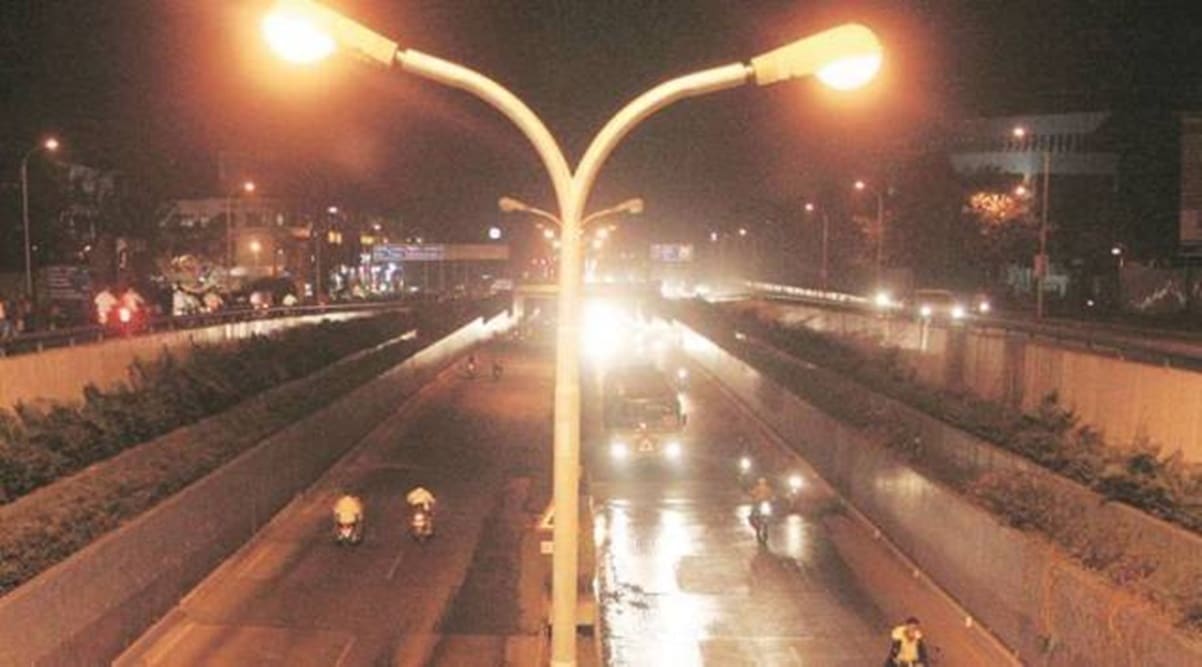 As per data provided by the PWD, there are nearly 90,000 street lights under its jurisdiction. Of these, it has converted 30,000 into smart LED ones in the first phase. (Representational/File)
 In a bid to rid the city of dark spots, keep a tab on functioning streetlights and save power, the Public Works Department (PWD) is planning to replace existing lights as well as old halogen lights with smart LED ones across the city.
Chief Minister Arvind Kejriwal granted in-principle approval to the Smart Street Light Policy Tuesday, which was presented by Cabinet Minister Atishi before the CM during a high-level meeting.
Expressing concern about the rising number of crimes against women in recent times, the CM assured that the Delhi government is taking all necessary measures within its jurisdiction to prevent such crimes. The implementation of the scheme is part of these efforts, as it will eradicate dark spots and ensure women’s safety, said officials.
Atishi emphasised that LED smart street lights will be installed throughout Delhi.
In January, The Indian Express had run a series of reports — Delhi in the dark — to highlight lack of illumination in various corners of the capital, following the Kanjhawala hit-and-run case. Few weeks later, L-G VK Saxena directed government departments to illuminate over 1,400 dark spots.
As per data provided by the PWD, there are nearly 90,000 street lights under its jurisdiction. Of these, it has converted 30,000 into smart LED ones in the first phase.
According to officials, the street lights will have smart sensors while the light poles will be geo-tagged using a centralised software system. This, officials said, will help identify non-functional lights and undertake immediate repairs quickly. They will be maintained under an Energy Service Company (ESCO) model.
A control and command centre will be set up to monitor the lights — their operational status, power consumption, detecting faults, lighting intensity, history of data-logging GIS integrations etc.
“If a streetlight is not working at any place or if the engineer receives a complaint regarding non-functioning streetlights, they can get it repaired immediately,” said the official.
Officials said they conducted a “joint survey before awarding work to fix the energy baseline and assess defects in the system. Besides, the department rectifies defects (such as missing poles, defective cables, and damaged pole junction box covers) as a one-time measure before handing it over to the ESCO agency”.
The bidder must achieve and maintain the required lux level (light level intensity) at 30 and must operate and maintain the streetlight network for seven years. Each LED fitting/pole will have the PWD logo embossed on the front along with a unique identification number, said the official.
Officials also added, “Third-party energy auditors will be hired for monitoring and verification. ESCROW account to be opened for making payment to the bidder.”
Upfront investment will be made by the ESCO agency while the government will bear 50% of maintenance cost with the concessionaire.
The PWD will pay the concessionaire on a monthly basis. In case of any deficiency in performance, a penalty will be imposed on the concessionaire. Further, a grievances redressal system, helpline number and mobile app will also be introduced.

 3 min read