4 min read
Stay updated with the latest - Click here to follow us on Instagram

Journalism of Courage



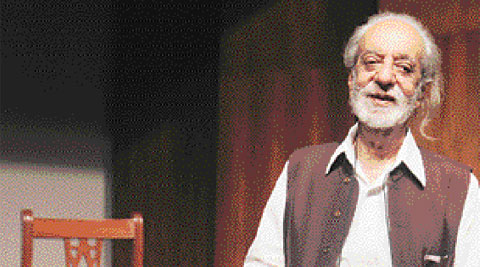 Jussawalla is at his candid best when talking about the book, and preserving literature.
It took eight years — amidst publishing hurdles and sorting through a compendium of 47 years worth of words — for editor Jerry Pinto to put together the fabulous anthology of Adil Jussawalla’s work, Maps for a Mortal Moon. Writing essays and columns for various publications through his long and illustrious career, the book captures Jussawalla’s writing on various subjects at its poetic best. From spending time with Nissim Ezekial during his Alzheimer days to a surreal travel piece that finds commonalities between Italy and Mumbai — the range and quality of work is a testament to why he is considered India’s greatest living writer. Jussawalla is at his candid best when talking about the book, and preserving literature.
You seemed surprised by the response the book received. Didn’t you expect it?
Well, much of this work was written a long time ago. One has lived with these pieces, not that I like to go back and read them. There are things that happen, and then there are things you said a long time ago that one does not believe in anymore. It’s always nice when there is a new set of people who come across the work and appreciate it.
Was there a process of choosing these essays?
Nothing is chronological in the book. I realised that given the fact that I have written on many different subjects, the main problem, was where to fit the pieces in and so we divided it into different sections. It was difficult for me to revisit my work. I came across many pieces that I am not very proud of. Unfortunately, things do get archived, and someday people will stumble across these works.
Jerry and I were debating a piece called Artists Warming their Arses on the Edge of a Volcano for the anthology. It was a polemical piece I had written in ’71 when I was fresh out of England. In it, I wrote against abstract and bourgeois art. But, I have always been attracted to abstract art.
In a country that does not care about its heritage, how worse off is our literary history?
We have to develop a publishing industry, which keeps certain writers in print because a writer out of print is a dead writer. My early poetry books have been out of print for years. It’s not just me. We need to make the public aware that a book might be a classic and needs to be re-printed. What is it about us that allows us not to conserve things.
Do you think the internet opens up possibilities for both poets and long-format writing, both of which seem to be disappearing from the journalistic world?
Publishing on the internet and blogs is a good thing, although I’m not really sure how many people read other’s blogs. Somebody compared blogging to poetry, saying everyone wants to write but no one wants to read anyone else’s work. Even for the best of writing, the comments seem to be somewhat thoughtless. Like the piece in the book Boycott, people want to do things as long it it doesn’t bother them. The internet gives freedom, but few want to go through the pains of doing anything.
Do you think you might attempt a novel again?
Not a novel. There is a possibility that some of my short stories may get published. I wrote many short stories but I destroyed them — they were really not very good. But two or three of them, coupled with a few others, may see the light of day. I am really anxious to get back to poetry. I’m still stuck working for the next book of selected works. And I don’t think I have the stamina anymore to write pieces for a magazine or novel.
Stay updated with the latest - Click here to follow us on Instagram