Premium

Mission Mathematics expanded to classes 6 to 10 in Delhi Government schools

The Directorate of Education (DoE) has directed Delhi Government schools to analyse Class 10 mid-term performance and identify learning gaps accordingl

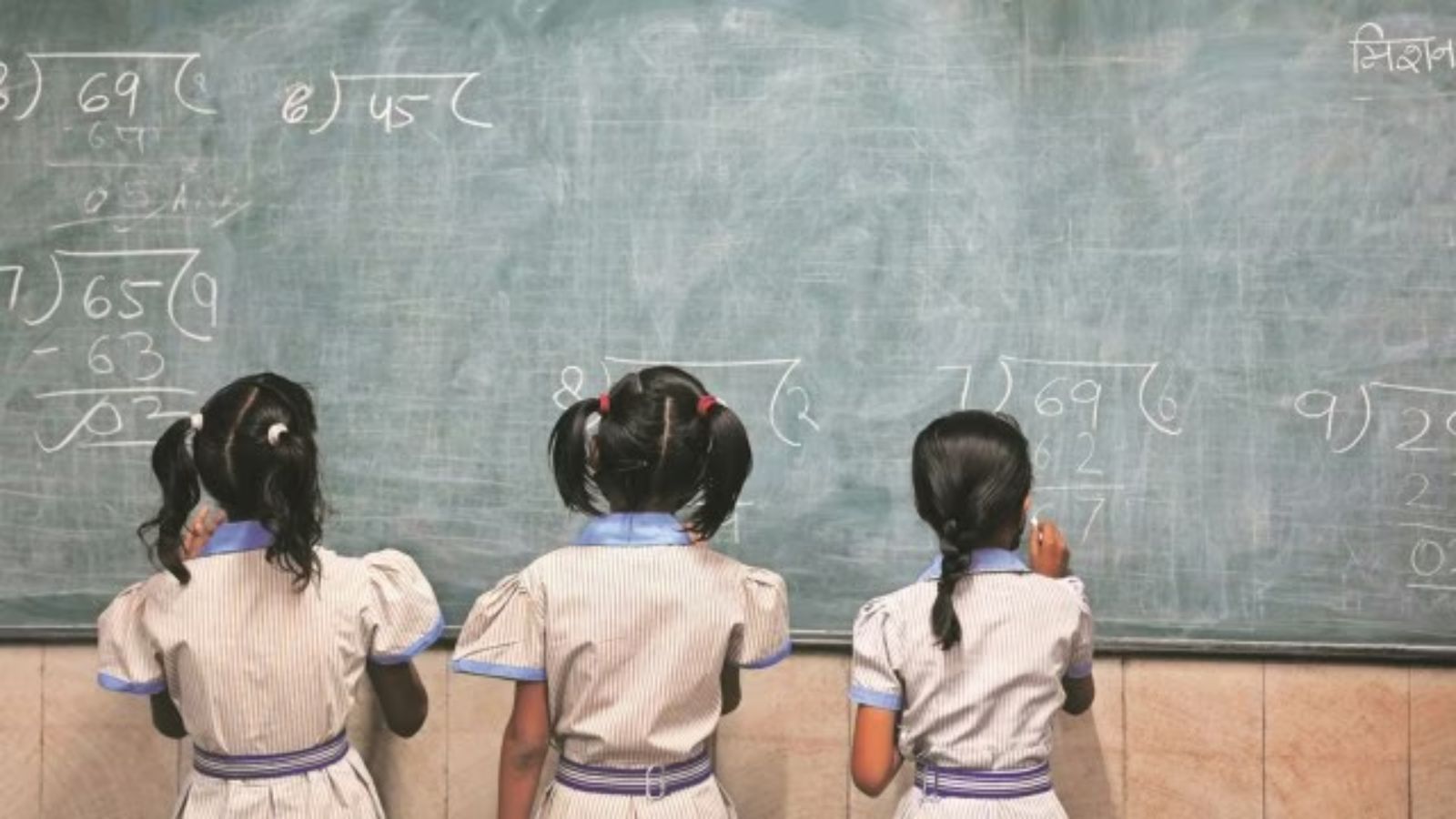
DelhiFor Classes 6, 9, and 10, students must have scored at least 50 per cent with grace marks in Mathematics or passed via compartment exams. ( Express Photo )

The Delhi Government’s “Mission Mathematics and Special Enrichment Classes” initiative has now been extended to students of classes 6 to 10 for the 2025–26 academic session to strengthen maths learning and address learning gaps.

The Directorate of Education (DoE) made the announcement in a departmental circular issued on Monday, citing improved performance in annual assessments and the Central Board of Secondary Education (CBSE) board examination results since the initiative began in 2022.

Launched in response to poor mathematics performance in board exams, the programme initially focused on classes 8 to 10. It introduced activity-based worksheets, “Question of the Day” exercises, and assessment tools to foster “joyful and concept-driven learning”. These resources were expanded to Classes 6 to 10 in June 2024 and will now be shared digitally with schools for all targeted classes —three times a week — starting July 7.

To further personalise support, DoE has directed schools to analyse Class 10 mid-term performance and identify learning gaps accordingly. A centralised tracking module is also being developed to monitor attendance and academic progress in Mathematics.

Eligibility and implementation

Students for the Special Mathematics Enrichment (SME) classes are selected based on their prior academic performance. For Classes 6, 9, and 10, students must have scored at least 50 per cent with grace marks in Mathematics or passed via compartment exams. For Classes 7 and 8, students scoring 40 per cent or below in the previous year are eligible.

In both cases, subject teachers may recommend additional students based on classroom performance.

SME classes will be conducted in small groups of 20–25 students, before or after school hours. Schools have been allowed to appoint resource persons for these sessions, with dedicated funds already allocated, as per the circular.

Story continues below this ad

Teachers will have to maintain detailed records, including a separate notebook for each student. They have also been advised to use curriculum mapping to align Class 10 content with foundational gaps from previous years.

Maths committee

To oversee the mission’s implementation, a Zonal Mission Mathematics (ZMM) Committee will be formed in each education zone.

Each committee will comprise a principal or vice-principal with a Mathematics background, two to three TGT (Maths) teachers from government schools. The committee will be chaired by the deputy director of education or DDE (Zone) and must report progress to the DDE (District) every fortnight. Schools must submit committee details to the Exam Branch by June 29.

At the school level, a regular TGT Mathematics teacher will serve as the School Nodal In-Charge for Mission Mathematics, responsible for communication, content-sharing, and maintaining records.

Training the teachers

Story continues below this ad

DoE, with support from the State Council of Education Research and Training (SCERT), will also conduct training sessions for Maths teachers focused on experiential and activity-based learning. A series of Teaching and Instructional Material (TIM) development competitions—similar to previous years—will be held for teachers across Primary to Senior Secondary levels. These will begin at the school level in August and move to the district level by December.

DDEs (district and zone) have been instructed to inspect implementation and resource utilisation, while DDE (Inspection) teams will monitor programme progress during scheduled school visits.

Sophiya Mathew is a Correspondent at The Indian Express, based in New Delhi. She joined the Delhi bureau in 2024, and has specialization in Integrated Multimedia Journalism from the Asian College of Journalism (ACJ), Chennai. Professional Background Core Beats: Her reporting is primarily focused on the Environment and Education. Specialization: She has gained recognition for her ground-level reporting on the Yamuna floodplains and the socio-economic challenges faced by those living on its banks. She also focuses on the disparities in Delhi's education system, ranging from elite private schools to government institutions and refugee education. Recent Notable Articles (December 2025) Her recent work has been heavily centered on Delhi's severe winter pollution crisis and the government's regulatory responses: 1. The Air Pollution Crisis "A tale of two cities: Delhi govt schools choke in bad air, private classrooms set up air filters" (Dec 20, 2025): A high-impact feature contrasting the "Clean Air Bubbles" in elite schools with the reality of government school students who are exposed to an equivalent of 17 cigarettes a day due to outdoor exposure. "Delhi sees season's worst air day, second worst December AQI in nearly a decade" (Dec 15, 2025): An analytical report on the meteorological patterns trapping pollutants in the NCR. "Delhi bans non-BS VI vehicles from outside: Why curbing vehicular pollution is key" (Dec 17, 2025): Explaining the science behind targeting specific vehicle vintages to lower particulate matter. 2. Enforcement & Regulations "No fuel at pumps in Delhi without valid PUC certificate from December 18" (Dec 17, 2025): Breaking the news on the environment ministry's strict "No PUC, No Fuel" policy. 3. Education Policy "Law to regulate school fee in Delhi risks becoming procedural, say parents" (Dec 13, 2025): Investigating the loopholes in the new Delhi School Education (Transparency in Fixation and Regulation of Fees) Bill, 2025. "Monsoon Session: Private school fee regulation Bill cleared after four-hour debate" (Aug 9, 2025): Covering the legislative passage of the controversial fee hike regulation. Signature Style Sophiya is known for her observational depth. Her reporting often includes vivid details from school corridors, hospital waitlists, or the banks of the Yamuna to illustrate how policy failures affect the city's most vulnerable residents. She is a frequent expert guest on the 3 Things podcast, where she explains the complexities of Delhi’s environmental laws. X (Twitter): @SophiyaMathew1 ... Read More

Stay updated with the latest - Click here to follow us on Instagram

Latest Comment
Post Comment
Read Comments
Advertisement
Loading Taboola...
Advertisement