Premium
This is an archive article published on December 18, 2015

Delhi: Every 3 days, two children are raped

Of 2,015 rape and sexual assault cases registered this year, 892 targeted those below 18 years old.

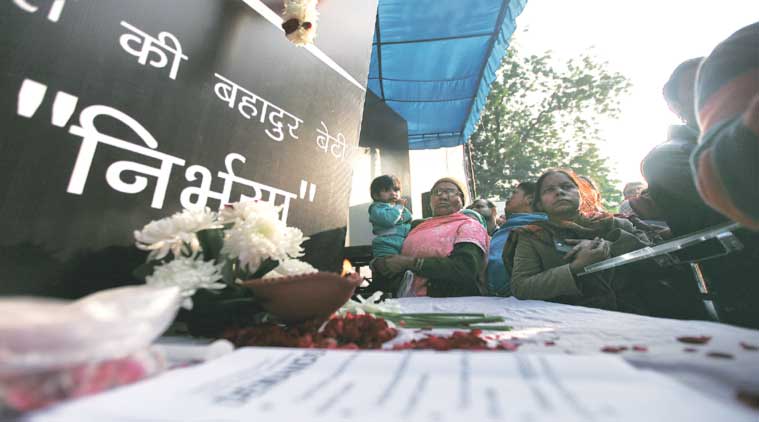
Hundreds gathered at Jantar Mantar Wednesday to remember the December 16 gangrape victim. (Express Photo by: Tashi Tobgyal) Hundreds gathered at Jantar Mantar Wednesday to remember the December 16 gangrape victim. (Express Photo by: Tashi Tobgyal)

THREE YEARS after the December 16 gangrape and murder of a 23-year-old woman shamed the capital, a series of numbers continues to haunt its police. They show that rapes and sexual assault against minors are on the rise in Delhi.

Consider these:

* Of the 2,015 cases of rape and sexual assault registered this year, 892 targeted those below 18 years old — in other words, 55% of those targeted were minors. This figure was 1,004 out of 2,069 (51%) in 2014, and 757 out of 1,571 (51%) in 2013.

* In the first 11 months of 2015, police registered 235 cases of alleged rape of children aged between two and 12 years. Police records also contain a smaller set of numbers that leads to a more chilling conclusion: children between two and seven years of age remain the most vulnerable.

* Out of the 235 cases of alleged rape of children aged between two and 12 years reported this year, 119 targeted children in the two-seven age group. In 116 cases, the targets were children between seven and twelve years of age. In 11 cases, the victims were children under the age of two.

Senior police officers told The Indian Express that in a majority of these cases, the alleged rape took place within the premises of the victims’ homes or neighbourhoods or in the slum clusters.

Police sources said in at least 35 of the 235 cases this year, the accused were the victims’ fathers or neighbours.

“Most of the cases reported this year are from the areas which have a low economic profile. Here the minor girls are most vulnerable,” said Deepak Mishra, Special Commissioner of Police (law and order).

Story continues below this ad

Advocate Shubhra Mendiratta, counsel for the Delhi Commission for Women (DCW), who is currently handling a case involving the alleged rape of a toddler, said there should be “a collective effort from the government and police to identify the root cause and prevent such crimes”.

Asked to suggest solutions, Mendiratta said: “The government has to create more crèches and deploy more women patrolling officers to stop such crimes.”

The courts handling such cases have also raised the alarm over how proceedings get derailed by witnesses who come under pressure to turn hostile.

In October, a designated court hearing a case under the Protection Of Children from Sexual Offences Act (POCSO) took a serious view of the manner in which minor victims were turning hostile in cases of “incest rape”.

Story continues below this ad

It also directed the DCW’s rape crisis cell to arrange “specialised psychological counselling” and rehabilitation for the victim — in this case a 14-year-old girl— who was being pressured by her mother to turn hostile.

The victim, who was sexually assaulted eight times by her stepfather, now stays at Aapno Ghar, the government’s rehabilitation centre.

However, such court interventions have their own limitations, said Mendiratta.

“There is no particular mechanism for the protection of child victims. If the minor complains, he or she does not automatically get protection. You have such high rate of acquittals because these victims turn hostile under the pressure from family. Rehabilitation and victim protection is key. Only then will you have high rate of conviction, which would act as a deterrent and reduce the crime rate,” she said.

Story continues below this ad

This is what the Justice Verma committee, set up in the wake of the December 16 gangrape and murder, had to say: “We note, with much despair, that in many cases a child is subjected to sexual abuse in his/ her home. We are also deeply concerned at the failure of the state to prevent and prosecute cases of child abuse.”

Kaunain Sheriff M is an award-winning investigative journalist and the National Health Editor at The Indian Express. He is the author of Johnson & Johnson Files: The Indian Secrets of a Global Giant, an investigation into one of the world’s most powerful pharmaceutical companies. With over a decade of experience, Kaunain brings deep expertise in three areas of investigative journalism: law, health, and data. He currently leads The Indian Express newsroom’s in-depth coverage of health. His work has earned some of the most prestigious honours in journalism, including the Ramnath Goenka Award for Excellence in Journalism, the Society of Publishers in Asia (SOPA) Award, and the Mumbai Press Club’s Red Ink Award. Kaunain has also collaborated on major global investigations. He was part of the Implant Files project with the International Consortium of Investigative Journalists (ICIJ), which exposed malpractices in the medical device industry across the world. He also contributed to an international investigation that uncovered how a Chinese big-data firm was monitoring thousands of prominent Indian individuals and institutions in real time. Over the years, he has reported on several high-profile criminal trials, including the Hashimpura massacre, the 2G spectrum scam, and the coal block allocation case. Within The Indian Express, he has been honoured three times with the Indian Express Excellence Award for his investigations—on the anti-Sikh riots, the Vyapam exam scam, and the abuse of the National Security Act in Uttar Pradesh. ... Read More

Stay updated with the latest - Click here to follow us on Instagram

Latest Comment
Post Comment
Read Comments
Advertisement
Loading Taboola...
Advertisement