3 min read
Stay updated with the latest - Click here to follow us on Instagram

Journalism of Courage



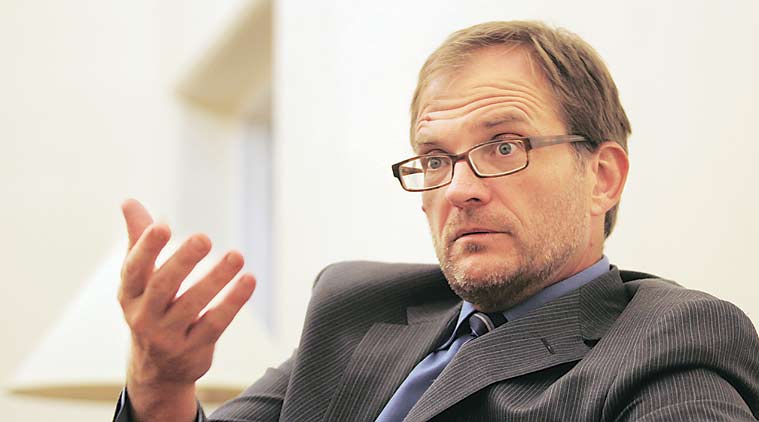 Matt Petersen, chief sustainability officer of Los Angeles, says scientists, research systems and civil society can help create political will for changes in air quality. (Source: Express Photo by Anil Sharma)
Political will is crucial for active changes in air quality, and civil society and scientists need to work to create this political will, Matt Petersen, chief sustainability officer of Los Angeles, told The Indian Express Thursday.
From one of the most polluted metropolises in the US, LA has been through many of the problems with air pollution that Delhi is facing, and taken targeted steps that led to “drastic improvements”, Petersen said. “Political will is crucial, political will has to be there… without political will it is hard to get things done. But scientists, research systems and civil society can help create this political will.”
Petersen said while the “range” may not be comparable to Delhi, the issues in air quality between LA and Delhi were the same. “We face the same problems, agricultural burning around cities, dust and vehicular emissions. We have tackled these problems head on, whether it was introducing strict emission norms, bringing in cleaner fuel, and starting regular street sweeping. We went region by region with the whole system working together to inform people. I strongly believe that people respond when you tell them the right things to do,” he added.
[related-post]
Petersen, who was appointed LA’s first chief sustainability officer in 2013, said the city was experimenting with neighbourhood scale air quality monitoring to build more community awareness. He said while LA was still exceeding federal norms of air quality on many days, its major problems were in the areas of nitrogen dioxide and, partly, particulates.
Asked about smog alert system to predict poor air quality days, which is still to be implemented in India, he said LA had successfully tried such a system. “I do not see why such a system cannot be introduced here. Though we do not have a daily alert system anymore, the data is stringently monitored… We had such a system in place earlier where daily emergency measures were taken.”
Asked about the recent Supreme Court ruling on an environmental cess to disincentivise non-destined trucks from entering Delhi, a policy that is still to be be implemented, Petersen said LA had dealt with the problem by intensive monitoring of vehicles. “We do not have such a system, but we created incentives for people to use electric cars by creating the infrastructure for it. We also monitor overloading stringently.”
Delhi and governments of neighbouring states such as Haryana and Uttar Pradesh are still to decide on a long delayed proposal to set up weighing machines at toll booths. With particulate matter levels escalating to the “very poor” range in the last week in many monitoring stations, the only steps taken by the Delhi government include speaking with neighbouring states to regulate crop burning, and promises to set up billboards at prominent locations. Environment secretary Ashwani Kumar said Wednesday closing schools on poor air quality days was “not a practical step”.
Stay updated with the latest - Click here to follow us on Instagram