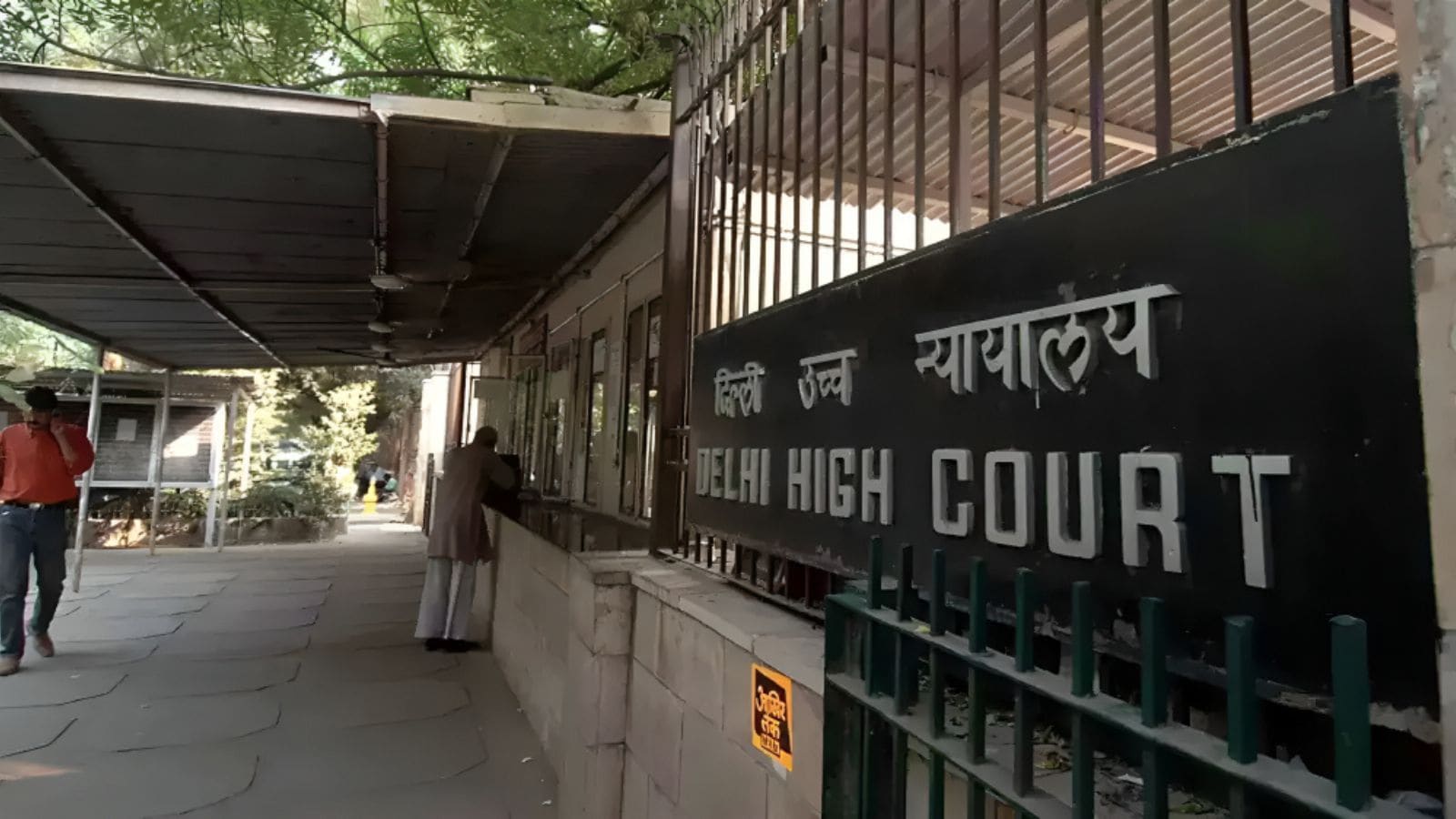
Delhi HC clarifies Darya Khan protected area over 1.25 acres and not 14 acres
Darya Khan Tomb is an Archaeological Survey of India-protected monument and had been a subject of dispute over a project of redevelopment of Kidwai Nagar (East).
Written by Sohini Ghosh
New Delhi | February 1, 2025 03:50 PM IST
4 min read
Whatsapp
twitter
Facebook
Reddit
The data has been provided by the Delhi prison administration after a court order sought the details in a bunch of petitions by 12 convicts of the Hashimpura massacre
The Delhi High Court recently clarified that the Lodi-era monument of Darya Khan Tomb in East Kidwai Nagar has a protected area of 1.25 acres instead of the 14 acres recorded earlier in a court order.
A division bench of Justices Rekha Palli and Saurabh Banerjee was dealing with an appeal filed by the National Buildings Construction Corporation (NBCC), which operates under the Ministry of Housing and Urban Affairs, seeking correction of a purported factual error in a judgment by a single-judge bench in February 2021, where the verdict had recorded the protected area in the Darya Khan Tomb complex as 14 acres.
Before the division bench, the NBCC claimed that it was unaware that the area of Darya Khan Tomb was only 1.25 acres as against 14 acres recorded, and only realised the actual area of the tomb after seeing documents, including copies of a notification issued as far back as in October 1925.
Darya Khan Tomb is an Archaeological Survey of India-protected monument and had been a subject of dispute over a project of redevelopment of Kidwai Nagar (East), which was identified as one of the colonies in the Zonal Development Plan of Zone D in 1993 to address the acute shortage of government housing in the capital city.
A total plot area of 86 acres, including 14 acres of Darya Khan Tomb, was handed over by the New Delhi Municipal Council (NDMC) to NBCC, for the construction of residential and commercial complexes. A majority of the project was to build houses under the General Pool Residential Accommodation (GPRA) for government employees. The proposal for the redevelopment of Kidwai Nagar (East) was passed by the Cabinet on October 12, 2010, and NBCC commenced the redevelopment work in 2013-14.
Residents of South Extension-II, New Delhi, which adjoins Kidwai Nagar (East), including senior advocate Aman Lekhi, had moved Delhi High Court in 2014, opposing the project on the ground that the redevelopment of Kidwai Nagar (East) shall have a devastating impact on the lives of the residents of South Extension-II. The residents had pointed to the illegal felling of trees by NBCC, the absence of environmental impact assessment, traffic issues, and that the project was in violation of the Master Plan for Delhi for 2021, among other issues.
The residents had also sought disclosure as to how ASI had granted permissions for the project next to the heritage monument of Darya Khan Tomb, with the monument being under ASI’s protected area.
Story continues below this ad
A single-judge bench in 2021, while relying on the statutory ban on construction over protected areas under provisions of the Ancient Monuments and Archaeological Sites and Remains Act, 1958, had held that the land of Darya Khan Tomb could not have been taken into account for determination of floor area ratio (FAR) applicable to the project. This meant that the FAR had to be calculated on 72 acres, excluding the Darya Khan Tomb protected area of 14 acres, instead of 86 acres as sanctioned by NDMC.
While the division bench in its order of January 28 clarified that the protected area of the tomb is only 1.25 acres, the court however added that “this would not amount to permitting the appellant to carry out any further construction/commercial activities without seeking appropriate orders from the Competent Statutory Authorities.”
The protected area of the tomb is surrounded by a prohibited area in the nature of a circular belt with a radius of 100 metres and the regulated area being a circular belt with a radius of further 200 metres.
The court refrained from issuing directions, as was being sought for by NBCC, for carrying out additional construction, and instead relegated the PSU to approach the relevant statutory authorities.
Sohini Ghosh is a Senior Correspondent at The Indian Express. Previously based in Ahmedabad covering Gujarat, she recently moved to the New Delhi bureau, where she primarily covers legal developments at the Delhi High Court
Professional Profile
Background: An alumna of the Asian College of Journalism (ACJ), she previously worked with ET NOW before joining The Indian Express.
Core Beats: Her reporting is currently centered on the Delhi High Court, with a focus on high-profile constitutional disputes, disputes over intellectual property, criminal and civil cases, issues of human rights and regulatory law (especially in the areas of technology and healthcare).
Earlier Specialty: In Gujarat, she was known for her rigorous coverage in the beats of crime, law and policy, and social justice issues, including the 2002 riot cases, 2008 serial bomb blast case, 2016 flogging of Dalits in Una, among others.
She has extensively covered health in the state, including being part of the team that revealed the segregation of wards at the state’s largest government hospital on lines of faith in April 2020.
With Ahmedabad being a UNESCO heritage city, she has widely covered urban development and heritage issues, including the redevelopment of the Sabarmati Ashram
Recent Notable Articles (Late 2025)
Her recent reporting from the Delhi High Court covers major political, constitutional, corporate, and public-interest legal battles:
High-Profile Case Coverage
She has extensively covered the various legal battles - including for compensation under the aegis of North East Delhi Riots Claims Commission - pertaining to the 2020 northeast Delhi riots, as well as 1984 anti-Sikh riots.
She has also led coverage at the intersection of technology and governance, and its impact on the citizenry, from, and beyond courtrooms — such as the government’s stakeholder consultations for framing AI-Deepfake policy.
Signature Style
Sohini is recognized for her sustained reporting from courtrooms and beyond. She specialises in breaking down dense legal arguments to make legalese accessible for readers. Her transition from Gujarat to Delhi has seen her expand her coverage on regulatory, corporate and intellectual property law, while maintaining a strong commitment to human rights and lacuna in the criminal justice system.
X (Twitter): @thanda_ghosh ... Read More


 4 min read