Journalism of Courage



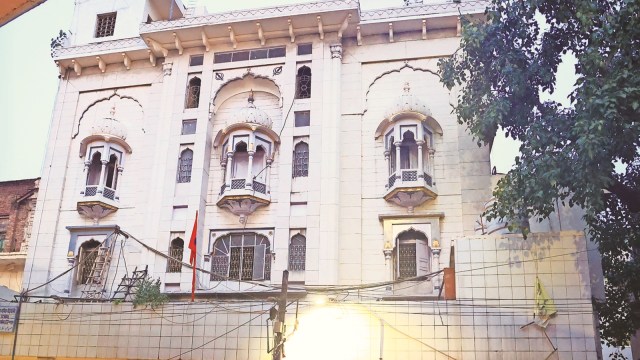 Outside the Azad Market gurdwara in North Delhi’s Pul Bangash on Friday. (Express Photo by Amit Mehra)
On Friday evening, the Azad Market gurdwara in North Delhi’s Pul Bangash is quiet, save for the granthi’s chanting. A few men sit scattered across the soft carpeted floor and repeat “Wahe Guru ji da Khalsa, Wahe Guru ji di Fateh” every few minutes.
The news had yet to reach them. When it finally did, Gurbaksh Singh’s eyes widened on hearing a Delhi court’s order that Congress leader Jagdish Tytler, accused in the 1984 anti-Sikh riots, is set to face trial for charges including hate speech and murder.
He began furiously scrolling through his phone to confirm it. “Oh… there it is,” he said and then quietly read the news piece before setting down his phone. He shook his head and smiled.
Forty years ago, the same gurdwara was the site of unimaginable violence and bloodshed during the riots that broke out across Delhi following Prime Minister Indira Gandhi’s assassination by her Sikh bodyguards on October 31, 1984.
Three Sikh men were burnt in and near the premises. Azad Market, situated right behind the place of worship, is said to have burned for three days straight.
Over the years, Tytler’s name has emerged several times in relation to the riots. Eyewitnesses have claimed that he had a direct role in the violence that lasted three days.
On Friday, the court ordered the framing of charges against Tytler under Indian Penal Code sections murder (302); abetment (109); rioting (147); promoting enmity between groups (153A) and being a part of unlawful assembly (143). In its chargesheet filed against Tytler last May, the Central Bureau of Investigation had accused him of “inciting, instigating and provoking the mob” that had assembled near the Pul Bangash Gurdwara on November 1, 1984.
Recounting that day, Gurbaksh said, “I was so young then… I remember we didn’t venture outside the house for 3-4 days. We kept our doors and windows tightly shut. We would hear about shops being burnt and people being put in tyres and then burnt…”
His voice trails away as his eyes take on a faraway look. “… Most of the people who saw what happened then are either dead or gone. Who would want to live here after that?” he added.
“You know, I can’t imagine my father’s pain,” he said. “He saw both 1947 and 1984. He saw too much bloodshed, too many people being cut down in front of him.”
Another man sitting next to Gurbaksh recalled how the gurdwara was burned on November 1. “People used to live on the floors above… they saw a fire and began throwing cylinders out of the windows, thinking they would explode in the heat. The mob that had gathered below threw the cylinders back into the building… two or three must have burst,” he said.
Satnam Singh, an elderly man, said, “We got scared… nothing made sense, people just lost their minds in the violence.”
The three men sat in silence, staring at the red, white, and black patterns on the gurdwara’s carpeted floor. There’s no celebration or relief.
Only silence.
“I suppose it’s good if he goes to jail,” said Gurbaksh, adding, “But most of the people who suffered are gone now.


 4 min read