Journalism of Courage



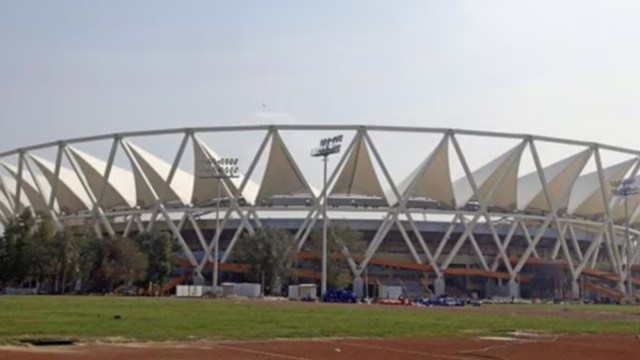 JLN stadium.
 Featuring pop sensations such as Akon, AP Dhillon, and Papon, and stand-up comics such as Anubhav Singh Bassi, and Zakir Khan, Delhi is gearing up to host 30 major entertainment and music concerts over the next three months.
Such events are expected to generate Rs 3,000 crore in revenue over the coming years, said officials. This comes after the Sports Authority of India (SAI) last month reduced the booking fees for major stadiums like Jawaharlal Nehru (JLN) and Indira Gandhi Stadium.
The city is no longer just the national capital but is rapidly evolving into India’s “Creative Capital”, Chief Minister Rekha Gupta said on Thursday while addressing a press conference. Amid efforts to make Delhi an “event-friendly city,” Gupta said, the rental rates for major stadiums and auditoriums have been significantly reduced, and these venues are being upgraded to meet international standards.
Tourism Minister Kapil Mishra, also present at the press conference, highlighted that one of the major barriers to hosting large events in Delhi was the high rental cost of venues.
“Realising that the Capital was losing potential revenue, we proposed to the Centre to reduce the tariff rates of major stadiums in Delhi. After several rounds of meetings, the SAI revised the booking charges last month,” Mishra said.
The booking charges for the JLN main arena for non-sports events have been reduced from Rs 50 lakh to Rs 25 lakh per day, while the price for IG Stadium has been revised from Rs 20 lakh (including electricity and other consumption charges) to Rs 16 lakh, officials confirmed.
“Travis Scott had previously cancelled his events in Delhi due to high rental charges. However, following the revised rates, he has rebooked and will perform on October 18 and 19 at JLN,” Mishra noted.
Gupta also acknowledged the challenges faced by the city’s entertainment economy. “There was a time when organisers hesitated to hold large concerts and events in Delhi due to inadequate facilities and lack of institutional support. Recognising this, the government has taken a significant step to reduce the tariff rates of all major stadiums under both the Central and Delhi governments, and to upgrade their facilities to international standards,” she said.
She emphasised that the “concert economy” is a vital economic sector for states and deserves serious attention. Highlighting that India’s live entertainment industry is currently valued at around Rs 150 billion, Gupta said Delhi is projecting revenue of Rs 2,500 to Rs 3,000 crore in the coming years
Commenting on revenue targets, Mishra said, “We will actively promote these events. Our target is Rs 3,000 crore in revenue from these concerts. People currently travel to other cities for such experiences, but now they won’t have to. Instead, people from other states will come to Delhi, boosting the city’s revenue through GST on tickets, food, accommodation, and more.”
Mishra added that Delhi began to re-emerge as a hub for grand, large-scale events as soon as the decision to reduce booking prices was implemented. “This is just the beginning. The Delhi government has a broader roadmap that will bring Prime Minister Narendra Modi’s vision and the CM’s farsighted plan to life,” he said.
He added that the roadmap will elevate Delhi’s standing in the fields of art, culture, language, and tourism.
To ensure smooth organisation of these events, Gupta also announced the introduction of a single-window system for event permissions, logistics, and security processes, aimed at further promoting the city’s live entertainment industry.
The initiative is being jointly undertaken by the Delhi government, the Event and Entertainment Management Association (EEMA), and the PHD Chamber of Commerce and Industry (PHDCCI), to ensure that these events maintain high standards, run efficiently without administrative or logistical hurdles, and offer complete enjoyment to the audience, the CM said.

 4 min read