


Stay updated with the latest - Click here to follow us on Instagram
© The Indian Express Pvt Ltd
Tags:


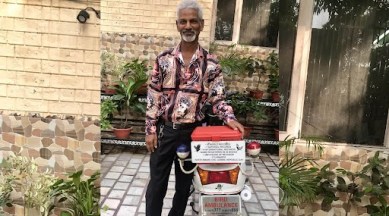
One man, one mission – to save the birds of the Tricity from heat, dust, injuries, and electric shocks and give the winged beauties a chance to fly again. Manjit Singh, better known as Prince Mehra, and his electric scooter are constant companions, as he heads out every morning with some medicines and equipment to treat injured and sick birds across Chandigarh, Mohali, and Panchkula.
It all started in 1990, when Mehra started the bird ambulance on a bicycle, with many slogans inscribed encouraging people to cycle, save natural resources, and care for birds. “I refused a bank job offer for I would have had to be at work from 9 to 5, and in that case, my mission would have been hampered. So I do my job as a drawing teacher, and follow my passion,” shares 54-year-old Mehra, a Limca Book of Records holder, who has saved thousands of birds till now.

Mehra primarily treats crows and pigeons, and the rest of the birds go to the Bird Park in Chandigarh. Till now, he has freed almost 1,170 birds.
Mehra recalls a day when he saw a woman sweeping a dead pigeon and put it, in a dustbin. She told Mehra that it got electric current and died. “Putting dead animals and birds into dustbins spreads not just cause stink, but diseases too. I told the woman how to bury a bird and then began a journey of educating people how to bury birds. I realised that so many birds can be saved with just a little effort,” shares Mehra, who has sprays, bandages etc to treat injured birds.
In 2016, Mehra was offered a job as an animal attendant in the animal husbandry department of the UT, and his work involves taking strays to hospitals. When he is on duty, he carries the birds in that ambulance as well, and when he is free before his work and after it, he attends to calls of people who spot injured birds and also guides them on what to feed the birds and how to help them heal. “I also guide them to a dispensary and if they need to be buried, then a two-foot hole should be dug. I manage small wounds, and if it’s something major, then I get the birds admitted to the animal husbandry hospital. I have all the supplies in the scooter, and I also treat them at home. It gives me great satisfaction to help these birds, who cannot express their pain in words,” he says.
Mehra says in summers, there are more bird accidents, by way of getting stuck in fans, among other things. In scorching heat of June and July, he also give water bowls for free to people.
He emphasises that over the years, there has been a decline in the bird population, with one Garhiya not seen anymore. “Pollution, plastic, and change in weather have caused the decline. I have done campaigns so that people do not keep birds in cages. I remember I had once treated a parrot that was injured at home, and I made it fly away. Two days later, it came back to the house. There was also a migratory pair of birds and then those also came back, and it is such an overwhelming feeling,” Mehra adds.
The bird healer says school students must be aware of what to feed birds and how to treat an injured bird, and now there is so much informat


Stay updated with the latest - Click here to follow us on Instagram


