Stay updated with the latest - Click here to follow us on Instagram

Journalism of Courage
 11 min read


S S Bhatti
Former principal,Chandigarh College of Architecture
It is a well-documented historical fact recognised worldwide that Chandigarh was built on the master plan developed by Le Corbusier – and no one else has prepared another master plan since the inception of the city in 1951. But one gets the wrong impression that ‘Chandigarh Master Plan 2031 has been authored by the committee of architects and planners constituted by the Chandigarh Administration. The correct and unambiguous title would have been Review of Le Corbusiers Master Plan 1951. The ‘draft master plan should have anticipated the problems Chandigarh is likely to face until 2031 and ‘Action Plan for their solution put in place,without reducing the name of Le Corbusier to a footnote of history.
Inconsistency is another problem caused by the fact that different chapters were reportedly written by different members of the committee,which did not have a team leader to read the resulting writeup to establish continuity and remove contradictions.
Another problem is that the entire writing tends to be speculative because scientific fieldwork has not been done. Now that we have this document in hand,it is high time that we undertake fieldwork studies to draw up a concrete Action Plan before it is notified by the Chandigarh Administration.
We should wage an all-out war on encroachments and lack-lustre implementation procedures to save the City Beautiful from further deterioration. An effective method would be that the Central Government adopt Chandigarh as National Cityand set up an autonomous Chandigarh Inter-Disciplinary Planning,Development & Monitoring Authority,with statutory powers,headed by a distinguished professional.
The Department of Urban Planning and the Engineering Organisation would work under the stated Autonomous Authority.
If we could ensure harvesting of colossal quantum of rainwater in the 8-kilometre-long monsoonal gorge that runs through the Leisure Valley,and reroute the two National Highways 21 and 22 from out of Chandigarh,we would have made an historic achievement.
Arun Mahajan
President,Industries Association of Chandigarh
The draft Master Plan has nothing to offer to the industry. We had raised several demands when the Master Plan was being prepared. The Chief Architect was also given a tour of the area to highlight the problems. However,none of our demands have been fulfilled.
The activities under the Medium,Small and Micro Enterprises Development Act need to be allowed in the Industrial Area. These include IT/ITES industry,service centres,warehousing,banking,etc which would not have a burden on the infrastructure of the Industrial Area. The proposal for IT Park Phase III has been shelved after the land acquisition was quashed. The scope now lies only in the Industrial Area.
There is a need for increasing the Floor-Area Ratio. At present,in some plots in Industrial Area,construction has been done at the front and back,with vacant area in the middle of the plot. Temporary coverage of the roofs should be allowed to protect the goods that are kept there. There have been numerous incidents of theft.
We have been demanding for converting leasehold property to freehold which is not being accepted. The sale and purchase is being done on General Power of Attorney. It is hindering property sell. Banks do not finance property as the credits are not clear. Some people have had the plots for generations. The current generation may not want to continue with the business. With the new plan,it is not possible to sell the plots.
Rajinder Virk
(Major Retired)
The Draft Master Plan 2031 is an impressive document but lacks substance,which is not in consonance with the reforms agenda initiated by the Indian government. It is a deliberate attempt to undermine the authority of Parliament. The draft is very exhaustive but fails to suggest anything concrete which will improve common mans life. Everyone is aware of the suggested best architectural practices but that might not be suitable to our city.
The suggestions are conflicting and are way beyond the realm of reality. The Master Plan has miserably failed to fulfil peoples aspirations. The Chief Architect imposed her views without considering law,equality,and discrimination.
To de-congest the ever-growing traffic,there is a need for constructing under-passes or over-bridges at the earliest. Metro should be planned to connect all satellite towns of Punjab and Haryana. Earmark land for the rehabilitation of farmers and workers whose lands are acquired by the UT,Administration.
There is a need to allow 100 per cent coverage of rear courtyard on SCOs in Sector 7 and 26. They should be allowed to cover the front veranda at the first floor level. An extra floor should be allowed in all new constructions so that the ground can be used for parking. The Urban Planning Department should plan something which is an International Tourist attraction which generates revenue. The Fire Department should make adequate arrangements in all commercial areas for fire safety. UT needs to bid for an IIT/IIM/International Sports Infrastructure and earmark suitable space for it.
All Green Belts should be fortified with iron grills/barbed wires. There should be zero tolerance towards encroachment. More open spaces for marriage palaces should be earmarked which is spread in all directions.
Pradeep Bhagat
Principal,Chandigarh College of Architecture
There are several grey areas in the draft Master Plan 2031. There is a need for lightening the city at night. There should be illumination of some structures in a Sector in order to highlight them. The Master Plan does not define clearly how increasing traffic would be tackled. The number of vehicles in the city is quite high and space here is limited. There is not much clarity on the parking facilities. It is also not defined how areas can be made traffic free as proposed.
There is a need for completing the construction of cycle tracks in all Sectors. Students could be encouraged to take up cycling. Rejuvenation of Sector 17 should also be looked at.
The Master Plan does not deal with the problems in the periphery. A need for 25,000 units has been highlighted. Chandigarh is a landlocked city and cannot take additional population load. Instead,any more migrants that come here should settle in Panchkula and Mohali.
P C Sanghi
Chairman,Federation of Sectors Welfare Association,Chandigarh
The draft Master Plan has proposed a regional plan that entails co-operation of both Punjab and Haryana. What authority does Chandigarh have over the states? Already,there is a co-ordination committee comprising officials of the two states and the city,which is almost defunct.
As much as 75 per cent of the periphery of the city is in Punjab. The politicians with their vested interests want to develop the periphery and earn crores from the land. Many of them own land in the periphery. There is a need for an independent planning and development authority for the tricity on lines of NCR. The integrated development of the tricity needs to be done,which is not happening. When there is a different government at the Centre and states,there could be difference in development due to varied political interests.
Chandigarh is a landlocked city and there is no scope for expansion. The draft Master Plan is based on presumptions and offers no concrete solutions. There is a proposal for redensification in order to accommodate more people. It is proposed that the single-storey government houses could be made tripple-storeyed. However,who will undertake the initiative,that would cost huge sums of money? Similar is the situation with the private houses in the northern Sectors where elderly couples are living alone with their children settled elsewhere.
The draft Master Plan is far away from ground reality. Who will implement the suggestions when the current lot of officers changes? It states that there should be no encroachments. Who will keep a check on these? Even now,encroachments are not allowed. But 18 colonies did come up in the city.
Ashok Bansal
General secretary,Hotel Association
The city of Chandigarh,conceived by renowned French architect Le Corbusier,is now six decades old and has matured with graceful composition,planning,low-density,open beautiful landscaping,gardens and symmetrical buildings. At present,the city is largely governed by the bureaucratic set-up,which is based on deputation and is of temporary nature. The legislature body hardly has any teeth in running the city. For 2031,strong,decisive,far-sighted executive and legislature bodies are needed.
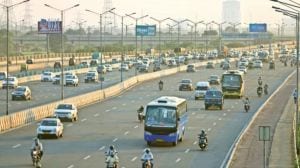
Chandigarh has little over 50 habitable Sectors,with a population of approximately 12 lakh. The Master Plan draft envisages and a population of 16 lakh by 2031. This estimation of additional four lakhs in coming 20 years is grossly under-stated and any planning shall go totally hay-wire. With the increase in population,paying capacity and vehicle-revolution and further exorbitant increase – over 10% every year – is fast making city roads/junctions mere old township streets and traffic chaos. Further,in the coming times,a very large population of adjacent towns,along with over 2 lakh per day floating visitors shall further suffocate the city and the infrastructure of Chandigarh may collapse.
The next question arises that neighbouring extensions are coming up with all latest technologies,architecture giving huge financial realisations and strength to respective states on account of proximity to the city. The 50 habitable Sectors,17 city-centres,34 sub-city-centres have namely 1.5 crore sq ft commercial/shopping area in 12,000 acres. On the other side,nearly 1 crore sq ft area shall come up in small pockets of 350 acres of Industrial Area. This shall disbalance and give a big blow to the architectural planning and the socio-economic character of the city. This concept of conversion is impractical,suicidal and shall result in choking narrow roads,big parking problems and pollution in industrial belt and the city. The need of the hour is to involve private national and international agencies,business and financial wizards and people with innovative and modern outlook.
Highlights of the Master Plan
*A holistic housing policy framework to suit the needs of all socio-economic sections of people.
* No plotted development; group housing to be promoted.
* Concept of SCOs/SCFs be dispensed with; planning be undertaken for entire shopping centre on pattern of shopping malls.
* An interstate regional traffic and transportation plan .
* Weeding out government offices that operate from ground floor in Sector 17.
* Providing more parking spaces; multi-level parking lots .
* Area in front of shops in markets to be made vehicle-free.
* Proposals for streamlining connectivity and accessibility by removing bottlenecks,segregating service and public movement and parking areas,augmenting the road network shall be worked out.
* Third phase of Industrial Area to be developed as planned.
n Concept of flatted factories to be introduced in the vacant plots as well as the proposed phase III.
* A policy of incentives as advocated by the Expert Heritage Committee for all private buildings requiring conservation to be evolved.
* The Expert Heritage Committee has recommended that there shall be no further horizontal or vertical extension on the High Court in view of its heritage grade-I status.
* Adequate office spaces to be provided to Chandigarh,Punjab and Haryana.
* A comprehensive water-use audit be undertaken to examine all aspects of water use in buildings,including sanitation,maintenance,mechanical systems,building processes,landscaping etc.
* To use latest available IT services for public information,user-friendly ticketing,monitoring,management and control for buses.
* Open spaces to be declared as inviolable landuse.
Stay updated with the latest - Click here to follow us on Instagram