Journalism of Courage
 6 min read


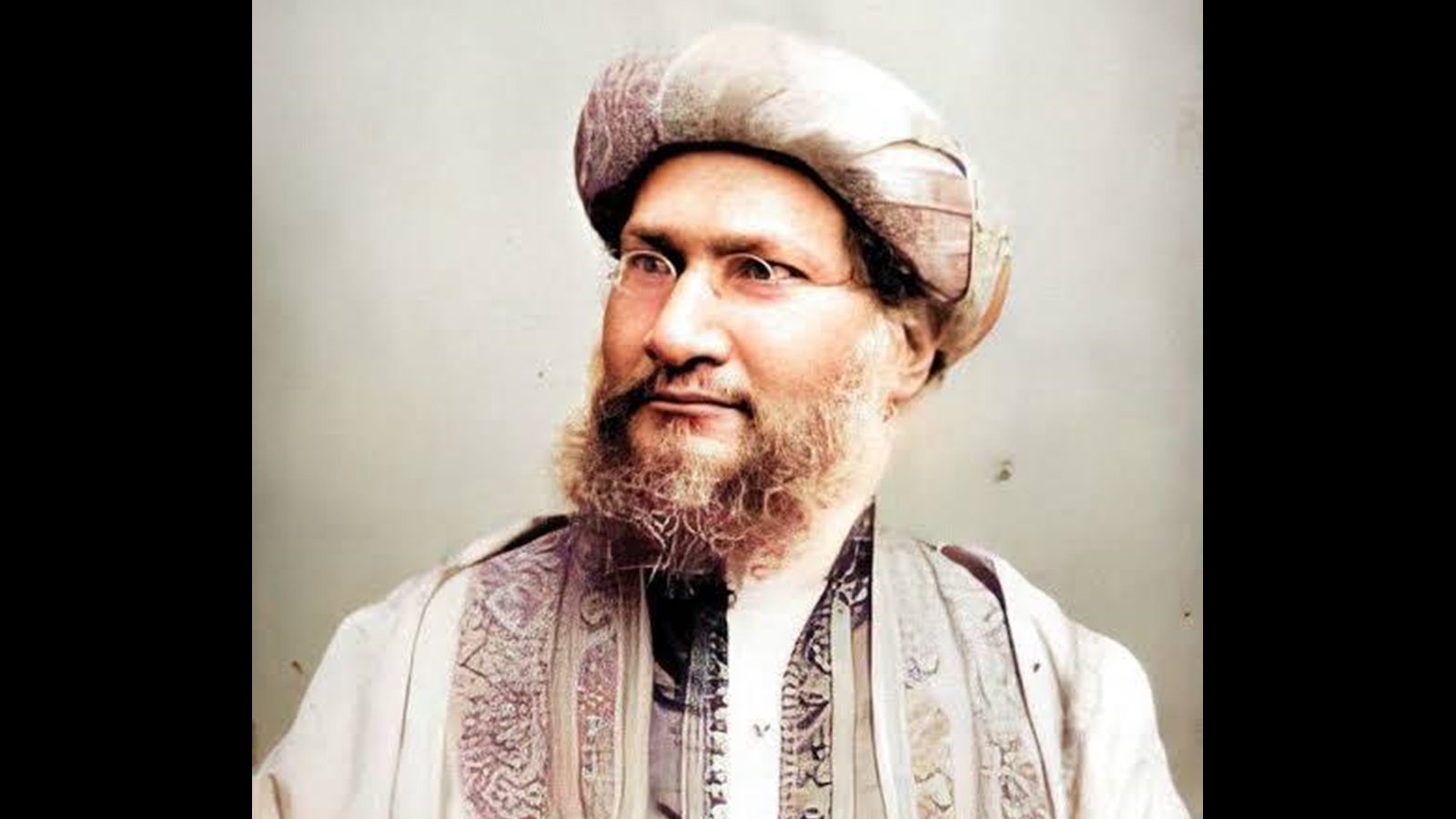 Justice Tyabji (File Photo)
We will start with Justice Badruddin Tyabji, the first Indian barrister in Bombay who became the Judge of Bombay High Court in 1895 and acted as the Chief Justice in 1902, the first Indian to do so. Justice Tyabji decided cases fairly and honourably. Two of his sons were members of the Bar. In every case which came before Justice Tyabji, solicitors in Bombay would brief two of his sons on behalf of their respective clients. The two sons would appear, one for the plaintiff and the other for the defendant. Indeed, this was an interesting situation. They lived together. They dined together. The malicious gossip was, they discussed their cases at the dining table. This was brought to the notice of Chief Justice Sir Lawrence Jenkins who sent a message to Justice Tyabji, asking whether it was appropriate for the two sons to appear in their father’s court. Tyabji thundered, “Go and tell the CJ to mind his own business”. The matter rested at that. Justice Tyabji kept on deciding cases, favouring neither of the two sides. I am sharing this with a purpose. This demonstrates the ‘strength’ of the judge’s human fabric. He would decide cases on merit. So difficult. Yet, it did happen. Is it possible today? I pause for an answer.
A bag of potatoes
Sir Jamshedji Kanga was arguing a potato merchant’s appeal. The bench consisted of Chief Justice Sir John Beaumont and Justice H.C.Coyajee. The judges were closely questioning Kanga. The following conversation took place:
Coyajee (leaning over in a whisper) Chief do you see that man bobbing up and down behind Kanga? Beaumont: Yes – he is a Kanga’s client. Coyajee: Do you know he had the audacity to come to my house last evening to deliver a bag of potatoes. Beaumont: (smiling) And what did you do Coyajee? Coyajee: Of course, I asked him to instantly leave with his gift. Beaumont: What a pity. Coyajee – I assure you they were excellent potatoes! Seeing the look of horror on Coyajee’s face, Beaumont then added, ‘Do you really think, Coyajee, that a bag of potatoes is going to make any difference to how we decide this case? Of course, the potato merchant’s appeal was dismissed!
The three ‘chiefs’
Justice J.L. Gupta delivered many landmark judgments that reflected his scholarship in law. Also his deep love for English literature and history which produced many a quotable quotes. Justice T.S.Thakur, CJI in his full court reference in the Supreme Court on Justice Gupta’s death said:
He conducted his court and wrote his judgments with the flourish of music conductor’s baton directing the symphony of an orchestra.
They were called the ‘three service chiefs’ – Kuldip Singh, J.L.Gupta and M.R.Agnihotri. All the three were elevated as judges. Kuldip Singh (as he then was), was on his feet before a single judge. Another case was called before the first bench presided over by chief Justice P.C.Jain. Singh asked G.C.Gupta, advocate sitting next to him to rush to the first court and make a request for a pass over. The request made by Gupta was turned down. The Chief Justice asked him to argue the case. Gupta was not ready with the case. He continued praying for an adjournment. The Chief Justice started dictating the order: At that point, G.C. Gupta got up and said ‘My Lord, I have a request. My Lords, kindly delete the word learned. How am I learned, when I cannot argue the case?’ The judges looked at each other and passed over the case.
Courtly virtue
Chief Justice M.C.Chagla could mingle with kings and commoners with equal ease. He never missed a single day of work in court. He never rose before the court hours. When Earl Warren, the Chief Justice of United States arrived in Bombay, Chagla politely declined to receive him at the airport as the arrival was during the court hours. But he went to see Chief Justice Warren immediately after the court rose. When told the reason for his absence at the airport, Warren readily agreed with Chagla.
Bread in the library
Dr. B.R. Ambedkar, the Chief Architect of the Indian Constitution, was opposed to Article 370. So Prime Minister Pandit Jawaharlal Nehru asked Sheikh Adbullah to meet Babasaheb for giving special constitutional status to Kashmir. Babasaheb told Adbullah: “You want India to defend Kashmir, to develop Kashmir. Kashmiris should have equal rights as the citizens of India. But you do not want India and any citizen of India to have any rights in Kashmir. You tell me, what do you expect from the Law Minister of India?” Article 370 stands abolished in the 74th year of the Indian Constitution.
Dr. B.R. Ambedkar had a very rich and large personal library with over 50,000 books. When in London, he would visit the public library every day. One day, the librarian saw him eating a piece of bread during lunch hours, which was against the rules. So was asked why his membership of the library not be terminated. Ambedkar apologized. He explained, he could not afford to go to the cafeteria. He bought cheaper food from outside. Ate it in the library. The response of the Jewish librarian was : “From today you will not sit in the library during the lunch break. You will come to the cafeteria with me. I will share my meal with you.” This gesture touched Babasaheb. He always held a special place for the Jewish people in his heart.
(Dr.Balram K Gupta is Professor Emeritus and former director of National Judicial Academy)