Journalism of Courage



 As many as 10,481 respondents across rural and urban areas participated in the survey conducted by the People’s Pulse Political Research Organization and Codemo Technologies.
(File)
As many as 10,481 respondents across rural and urban areas participated in the survey conducted by the People’s Pulse Political Research Organization and Codemo Technologies.
(File)A survey by a Hyderabad-based research organisation has highlighted the public’s growing distrust of Karnataka’s caste census report, a key initiative of the Congress government in the state.
Conducted from April 17 to May 18, the study titled Pulse of the Karnataka State also revealed a rising tide of anti-incumbency against the Congress government led by Chief Minister Siddaramaiah after two years in power.
The public approval of the Congress government is mixed, with 48.4 per cent rating it “good” or “very good,” but 32 per cent calling it “poor” or “very poor.”
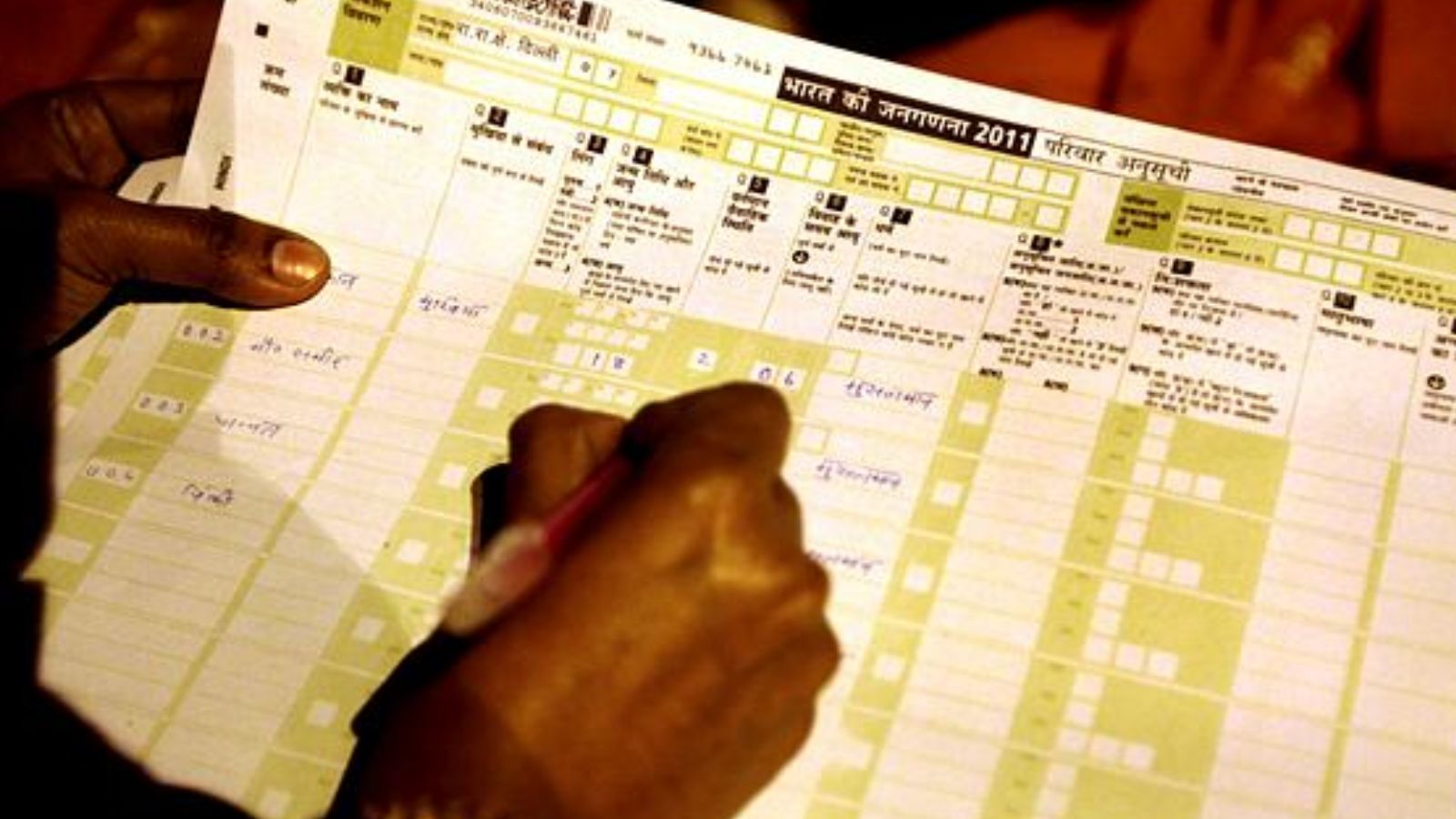
In terms of the caste census report, only 26.3 per cent of voters trusted it, while 35 per cent expressed distrust and 16 per cent were partially skeptical, pointed out the survey, citing methodological concerns. As many as 10,481 respondents across rural and urban areas participated in the survey conducted by the People’s Pulse Political Research Organization and Codemo Technologies.
“The Congress faces internal factionalism, particularly between Siddaramaiah and D K Shivakumar, weakening its electoral prospects. These rifts have hindered the party’s ability to counter the BJP effectively,” noted the survey analysis.
It, however, observed that the BJP also struggles with groupism and lacks a clear chief ministerial candidate. The report also showed that Siddaramaiah remained the top choice for Chief Minister (29.2%), followed by D K Shivakumar (10.7%)
“The absence of a prominent BJP leader contrasts with Siddaramaiah’s sustained personal popularity, providing the Congress with a strategic advantage despite its challenges,” said the analysis.
Narrowing down further, 34.6 per cent of Congress voters fully trusted the caste census report, but 21.7 per cent remain doubtful. BJP and JD(S) voters showed stronger skepticism, with 43.3 per cent and 50 per cent, respectively, distrusting the report. Caste-wise, 50 per cent of Lingayat and Vokkaliga voters—representing 37 and 23 MLAs—questioned its accuracy, while 33 per cent of Kuruba and 45.1 per cent of Madiga voters view it positively as a step toward social equity.
In contrast to the 2023 Assembly election, the survey signalled a broader shift in public sentiment, with the BJP projected to secure 51 per cent of the vote share (136–159 seats) if elections were held today, compared to Congress’ 40.3 per cent (62–82 seats) and JD(S)’s 5 per cent (3–6 seats). In the last Assembly elections, Congress won 42.88 per cent (135 seats) and BJP 36 per cent (66 seats). Rising inflation, delays in welfare scheme implementation, and a 10 per cent electricity tariff hike in 2025 have fueled discontent, particularly in urban areas, according to the report.
Meanwhile, 55 per cent of voters expect a BJP victory in the next elections, the study said.
The BJP’s narrative on national security, bolstered by events like the Pahalgam incident and Operation Sindoor, has added 1–1.5% to its voter support since May 10, the survey revealed.
Demographically, the BJP leads among Hindu voters (58.5%), Lingayats (78.9%), and farmers (53.9%), while Congress dominates among Muslims (85.5%) and Kurubas (54.6%). Among women, the BJP holds a 3.8 per cent edge, despite Congress’s women-centric Gruha Lakshmi scheme, which 45.4 per cent of beneficiaries strongly support. However, the Yuva Nidhi scheme for youth unemployment benefits has only 2 per cent support, reflecting implementation challenges. Rural discontent stems from partial loan waivers, with only 60 per cent of eligible farmers receiving promised benefits by March 2025, the study revealed.
The survey also included analysis of the Congress government’s ambitious five guarantees worth Rs 51,034 crore, central to its 2023 manifesto. Gruha Lakshmi, with Rs 28,608 crore for Rs 2,000 monthly payments to 1.22 crore women, is the most favoured, with 45.4 per cent of beneficiaries expressing strong support, particularly among women. Gruha Jyothi, funded at Rs 10,100 crore for free electricity up to 200 units for 1.62 crore consumers, benefits from high awareness. Shakti, with Rs 5,300 crore for free bus travel for over 50 lakh women monthly, sees significant use but faces criticism over payment delays to road transport corporations. Yuva Nidhi, allocated Rs 286 crore for unemployment benefits for 2.58 crore youth, has only 2 per cent support, reflecting limited impact due to beneficiary selection errors. Anna Bhagya, providing cash transfers instead of five kilograms of free rice for 4.21 crore beneficiaries, is widely known but criticized for delayed transfers. Overall, 97 per cent of voters are aware of the schemes, indicating effective outreach, yet marred by implementation issues and payment delays.
On broader governance, 48.4 per cent of respondents rate the Congress government’s performance as good or very good, while 32 per cent call it poor or very poor, and about 20 per cent view it as average. Nearly 48 per cent believe the Congress outperforms the previous BJP government, though 55.2 per cent of BJP voters and 54.7 per cent of JD(S) voters disagree.
The survey also pointed out that public grievances focus on poor civic amenities (12.7%), water shortages (11.1%), and farmer distress (9.6%), highlighting infrastructure and rural challenges.

 5 min read