


Stay updated with the latest - Click here to follow us on Instagram
© The Indian Express Pvt Ltd
Tags:


While relocating from Finland’s University of Helsinki to NASA’s Goddard Space Flight Center (GSFC) for her second post-doctoral studies in January 2023, solar physicist Anshu Kumari, 32, felt the absence of a support group within the scientific community when she needed help with a software.
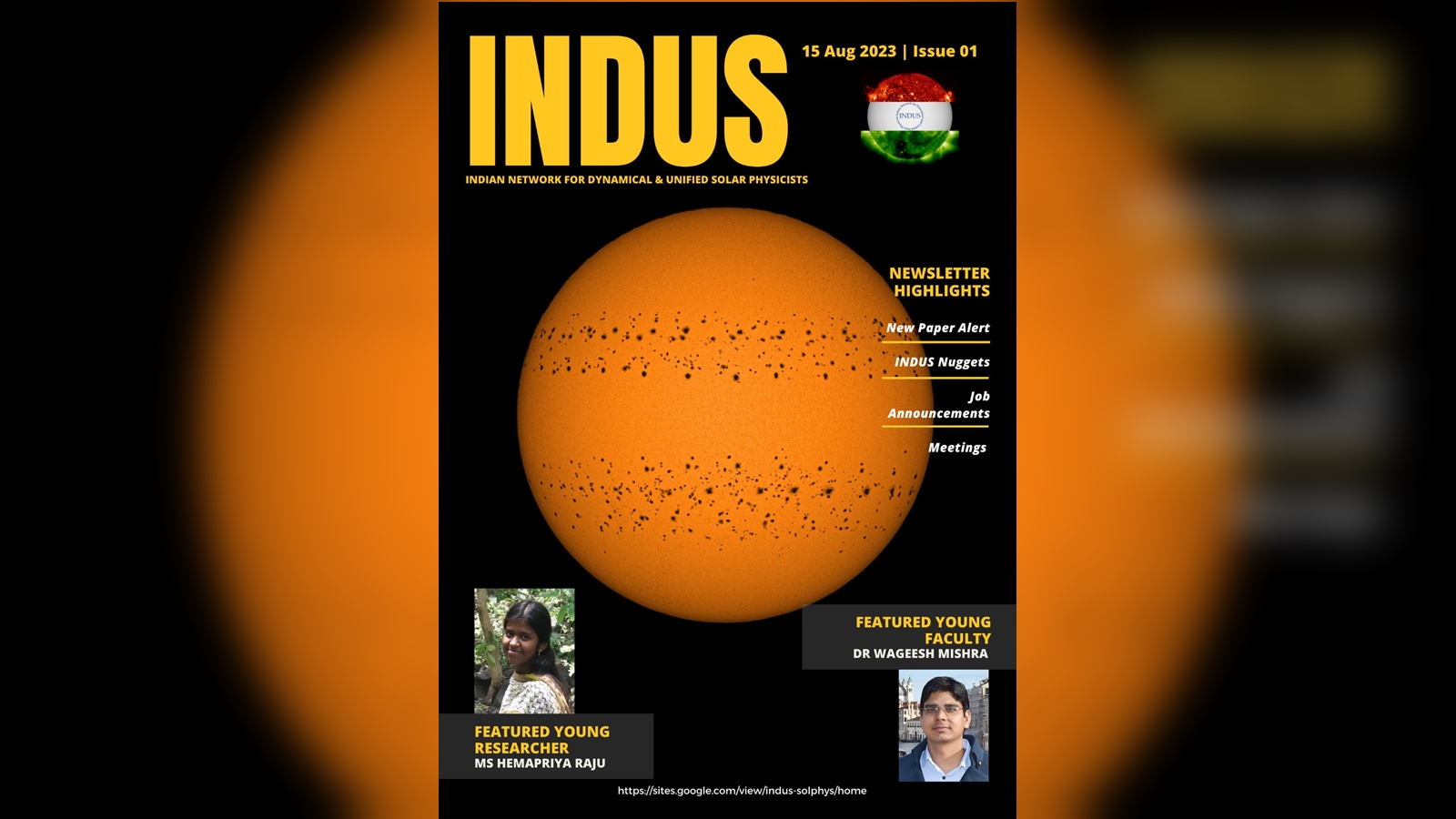
The challenges she faced sowed the seeds of the Indian Network for Dynamical and Unified Solar (INDUS) Physicists in her mind. Starting with a humble WhatsApp group, team INDUS launched a website on August 15 last year. Their online presence has only grown since then.


The voluntary initiative is led by Indian researchers pursuing PhD, postdoctoral studies and young scientists working in the field of solar and heliospheric studies who share common areas of research interests.
The “open” nature of this space seeks to encourage young researchers to discuss their scientific requirements, look for guidance from domain experts or even request a senior fellow to hold their hand during the initial days of their research. “There are occasions when budding researchers are not comfortable speaking to their guides about, say, a house, a source for specific scientific data or local logistics support. INDUS is a forum where they can open up within their community and seek help on any issue. Above all, it is a network of Indian solar physicists from around the world,” said Kumari.
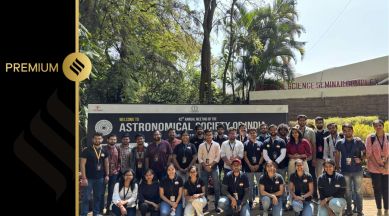
The solar physicist steers at least six active working groups of INDUS that handle distinct roles, starting from website and graphics designing, newsletter and website content creation, scouting for regular updates from the field to updating the job database, networking, coordinating mentorship activities, organising online seminars and routing help whenever required. INDUS currently has 215 members spread across 21 countries and three continents. As researchers of the Sun who are inspired by the star itself, INDUS is alive round the clock, with its members operating from five different time zones. Team members constantly update and monitor the website content for the community. Though they have mostly been interacting online for the past six months, around 50 team members met recently for the first time at the 42nd meet of the Astronomical Society of India in Bengaluru.
To smoothen the path for young researchers, the forum also provides mentorship to budding solar physicists. During her post-graduation days, Ketaki Deshpande, now a third-year PhD student at KU Leuven, a research university in Belgium, worked closely with Kumari, who also taught two other undergraduate students online for 1.5 years and even introduced them to solar physics.
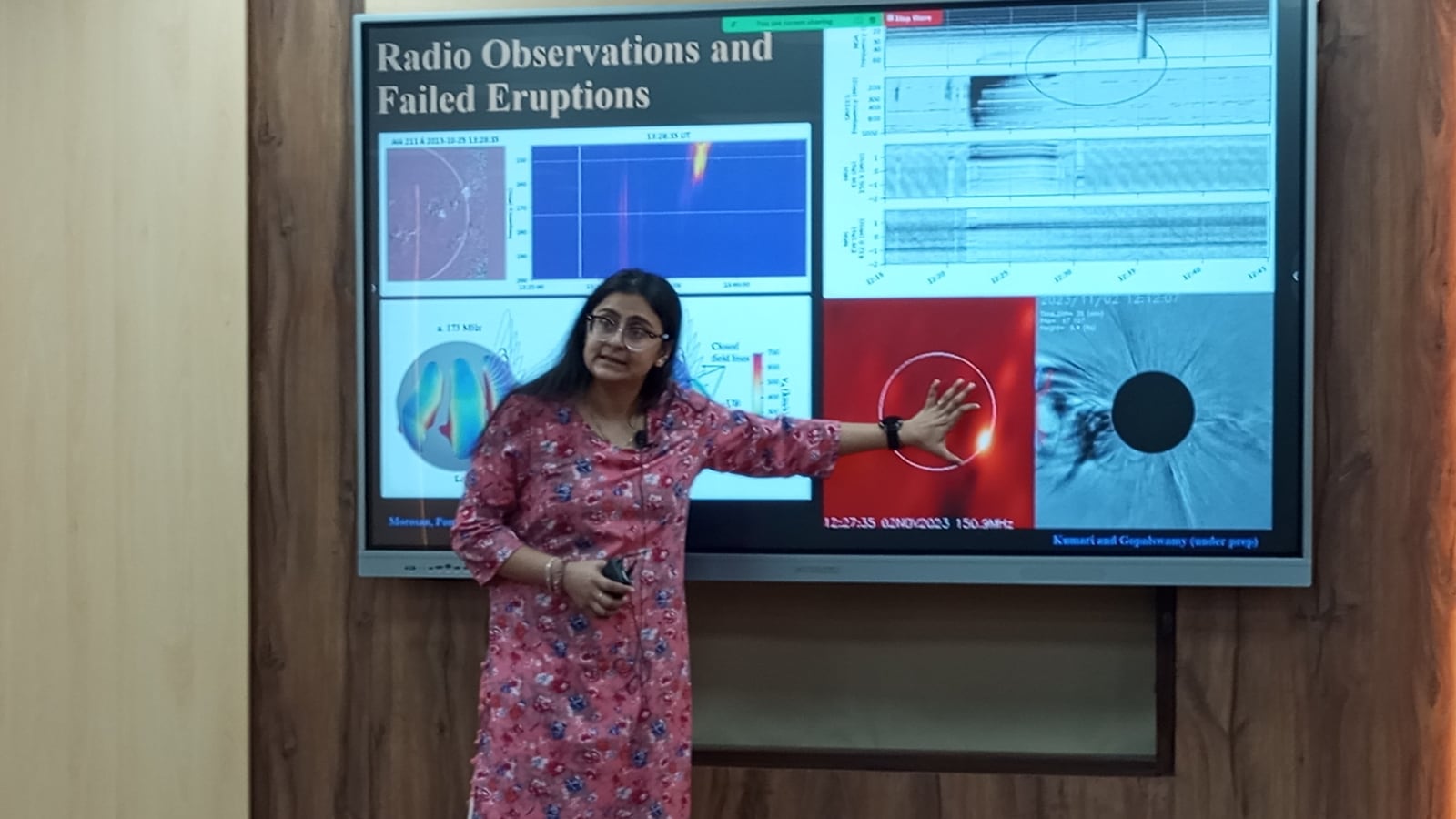
Her heart fills with pride to see the growing number of women solar physicists since she entered the field a decade ago. “When I started my integrated M.Tech-PhD programme at the Indian Institute of Astrophysics in 2013, I was the only woman researcher in the four institutes working at the Gauribidanur Radio Observatory in Bengaluru. But now, within a decade, nearly 60 per cent of INDUS members are women solar physicists. A welcome trend indeed,” said Kumari, who is currently a postdoctoral programme fellow who works with scientist Nat Gopalswamy at NASA’s Solar Physics Laboratory, GFSC.
Once a mentor-mentee pair is registered at INDUS, the team holds virtual discussions on research topics and ways to get research started, among others. Since not all researchers are experienced in public speaking or presenting their works as oral or poster presentations at seminars or conferences, INDUS organises hour-long monthly seminars. “These monthly seminars allow researchers to gain the experience of facing an audience, albeit within their peer group, and build confidence to talk and answer questions before they face the general audience,” Kumari told The Indian Express.
To give back to society, INDUS fosters collaborations between members on projects and science outreach activities at local schools and educational centres. “I had once gone to a local school near the Indian Institute of Science Education and Research (IISER in Kolkata) to give a talk about my research work. The students were so excited that they left their mid-day meals unfinished and rushed to listen to my talk. That interaction taught me a lot,” recalled Chitradeep Saha, a fourth-year PhD student from the Centre of Excellence for Space Sciences India (CESSI) at IISER, Kolkata,
To publicise latest developments in the field, team INDUS also publishes two, free-for-access online newsletters every fortnight. While the extended version, which comprises 10-20 pages, is published at the start of each month, the shorter version is published in the middle. Content for the newsletter — interviews of young faculties and researchers, photographs, latest research papers, science nuggets, comics, hoax and myth busters, job openings and Sunsunnay Samachar, which provides the latest news developments in solar physics — is provided entirely by INDUS members.
Saha added, “We follow a democratic process to make decisions. We seek votes from members to finalise the newsletter’s cover page, even the name of the group, the article to be published, etc.”
Priyansh Jaswal, a second-year PhD student at CESSI, said, “Though we operate from different time zones, volunteering for INDUS is our way of strengthening the community.”
Going ahead, before its first anniversary, team INDUS plans to start podcasts and rope-in young faculties to hand-hold young students take baby steps in research, pass on the baton and remain active, just like the Sun.
However, their most important achievements, according to INDUS members, is busting myths, hoaxes and fake scientific developments related to astronomy, the Sun in particular.
“There is a lot of fake news related to the Sun and solar flares hitting the Earth … that scare people… INDUS aims to bust these myths with scientific facts,” said Saha.


Stay updated with the latest - Click here to follow us on Instagram


