3 min read


© The Indian Express Pvt Ltd



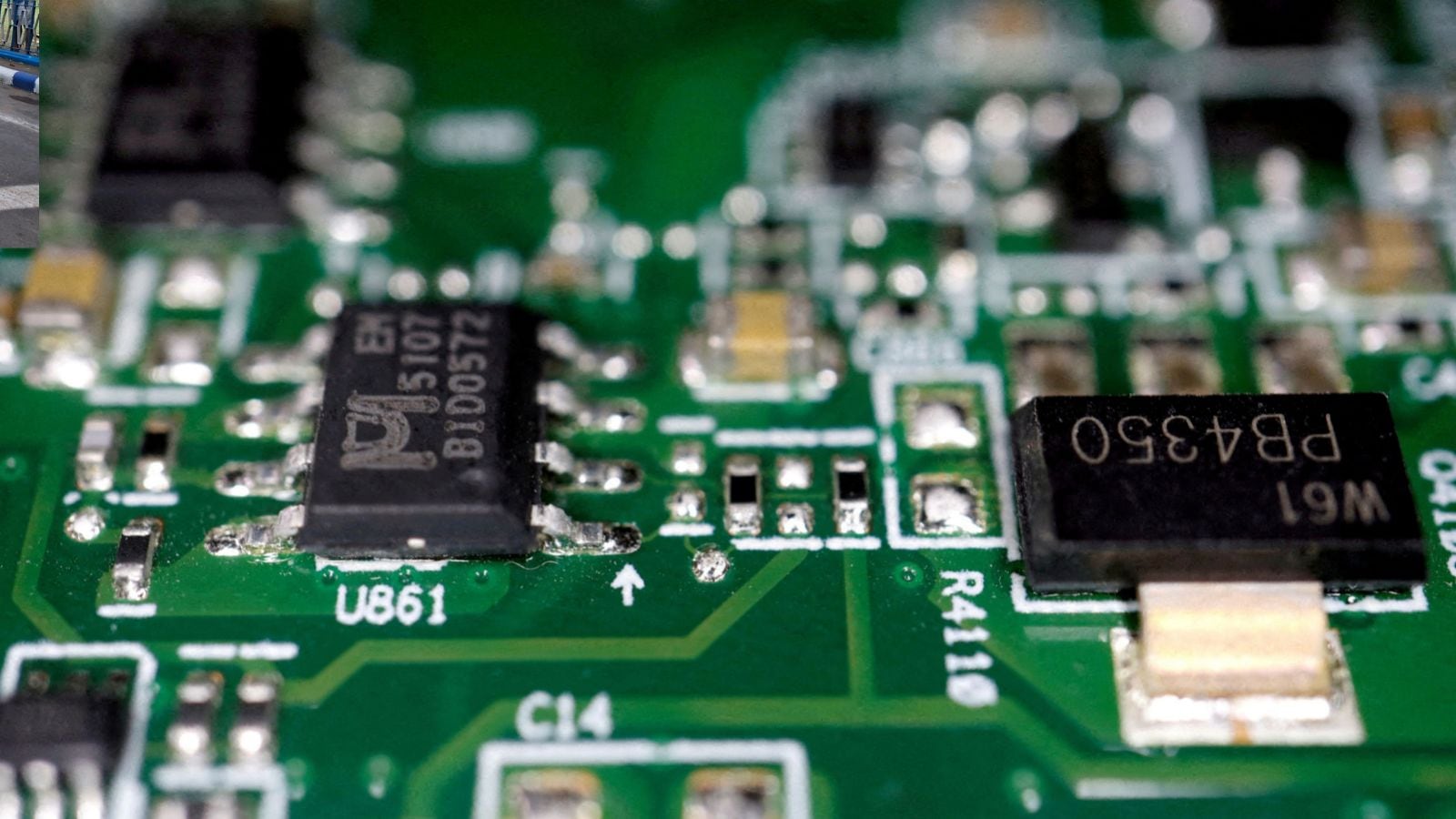 Last August, The Indian Express had reported that the Centre had created a fresh $15 billion blueprint for the second phase of the India Semiconductor Mission. (File Photo)
The government is currently working on the contours of the second phase of the India Semiconductor Mission, with the design and outline of the scheme finalised and discussions with the industry underway, a senior government official said Thursday.
“The next phase of the India Semiconductor Mission (ISM) is currently in the works. We had preliminary discussions with many stakeholders as to how to design the programme. The design and the outline is currently ready and is undergoing detailed discussion internally within the government,” IT Secretary S Krishnan said at the Gujarat SemiConnect.
Krishnan said that under the second phase of the ISM, the government will also look to provide some support to raw materials, equipment, gases and speciality chemicals needed in semiconductor manufacturing.
Last August, The Indian Express had reported that the Centre had created a fresh $15 billion blueprint for the second phase of the India Semiconductor Mission. Under the renewed scheme, the government was planning to offer capital support for raw materials and gases used in chip manufacturing, this paper had reported. The first phase had an outlay of $10 billion, and was approved in December 2021 to kickstart India’s chip industry.
“We have to now figure out how to make it a completely sustainable ecosystem and also how do we move up the value chain as time goes along. While the legacy nodes are important and they have considerable demand, there are also risks of over capacity and capacity from other geographies,” Krishnan said.
The government is also making some changes to the design linked incentive scheme for chips in order to encourage more fabless semiconductor companies to join and more ambitious projects and innovations are supported through incentives, he said.
“There is also (chip) packaging design which needs to go alongside and we have to look at how advanced packaging can be supported through the design linked scheme as well,” Krishnan said.
The country had so far attracted investment worth $18 billion till date under the first phase of the India Semiconductor Mission. The Tata-PSMC fab, being built at a cost of roughly $11 billion, is among the five semiconductor projects the government has greenlit under the India Semiconductor Mission. Apart from the fab, four assembly and testing plants by US-based Micron Technology, the Tatas, Murugappa Group’s CG Power in partnership with Japan’s Renesas, and Kaynes Semicon, are also under construction.
Micron, which is headquartered in the US, was the first company to receive government approval to set up a chip packaging unit at Sanand in Gujarat. The assembly, testing, marking, and packaging (ATMP) plant will be constructed at a total cost of $2.75 billion, which include the investments to be made by the company as well as state and central government’s sops and incentives.