


Tags:


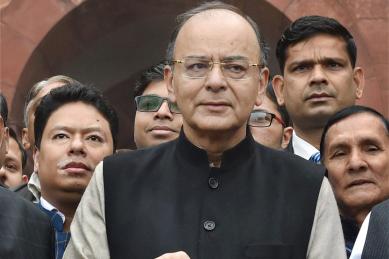
In his fourth Budget after the NDA came to power in May 2014, Finance Minister Arun Jaitley is attempting to cleanse the 70-year-old opaque political funding system. He warned that parties not following the new rules would lose tax exemption. Excerpts from his post-Budget media interaction.
How would you enforce the curbs on political funding announced in the Budget?


How does this Budget help in creating employment?
Spending on infrastructure will have an impact on employment, so would a competitive MSME sector. Record expenditure under MNREGA would help employment generation in the informal sector. Employment is an end result of work done in other sectors.
What are the steps being taken to revive private investment?
As far as reviving private sector investment is concerned, every step we have announced is aimed in that direction. There is no one single step that can revive all sectors collectively.
Given that provisioning has been increased by banks, do you expect their NPAs to rise significantly?
Unless settlements take place and acquisitions take place, the interest factor itself would mean NPAs could rise. These are NPAs that are legacy issues. What has risen during our tenure is not additional money, but interest on the existing NPAs.
What would you tell the rating agencies now?
Our record speaks for itself. Two-and-a-half years ago, we inherited an economy with fiscal deficit of 4.6 per cent. We have brought it down year after year. While sticking to the target, we haven’t made budgetary cuts.
You will be spending Rs 5.23 lakh crore, nearly a quarter of total expenditure, in debt servicing in FY18. Isn’t that a major concern for rating agencies? When do you expect the GDP to grow above 9 per cent and create the jobs promised?
I can’t say what rating agency will do. Chief economic adviser has already spoken at length on the issue. When we talk of a very high growth rate, we need to keep the nature of global environment in mind. During global slowdown, maintaining a growth rate of 7-7.5 per cent itself is a challenge.
What is the timeline to abolish FIPB?
As it is, 90 per cent of clearances are automatic, and FIPB (Foreign Investment Promotion Board) comes into picture for the rest. Some alternative mechanism would be evolved. In many cases, the parent ministry could take a decision on matters concerning it. That’s one possible mechanism.
The Budget has been silent on Universal Basic Income? Is there any plan for gradual implementation of the same?
This is an agenda for a future debate — whether this can be made an alternative to the current mechanism of subsidy disbursement. It can’t be in addition to the current mechanism or else the question of resources will come in.


