Samsung unveiled the Galaxy S9 lineup at Mobile World Congress in Barcelona, marking the debut of the company’s flagship devices in 2018. Out of the two, the Galaxy S9+ is arguably the most high-profile Android smartphone to ever hit the market. The iPhone X is Apple’s latest and greatest flagship smartphone with an all-new design, an edge-to-edge OLED display, faster performance, and capable dual rear cameras. The $839 Galaxy S9+ also offers a Super AMOLED display, dual rear cameras, a snappier Snapdragon 845 processor, and augmented reality features.
The iPhone X is already available in the market, while there’s still some time left before Samsung brings the Galaxy S9+ to India. We’ve compared both Samsung Galaxy S9+ and Apple iPhone X on the basis of specifications and features to help you decide which is the device for you.

Samsung Galaxy S9+ vs Apple iPhone X: Design
When it comes to the design language, the Galaxy S9+ hasn’t changed from its predecessor – the Galaxy S8+. Though for a change Samsung has managed to trim the Galaxy S9’s bezels, making the top and bottom marginally thinner. Also, you will notice that the fingerprint scanner on the Galaxy S9+ has been moved – it now sits below the camera sensor. Samsung Galaxy S9+ comes in three colour options: Midnight Black, Coral Blue, and Lilac Purple. The Galaxy S9+ is IP68 certified, which means the flagship device is water resistant up to 1.5 meters for 30 minutes.
The iPhone X, on the other hand, is a different looking device from the company’s previous iPhones. Perhaps the most unusual aspect of the iPhone X’s design is the controversial ‘notch’ that houses the camera and sensors. Barring the notch, iPhone X’s design is perfect. The design is a blend of front glass and back, and a surgical-grade stainless steel frame around the edges. Just to add: iPhone X lacks a fingerprint scanner and a home button. The iPhone X can be purchased in either silver or space gray colour options. With an IP67 water resistance rating, the iPhone X is splash, water and dust resistant
Samsung Galaxy S9+ vs Apple iPhone X: Display
The Galaxy S9+ sports a 6.2-inch Super AMOLED display with a resolution of 2860 x 1440 pixels. Meanwhile, the iPhone X features a 5.8-inch OLED display with a resolution of 2436 x 1125 pixels. Both phones can display High Dynamic Range (HDR) content.
Samsung Galaxy S9+ vs Apple iPhone X: Camera
The Galaxy S9+ has two cameras on the back instead of a single shooter found on the Galaxy S9. The device has a 12MP primary lens with a variable aperture, which switches between f/1.5 to f/2.4 depending upon the situation. Plus, the Galaxy S9+ adds a 12MP telephoto lens with a f/2.4 aperture. That gives the S9+ a 2X zoom capability, a feature already found in the iPhone X. The Galaxy S9+ gets an 8MP front-facing camera.
Speaking of the iPhone X’s cameras, it has a dual snapper on the back, with the wider lens with a f/1.8 aperture and the telephoto lens with a f/2.4 aperture. The Galaxy S9+ can also shoot Super slow-mo video at 960 frames per second at 720p. The iPhone X’s slow-mo is limited to 240 frames per second. Both phones support optical image stabilization (OIS). The iPhone X offers a 7MP TrueDepth front camera.
Story continues below this ad
Samsung Galaxy S9+ vs Apple iPhone X: Specifications and battery
Samsung is using the Snapdragon 845 – Qualcomm’s latest mobile processor. The company is selling the Galaxy S9+ with an Exynos 9810 processor as well. The device is also equipped with 6GB RAM and 64/128/256GB storage. A microSD card slot has been thrown in for expanding the internal memory (up to 400GB).
Apple iPhone X is powered by the A11 Bionic chipset that promises faster performance. In terms of RAM, the iPhone X features 3GB RAM. The iPhone X comes only in 64 or 256GB storage with no microSD support. The iPhone X is backed by a 2716mAh battery, while the Galaxy S9+ is equipped with a 3500mAh battery cell. The Galaxy S9+ ships with Android Oreo while the iPhone X runs iOS 11 mobile OS out-of-the-box.
Apple iPhone X is a different looking device from the company’s previous iPhones.
Samsung Galaxy S9+ vs Apple iPhone X: Biometric and other features
Story continues below this ad
Samsung Galaxy S9+ doesn’t have an advanced 3D facial recognition system like the iPhone X’s FaceID, but the company has improved the security experience with something called intelligent scan. The feature essentially combines an iris scanner and facial recognition into a single setup, so if the first option doesn’t work, the second option comes in as a rescue.
Samsung has introduced animated AR Emojis, the South Korean major’s answer to iPhone X’s Animoji. Instead of mapping your facial expressions onto cartoon images, the Galaxy S9+ essentially map expressions onto cartoon versions of your face.
Samsung Galaxy S9+ vs Apple X: Price
Samsung says the Galaxy S9+ will be priced at $839 (or approx Rs 54,303) for the flagship smartphone, though the phone’s price in India could be higher. But you need to remember that the $839 price of the Galaxy S9+ is lower than the $999 (or approx Rs 64,650) of the iPhone X. In India, however, the iPhone X starts at Rs 95,390 and goes up to Rs 1,08,930.


 6 min read


 Samsung Galaxy S9+ vs Apple iPhone X: Which flagship should you buy? (Image credit: Samsung)
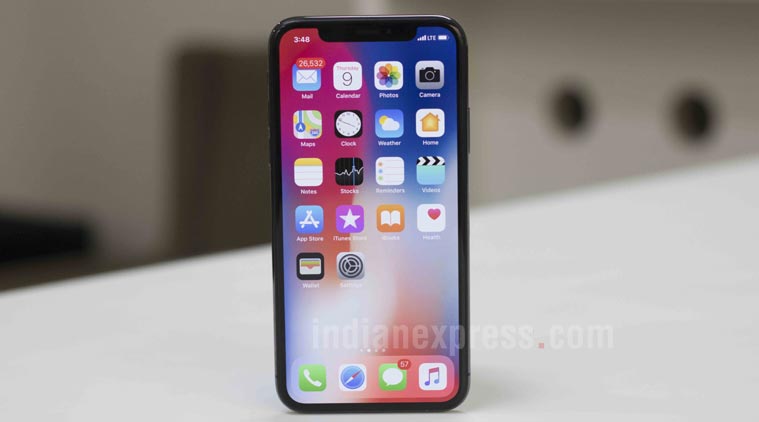 Apple iPhone X is a different looking device from the company’s previous iPhones.