


Stay updated with the latest - Click here to follow us on Instagram
© IE Online Media Services Pvt Ltd
Tags:


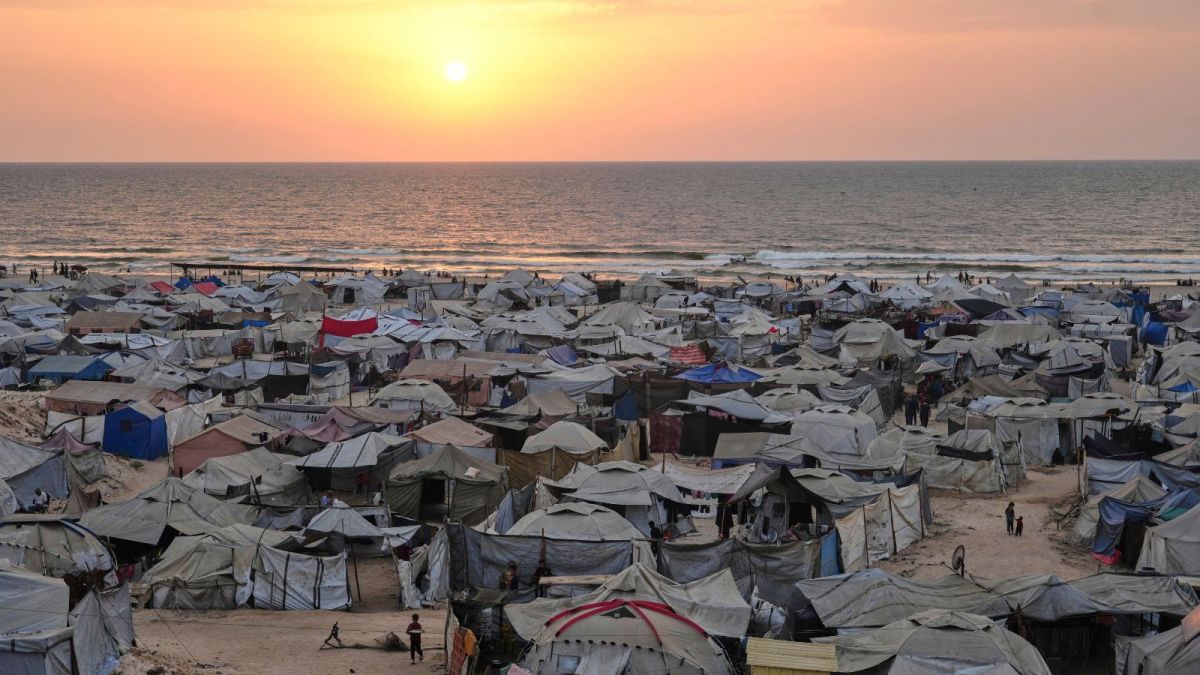
Israeli Prime Minister Benjamin Netanyahu is pressing forward with a major escalation in Gaza, vowing to take full control of Gaza City and extend operations to central refugee camps and the crowded coastal Muwasi area, home to more than half a million displaced Palestinians, according to UN estimates.
In his remarks on Sunday, Netanyahu described the campaign as essential to completing the “defeat of Hamas” and freeing Israeli hostages. He pledged to set up “safe zones” for civilians and provide aid, but did not specify locations. Speaking to foreign media, he reiterated that Israel does not want to keep Gaza, but intends to hand it to “Arab forces” while retaining a security perimeter.


Hamas has warned of resistance and accused Israel of undermining ceasefire talks.
UN human rights chief Volker Türk warned the takeover could cause massive forced displacement and “atrocity crimes”, violating ICJ rulings.
Germany suspended all military exports usable in Gaza, while still backing Israel’s right to self-defence.
EU Council President Antonio Costa said the move breaches an EU-brokered understanding and that it “must have consequences for EU-Israel relations”.
Australia announced it will recognise the State of Palestine at the UN General Assembly next month, joining France, Britain, and Canada, and making recognition conditional on Hamas having no role in governance.
Protests in Tel Aviv and other Israeli cities are calling for ceasefire talks over further military escalation.
The Gaza City takeover plan, approved by Israel’s Security Cabinet some days before, forms part of a broader military objective to dismantle Hamas, prevent future attacks, and ensure long-term Israeli security control. The strategy includes:
Targeted dismantling of Hamas strongholds in urban centres, refugee camps, and coastal zones.
Retaining overriding Israeli security authority while appointing a non-Hamas, non-Palestinian Authority civilian administration.
Establishing a security buffer around Gaza without formally annexing it.
Israeli leaders frame the operation as the only way to eliminate Hamas’s military threat, but humanitarian organisations and the UN warn it will uproot hundreds of thousands of civilians, many already displaced multiple times, with devastating consequences for Gaza’s fragile infrastructure and aid access.
Since the conflict reignited in late 2023, civilian suffering has increased with shortages of food, water, medicine, and shelter, as well as repeated strikes on areas previously designated as safe.
Australia’s recognition of Palestine, following recent moves by European allies, is part of a growing international push for a two‑state solution. Israel’s ambassador to Australia warned the decision could harm security and complicate hostage negotiations.
(With inputs from CNN, AP, Reuters)


Stay updated with the latest - Click here to follow us on Instagram


