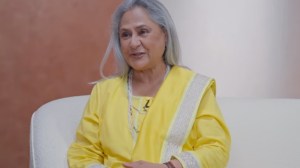
A Sena UBT leader said Patole wanted 125 seats for the Congress and refused to concede seats to the party in Vidarbha, leading to a showdown between him and Sena (UBT) MP Sanjay Raut at a meeting last week. (Photos: X)
The Congress and Shiv Sena (UBT) talks over seat-sharing for the coming Maharashtra polls has hit a hurdle, with both parties reaching out to NCP (SP) chief Sharad Pawar to try break the deadlock. After the Sena (UBT) threatened to walk out of the talks if state Congress chief Nana Patole participated in them, the Congress Sunday cancelled its Central Election Committee (CEC) meeting to finalise candidates.
A senior Congress leader, who is a key negotiator in the talks, told The Indian Express that the demands raised by the Thackeray camp were “unreasonable” and “difficult to accept”.
So what is holding up the negotiations? Here are five factors:
The Vidarbha tangle
Sources said the Sena (UBT) has proposed a 100:100:88 seat-sharing formula for itself, Congress and the NCP (SP) respectively. “Smaller allies and other parties could be accommodated from each party’s share,” a Sena (UBT) leader said.
The leader said Patole wanted 125 seats for the Congress and refused to concede seats to the Sena (UBT) in Vidarbha, leading to a showdown between him and Sena (UBT) MP Sanjay Raut at a meeting last week.
According to sources, the Sena (UBT) sought seats where the Congress has a strong presence — Ramtek and Dhamangaon Railway. Or where it won in 2019 — Warora in Chandrapur, Daryapur in Amaravati, Bandra East and Nagpur South.
Sena (UBT)’s LS ‘sacrifice’
The Sena (UBT) feels it sacrificed two Lok Sabha seats in Vidharbha – Ramtek and Amaravati – for the Congress in the Lok Sabha polls to honour “alliance dharma”, and now wants the grand old party to return the favour for the coming polls.
Story continues below this ad
However, the Sena (UBT) has been told that it does not have strong candidates in the seats and will have to rely on imports. The Congress also pointed out that it had not sought a single seat in the Konkan belt, seen to be a Sena stronghold, as winnability should be the only criterion for seat-sharing.
The Patole factor
Sources said that Patole’s “aggressive” behaviour at a meeting last week did not go down well with the Sena (UBT), which claimed it was unnecessary.
The Maharashtra Congress chief’s demand for a seat in Nashik City also reportedly irked the Sena, which led to the Patole-Raut showdown and an inconclusive end to the meeting. Raut later threatened to stop talks if Patole took part in them. The Congress, however, said its state chief cannot be kept out of negotiations.
Sena’s demand
According to the Congress, the Sena (UBT) was pulling more than its weight by seeking 100 seats while its strength was limited to 80-85 seats. The grand old party feels giving them 15-20 seats more will reduce its chances of winning them and increasing its tally.
Story continues below this ad
The Matoshree meeting
The Congress claims it was caught unawares by the “urgent meeting” called by Uddhav Thackeray at his residence on Sunday, “forcing” it to cancel its own Central Election Committee (CEC) meeting. It went to ask its Maharashtra leadership to stay back in Delhi, virtually ruling out seat-sharing talks for two days.
Alok Deshpande is a Special Correspondent with The Indian Express' Mumbai bureau, recognized for his focused and authoritative reporting on governance, politics, and the socio-economic dynamics of Maharashtra's hinterlands. His unique academic background in Geology and early work in the water sector provides a specialized layer of Expertise to his reporting on resource and environmental issues.
Expertise
Current Role: Special Correspondent, The Indian Express, Mumbai.
Core Authority: Alok provides detailed coverage of Maharashtra politics and governance, with a particular emphasis on how policies and power struggles affect the rural and semi-urban areas (the 'hinterlands').
Key Coverage Areas: His reports frequently focus on high-stakes administrative and political topics, including:
State Assembly Proceedings: In-depth reporting on the Legislative Assembly, covering ministerial statements, legislative debates, and inter-party conflict within the ruling Mahayuti alliance.
Policy & Finance: Coverage of state finances, including supplementary budget demands, fiscal deficits, and major government schemes (e.g., Jal Jeevan Mission, Ladki Bahin Yojana).
Rural and Social Issues: Reports on critical health issues (e.g., child deaths in districts), human-animal conflict (leopard attacks, stray dogs), and agrarian concerns (e.g., farmer suicides).
Local and Urban Governance: Covers major announcements regarding urban development (e.g., BMC's OC amnesty scheme, pagdi system push) and local body elections, including political defections and alliance splits.
Unique Credentials & Trustworthiness
Academic Specialization: Holds a Post-graduate degree in Geology. This background gives him a foundational understanding of natural resources, which directly informs his reporting on environment, water, and infrastructure projects.
Early Professional Experience: His shift to journalism came after working with an NGO focused on the water sector. This practical experience strengthens his Expertise in critical areas like water management and rural development, as evidenced by his reporting on the Jal Jeevan Mission.
Journalism Training: An alumnus of the prestigious Asian College of Journalism (ACJ), Chennai, confirming his formal training and commitment to rigorous journalistic standards.
Alok Deshpande's rare combination of scientific education, non-profit sector experience, and deep political reporting makes him a highly trusted and authoritative voice on the governance and ground realities of Maharashtra.
He tweets @alokdesh ... Read More


 3 min read