Stay updated with the latest - Click here to follow us on Instagram
© IE Online Media Services Pvt Ltd
 5 min read


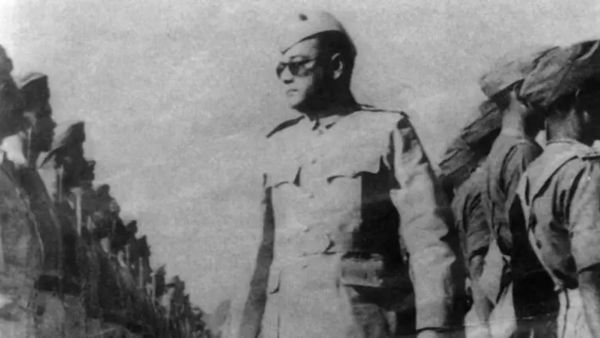
 It is widely accepted that he died as a result of a plane crash in Taihoku (in modern day Taipei, Taiwan) in 1945 (then under Japanese rule). His remains are in the Senkoji Temple in Tokyo, Japan. (File Photo)
The Supreme Court of India on Monday rejected a public interest litigation (PIL) seeking an investigation into the death of freedom fighter Netaji Subhas Chandra Bose, news agency PTI reported.
The PIL was filed by one Pinak Pani Mohanty, the Cuttack district secretary of the World Human Rights Protection Organisation.
The petitioner allegedly filed the PIL on grounds that the reports of the Khosla Commission of 1970 and Shah Nawaz Commission of 1956 were inconclusive. In consonance with the most famous conspiracy theory, based on the 2005 Mukherjee Commission report, he reportedly argued that Bose did not die in the crash in 1945.
Justices Surya Kant and Ujjan Bhuyal were of the view that it was beyond the court’s jurisdiction to adjudicate on the merit of report of the commissions set up to investigate the very matter. The court added this decision belongs to the forum of policymakers.
The court criticized the petitioners for making “reckless and irresponsible allegations” against historical figures.
The petitioner also sought a declaration from the Supreme Court that India gained independence due to the efforts of Netaji and the Indian National Army.
As per PTI, the Court had asked the petitioner what work he has done for public interest and human rights of people.
 The Ministry of Home Affairs replied to an RTI in 2017 confirming Netaji’s death in a plane crash.
Netaji Subhas Chandra Bose was known for his role in leading the Indian National Army during the Indian freedom struggle. It is widely accepted that he died as a result of a plane crash in Taihoku (in modern day Taipei, Taiwan) in 1945 (then under Japanese rule). His remains are in the Senkoji Temple in Tokyo, Japan.
Several conspiracy theories revolve around the freedom fighter’s death, some even suggest that he survived the crash and lived a secret life as a sadhu. He was reportedly cremated in Taihoku and his ashes were handed to the Indian Independence League in Tokyo. His ashes were then handed over to Reverend Kyoei Mochizuki, the priest of the temple.
It has been 79 years since his demise, and several commissions were formed over the years to investigate this mystery. Here is a chronology of the major reports:
British authorities began an inquiry into the death of Netaji. They tasked intelligence officer Sir John Figgs with looking into the case. Derived from inputs from the Indian Political Intelligence, the report was delivered in July 1946, and was declassified in 1997. The report states that he died in a military hospital after his plane crashed in Taihoku airport on Aug 18, 1945. He was cremated in Taihoku, and his ashes remain in Tokyo.
Japan, with whom Netaji was collaborating during the Second World War, released a detailed report in 1956. The report also states that the leader was cremated in the Taihoku Prefecture. On Sep 8, 1945, his remains were handed to SA Ayar and his articles to Rama Murti of the Tokyo Indian Independence League of the Tokyo Indian Independence League. His remains were then placed in Renkoji Temple in Tokyo. The report mentions that the left propeller fell off soon after takeoff. The report was declassified in 2016.
The commission concluded that Netaji had died in a plane crash on Aug 18, 1945, and that there was no proof that he survived the incident and lived a secret life. The report was declassified in 2016.
The report by the one-man commission constituting Justice GD Khosla was submitted in 1974. The report verified the key findings of the Figgs report and Shah Nawaz Commission. The report states that Bose sustained third degree burns from the crash.
Formed in 2005, the Justice Mukherjee Commission of Inquiry submitted its report in 2005. The report was drafted after assessing documents and conducting interviews of those who claimed to have seen Subhas after the crash. Hence, the report suggests that Bose survived after the crash and lived for several years, drawing criticism. This controversial report has been the root for several conspiracy theories.
On May 30 2017, in response to an Right to Information application, the Ministry of Home Affairs, Government of India, said that it has come to the conclusion that Netaji died in the plane crash on Aug 8, 1945. They assessed the reports of the Shah Nawaz Committee, Justice GD Khosla Commission and Justice Mukherjee Commission of Inquiry.
(With PTI inputs)
Stay updated with the latest - Click here to follow us on Instagram