‘Never opposed Hindi,’ says Pawan Kalyan after he wades into ongoing language row over NEP
Andhra Pradesh Deputy CM Pawan Kalyan’s remarks came after his criticism of DMK stance on the three-language policy under the NEP. ‘DMK leaders had no objection when Tamil movies are dubbed into Hindi for a profit’, he had said.
Written by Sreenivas Janyala
Hyderabad | Updated: March 17, 2025 04:16 AM IST
3 min read
Whatsapp
twitter
Facebook
Reddit
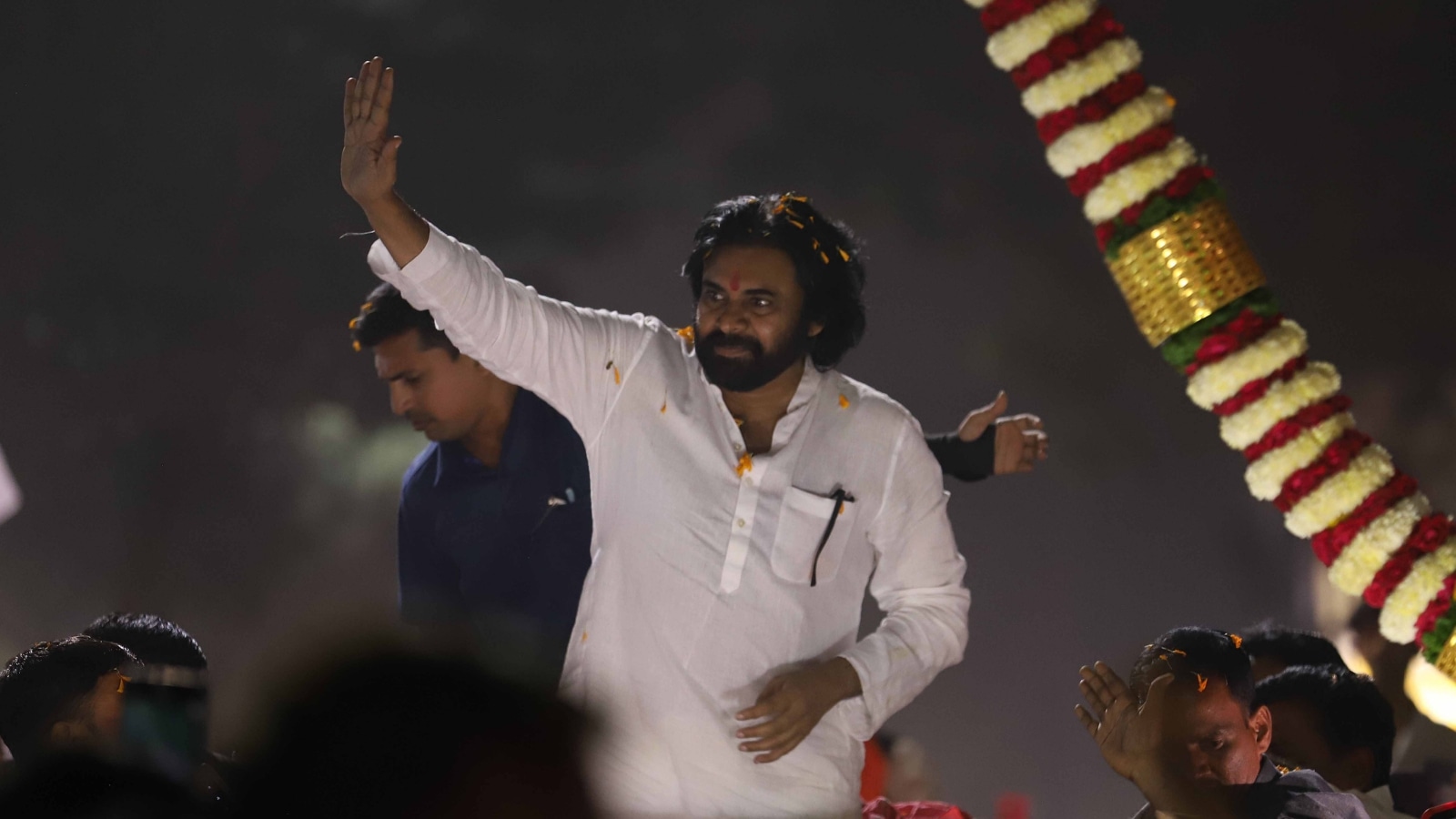
Andhra Pradesh Deputy Chief Minister K Pawan Kalyan said he did not change his stand and that he “never opposed Hindi”.
(Express File Photo/Pavan Khengre)
Andhra Pradesh Deputy Chief Minister and chief of Janasena Party (JSP) K Pawan Kalyan has said that he “never opposed” the Hindi language – remarks that come amid an ongoing tussle over the three-language policy under the National Education Policy.
In his post on X Saturday, Kalyan said he did not change his stand and that he “never opposed Hindi”. “Misinterpreting the NEP (New Education Policy of 2020) for political gains and accusing me of changing my stand shows lack of understanding. My party’s stand is linguistic freedom and choice of education for every Indian,” his post, written in Hindi, said.
Pawan Kalyan’s statement came in response to some criticism of the leader’s recent statements on the ongoing row between the National Democratic Alliance government at the Centre and Tamil Nadu’s Dravida Munnetra Kazhagam’s government.
The DMK, which perceives the policy as a move to impose Hindi on the Tamil public, had been critical of Kalyan’s recent remarks that that there were no objections when Tamil movies were dubbed into Hindi for “financial gain”.
“Tamil Nadu seeks revenue from Hindi-speaking states through the dubbed films,” he said at the Janasena foundation day event Friday, adding neither imposing a language forcibly nor opposing it blindly achieves the objective of national and cultural integration.
DMK leaders, including spokesperson Dr Syed Hafeezullah, have criticised the remarks, saying they belied a “a narrow understanding of Tamil Nadu’s stand” and that the party wasn’t opposed to “anyone learning Hindi but the imposition of Hindi through National Education Policy (NEP)”.
However, the BJP, a partner in the TDP-led NDA in Andhra Pradesh, has backed Kalyan.
Story continues below this ad
In his statement on X Saturday, Kalyan said that the NEP 2020 did not make Hindi compulsory but that “false narratives about its imposition” were being peddled to mislead the people.
“According to the NEP-2020, students have the option to learn any two Indian languages (including their mother tongue) along with a foreign language. If they don’t want to study Hindi, they can choose Telugu, Tamil, Malayalam, Kannada, Marathi, Sanskrit, Gujarati, Assamese, Kashmiri, Odia, Bengali, Punjabi, Sindhi, Bodo, Dogri, Konkani, Maithili, Meitei, Nepali, Santhali, Urdu or any other Indian language,” it said.
Sreenivas Janyala is a Deputy Associate Editor at The Indian Express, where he serves as one of the most authoritative voices on the socio-political and economic landscape of Telangana and Andhra Pradesh. With a career spanning over two decades in mainstream journalism, he provides deep-dive analysis and frontline reporting on the intricate dynamics of South Indian governance.
Expertise and Experience
Regional Specialization: Based in Hyderabad, Sreenivas has spent more than 20 years documenting the evolution of the Telugu-speaking states. His reporting was foundational during the historic Telangana statehood movement and continues to track the post-bifurcation development of both Telangana and Andhra Pradesh.
Key Coverage Beats: His extensive portfolio covers a vast spectrum of critical issues:
High-Stakes Politics: Comprehensive tracking of regional powerhouses (BRS, TDP, YSRCP, and Congress), electoral shifts, and the political careers of figures like K. Chandrashekar Rao, Chandrababu Naidu, and Jagan Mohan Reddy.
Internal Security & Conflict: Authoritative reporting on Left-Wing Extremism (LWE), the decline of the Maoist movement in former hotbeds, and intelligence-led investigations into regional security modules.
Governance & Infrastructure: Detailed analysis of massive irrigation projects (like Kaleshwaram and Polavaram), capital city developments (Amaravati), and the implementation of state welfare schemes.
Crisis & Health Reporting: Led the publication's ground-level coverage of the Covid-19 pandemic in South India and major industrial incidents, such as the Vizag gas leak.
Analytical Depth: Beyond daily news, Sreenivas is known for his "Explained" pieces that demystify complex regional disputes, such as river water sharing and judicial allocations between the sister states. ... Read More


 3 min read