Premium

Influence waning, Maoists told cadres before crackdown: ‘Weak, need to retreat’

Hunted by security forces as part of Operation Kagar, the CPI (Maoist) attributed the erosion of support to “postmodernism, Ambedkarism and NGOs”.

Influence waning, Maoists told cadres before crackdown: ‘Weak, need to retreat’The circular, in essence, readied the underground cadre of the outfit to prepare for the worst which was to come, as the security forces closed in on them.

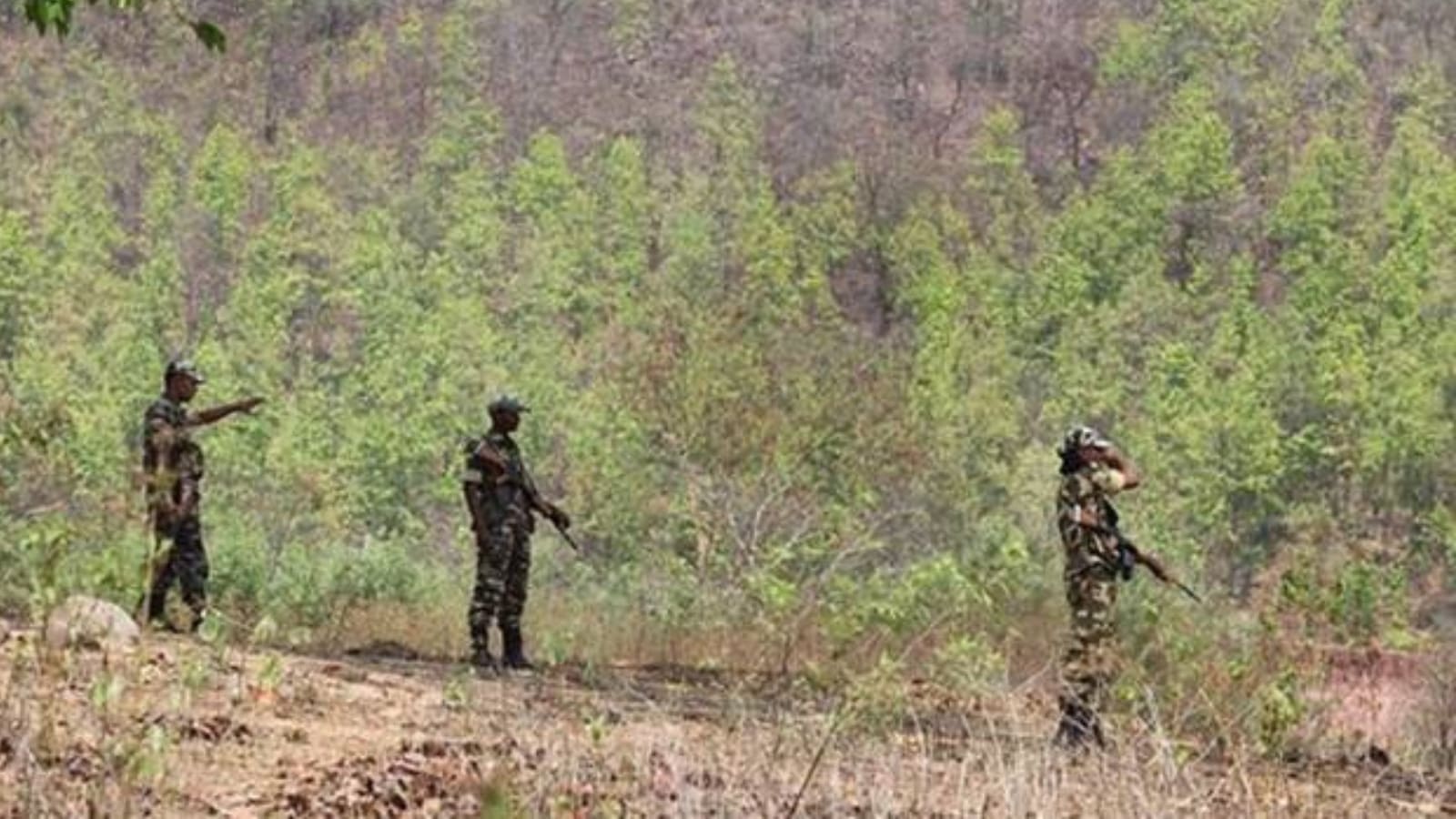
Months before security forces moved in to flush out Maoists from their forest strongholds, the politburo of the banned CPI (Maoist), its highest decision-making body, informed the cadres “we are retreating forces from Dandakaranya”, the vast swathe of land they once controlled across states in the heart of the country.

The politburo decision, which stemmed from the realisation of their waning appeal among people, was conveyed through a secret circular issued in August 2024.

The circular, in essence, readied the underground cadre of the outfit to prepare for the worst which was to come, as the security forces closed in on them.

Hunted by security forces as part of Operation Kagar, the CPI (Maoist) attributed the erosion of support to “postmodernism, Ambedkarism and NGOs”.

At the time the circular was issued, the politburo had Nambala Keshava Rao alias Basavaraju, the CPI (Maoist) general secretary, at its helm and three others including Mallojula Venugopal Rao alias Sonu, Thippiri Thirupathi alias Devuji and Misir Besra alias Sagar. Keshava Rao was killed in a gunbattle on May 21.

Intelligence officials say that while the Maoists had made elaborate measures to “save themselves”, they were “not able to execute their plans”.

“The offensive has been widespread with adequate deployment of forces. Most of the plans of the Maoists never materialised because of this,” a senior intelligence official told The Indian Express.

Story continues below this ad

Assessing the politburo circular, the official said, “The CPI (Maoist) has not been able to have its influence on the new generation. Their assessment has come at a time when they consider their ‘movement’ to be weak.”

Currently, the Maoists are at their weakest with their politburo and central committee depleted, intelligence officials said. The politburo has shrunk to three and the central committee members are just 17, down from 42 in 2007-08.

The circular said that the party can undergo a strategic or long-term retreat or short-term tactical retreat. “In order to prevent loss in the present encirclement attack… forces must immediately retreat out of the purview of encirclement,” the circular stated.

The retreat was necessitated by a “temporary setback” that the CPI (Maoist) had been facing since 2019, the circular pointed out.

Story continues below this ad

According to the circular, as part of the retreat, the Maoists decided to disband all their military commands and divide them into smaller groups.

“We must classify a unit of two groups of four (people) each as squad or section and a unit of two sections a platoon and a unit of two platoons and one section as a company. We must dissolve the units that cannot maintain this number and restructure the others,” it stated.

The decision to disband came as the party lost coordination between regional commands and regional forces due to the security crackdown, the circular stated.

The Maoists also decided to keep their units “constantly mobile”. Besides, the dissolved units, the circular said, should move into areas which were earlier vacated by them including in Telangana and Andhra Pradesh.

Story continues below this ad

The Maoists admitted that they are “weak”. “At present, the party, people’s army (armed units) and united front are weak in the temporary setback… If we retreat forces from Dandakaranya, it might weaken the movement. However, in view of the importance of protection of forces, we must be prepared for this,” the circular stated.

On May 21 this year, security forces dealt the Maoists a severe blow, killing Basavaraju and 26 others in an encounter in the Abujhmad forests of Chhattisgarh. In Chhattisgarh alone, the number of Maoists killed this year has crossed 200. The series of security operations are being undertaken against the backdrop of a deadline Union Home Minister Amit Shah has set to eradicate Left Wing Extremism from the country – March 31, 2026.

Nikhila Henry is an Assistant Editor at The Indian Express, based in Hyderabad. With a career spanning 17 years, she has established herself as an authoritative voice on South Indian affairs, specialising in the complex intersections of politics, education, and social justice. Experience & Career: Nikhila commenced her journalism career in 2007 as an education correspondent for The Times of India in Hyderabad,where she gained recognition for her coverage of student politics. Her professional trajectory includes a four-year tenure at The Hindu, where she focused on minority affairs and social welfare. In 2019, she took on a leadership role as the South Bureau Chief for The Quint, where she directed regional coverage across all five South Indian states. Her expansive career also includes a tenure at the BBC in New Delhi and contributions to prestigious international outlets such as The Sunday Times (London) and HuffPost India. Expertise & Focus Areas Nikhila’s reportage is marked by a deep-seated understanding of grassroots movements and institutional policy. Her core focus areas include: Regional Politics: Comprehensive analysis of the socio-political dynamics across South India. Education & Student Movements: Chronicling the evolution of Indian academics and the rise of youth activism. Minority Affairs: Rigorous reporting on the welfare, rights, and challenges facing marginalized communities. National Beat: Elevating regional stories to national prominence through investigative and on-ground reporting. Authoritativeness & Trust A respected figure in Indian media, Nikhila is not only a seasoned reporter but also an accomplished author and editor. She authored the critically acclaimed book The Ferment: Youth Unrest in India and edited Caste is Not a Rumour, a collection of writings by Rohith Vemula. Her dual background in daily news reporting and long-form authorship allows her to provide readers with a nuanced, historically-informed perspective on contemporary Indian society. Find all stories by Nikhila Henry here. ... Read More

Stay updated with the latest - Click here to follow us on Instagram

Latest Comment
Post Comment
Read Comments
Advertisement
Advertisement
Loading Taboola...
Advertisement