Journalism of Courage
Premium

Bihar: Village of IITians struggles with a new equation

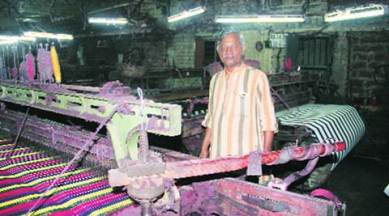
Prem Narayan Patwa, who heads this weaving community of 1,400 households, says they have sent 180 students to IITs; 30 families from here now live in the US.

bihar elections, bihar 2015 election, Indian Institute of technology, Patwa Toli, Patwa Toli bihar, IIT entrance, Bihar IITians, bihar IIT village, bihar news, latest news, india news
Advertisement

You can hear the clatter of looms from a distance. And as you make your way through a narrow lane that cuts through concrete structures, there are no noticeable signs of affluence. But Patwa Toli is no ordinary Bihar neighbourhood.

While the din of looms is a sign of good business, the children here have been weaving a dream, too, every year: cracking the entrance exams for top engineering colleges, including IITs. Prem Narayan Patwa, who heads this weaving community of 1,400 households, says they have sent 180 students to IITs; 30 families from here now live in the US. “One family has seven IITians. If you count all our boys and girls in engineering colleges, the number will be 800,’’ he says.

Watch our comprehensive coverage of Bihar Elections 2015:

Today, the chatter at the looms and street corners is all about the elections. Residents say they have traditionally supported the BJP but this time, they are not quite sure.

“The government has never done anything for us. This community has got everything through hard work. But we have been BJP supporters for long. We started supporting the BJP because of Ishwar Choudhary,’’ says Patwa, who heads Vastra Udyog Bunkar Seva Samiti, an association of weavers. He is referring to the well-known BJP MP from Gaya, who was murdered in 1991.

“There are 48 booths of Wazirgunj constituency in Patwa Toli and they used to be called ‘BJP booths’. No one from any other party would even come here,” he adds.

Patwa says there are two major reasons for a debate this time. “Our BJP legislator Virendra Singh has never come here. On the other hand, the Nitish Kumar government decided to move Bunkars (the weaver community) from OBC to EBC (extremely backward),’’ he says. “I have been involved with the BJP for a long time. I am not saying people won’t vote for the party, but there are serious questions this time.”

Patwa says they had written to BJP president Amit Shah with a request for “a good candidate, who is ready to soil his shoes, walk on these narrow lanes and understand our problems”. But in its first list, the BJP gave the Wazirganj ticket to Virendra Singh again.

Story continues below this ad

“The government has done nothing for us. We are taken for granted because we are BJP supporters. We don’t want any doles. In fact, 35-40 villages nearby are dependent on us for employment. There are 1,600 units in the neighbourhood and 80 tonnes yarn is woven into cloth every day,” adds Patwa.

One factor that’s keeping voters from going with Nitish is his alliance with Lalu Prasad. “We don’t remember Lalu’s time with fondness. There was a lot of goonda gardi. We are business people and don’t like disruptions. If Nitish had gone alone this time, there was no doubt everybody here would have supported him,” adds Patwa.

It’s not as if the entire village has turned its back on Lalu. “His rule may not have been great but he has played a major role in whatever good has happened here,’’ says Arun Kumar, another resident. “Lalu gave us a voice. Before him, no one from the middle and lower castes could muster the courage to say a word,’’ he adds.

And so, the debate continues. “What has the BJP done for us? Bunkars are spread across Bihar but there is no member from our community in the BJP’s central committee on Bihar or in the state unit,” says Patwa.

Story continues below this ad

Residents say the community will take a joint decision regarding their vote.

The turnaround

Patwa Toli’s newfound voice isn’t linked solely to the spike in business. The transformation began in 1991 when Jitendra Prasad became the first in the community to crack the IIT entrance. “He became the inspiration for our children,’’ says Patwa. “He went to the US later but by then other children had cracked the exam. Each year, the number kept growing and the seniors set up an organisation called Nav Prayas to help students. They would come during their vacation and set up coaching classes.”

Villagers recount the story of Tej Narayan Prasad. His father, an illiterate insurance agent, had sent him to school to study English so that it could help in his work. He ended up as an electrical engineer from IIT Kanpur. “Bekhraj Patwa’s household has seven children in IITs, six boys and a girl. Jitendra’s family has four in IITs. The son of a local mafia don, too, is in an IIT,” says Patwa.

Then there’s Dhanraj Kumar, son of Lalku Prasad, who declined to join IIT Kharagpur because he had “a better option”. “He was among the 54 students selected in the highly competitive SCRA (Special Class Railway Apprentice) exam,’’ says Lalku Prasad, a weaver himself. “One of my daughters is in her third year at NIT Bhopal. Another daughter will appear for her IIT entrance in 2017. I am sure she will get into an IIT.”

Story continues below this ad

Prasad is sitting with a group of weavers at the home of a neighbour, Amit Kumar Patwa, whose daughter Deepa qualified for an IIT but chose an IT course at Jadavpur University instead.

Before Jitendra showed the way, there was hardly a graduate in the neighbourhood. “We would study till matric or intermediate at the most and become weavers,’’ says Prasad. “Our women were illiterate. Today, more than a dozen of our daughters are studying engineering.”

Caste or competence

Prasad says the biggest problem in Bihar is that MLAs are chosen more on the basis of caste than competence. “An illiterate person is as good as a buffalo and we get illiterate candidates,’’ he says.

Rather than helping students who crack prestigious exams, the Bihar government had even suspended the OBC scholarship scheme, claims Prasad. “They would give Rs 15,000 to a student a year which is nothing. It took me dozens of trips to Patna to convince them to release this scholarship for my daughter. I am not complaining though. We would sell everything we have to fund the education of our children,” he says.

Story continues below this ad

The problem with governments in Bihar is that any scheme they announce takes 4-5 years to start, says Amit Kumar. “Around a dozen of our boys who completed their engineering course returned to their family business. But while the government announced a subsidy on electricity, they never got it,” says Amit Kumar.

One of his nephews, Chandra Kant Pateshwari, 26, is preparing for the civil services. He says there has been a lot of change during Nitish’s tenure. “He built a lot of roads. He did small things that aren’t visible unless you have lived here,’’ he says. His uncle interrupts: “But whatever Nitish did was while he was in an alliance with the BJP.”

The debate is back to square one as Amit Kumar gives credit for the community getting EBC status to the JD(U)-BJP coalition. “We like Nitish. But we loved him when he had an alliance with the BJP. The choice is very tough,” says Patwa.

Curated For You

Muzamil Jaleel is a Deputy Editor at The Indian Express and is widely recognized as one of India’s most authoritative voices on Jammu & Kashmir, national security, and internal affairs. With a career spanning over 30 years, he has provided definitive on-the-ground reportage from the heart of the Kashmir conflict, bearing witness to historic political transitions and constitutional shifts. Expertise and Investigative Depth Muzamil’s work is characterized by a rare combination of ground-level immersion and high-level constitutional analysis. His expertise includes: Conflict & Geopolitics: Decades of reporting on the evolution of the Kashmir conflict, the Indo-Pak peace process, and the socio-political dynamics of the Himalayan region. Constitutional Law: Deep-dive analysis of Article 370 and Article 35A, providing clarity on the legal and demographic implications of their abrogation in 2019. Human Rights & Accountability: A relentless investigator of state and non-state actors, uncovering systemic abuses including fake encounters and the custodial death of political workers. International War Reporting: Beyond South Asia, he provided on-the-spot coverage of the final, decisive phase of the Sri Lankan Civil War in 2009. Landmark Exposés & Impact Muzamil’s reporting has repeatedly forced institutional accountability and shaped national discourse: The Kashmir Sex Scandal (2006): His investigative series exposed a high-profile exploitation nexus involving top politicians, bureaucrats, and police officers, leading to the sacking and arrest of several senior officials. Fake Encounters: His reports blew the lid off cases where innocent civilians were passed off as "foreign terrorists" by security forces for gallantry awards. SIMI Investigations: He conducted a massive deep-dive into the arrests of SIMI members, using public records to show how innocuous religious gatherings were often labeled as incriminating activities by investigative agencies. The Amarnath Land Row: Provided critical context to the 2008 agitation that polarized the region and altered its political trajectory. Over the years, Muzamil has also covered 2002 Gujarat riots, Bhuj earthquake, assembly elections in Bihar for Indian Express. He has also reported the peace process in Northern Ireland, war in Sri Lanka and national elections in Pakistan for the paper. Awards and Fellowships His "Journalism of Courage" has been honored with the industry's most prestigious accolades: Four Ramnath Goenka Awards: Recognized for J&K Reportage (2007), On-the-Spot Reporting (2009), and Reporting on Politics and Government (2012, 2017). Kurt Schork Award: From Columbia University for international journalism. Sanskriti Award: For excellence in Indian journalism and literature. IFJ Tolerance Prize: For his empathetic and nuanced reporting in South Asia. International Fellowships: Served as a visiting scholar at UC Berkeley and worked with The Guardian, The Observer, and The Times in London. He has also received Chevening fellowship and a fellowship at the Institute of Social Studies, Hague, Netherlands. Professional Presence Current Location: New Delhi (formerly Bureau Chief, Srinagar). Education: Master’s in Journalism from Kashmir University. Social Media: Follow him for field insights and rigorous analysis on X (Twitter) @MuzamilJALEEL. ... Read More

Stay updated with the latest - Click here to follow us on Instagram

Tags:
  • Bihar polls
Edition
Install the Express App for
a better experience
Featured
Trending Topics
News
Multimedia
Follow Us
Express PremiumHow matcha, kunafa chocolate, and 'ugly-cute' toys defined cool in 2025
X