PM Modi’s UAE visit: In Dubai heat, packed stadium on its feet
Modi’s speech covered a range of topics from terrorism, the “new-look India”, the warm welcome that he received in the UAE and initiatives launched by his government for Indian expatriates.
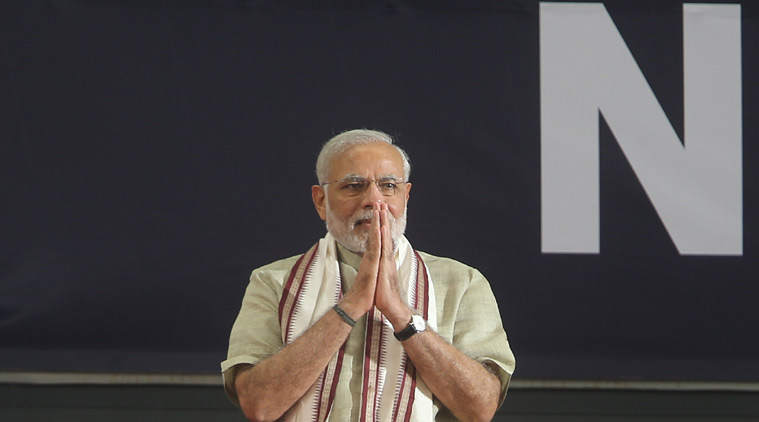
Narendra Modi at a cricket stadium to talk to Indian expatriates on Monday, Aug 17, 2015, in Dubai, United Arab Emirates. (Source: AP)
Hours after India and the UAE resolved to counter terrorism jointly, Prime Minister Narendra Modi sent out a message to Pakistan from Arab soil, saying that the theory of “good Taliban and bad Taliban” would not work anymore and that the “message was clear to those whom it was intended for”.
Addressing a gathering of thousands at the Dubai cricket stadium, Modi’s speech covered a range of topics from terrorism, the “new-look India”, the warm welcome that he received in the UAE and initiatives launched by his government for Indian expatriates.
You’ve Read Your Free Stories For Now
Sign up and keep reading more stories that matter to you.
At one point, he asked the crowd to give a standing ovation to UAE Crown Prince Sheikh Mohammed bin Zayed Al Nahyan for allotting land for a temple in Abu Dhabi. Then, in a bid to strike a chord with expats from Kerala who constitute a bulk of the Indian population in Dubai, he wished them a “happy new year” in Malayalam.
[related-post]
Modi attributed the warm welcome received to “the change in situation in India”, adding that the country’s prestige had increased and its changing profile was being accepted by the world.
Although he spoke about his initiatives to improve relations with neighbours – help for Nepal after the earthquake, the land boundary agreement with Bangladesh, his visit to Sri Lanka and assistance for Maldives over water crisis –the highlight of the 70-minute-long speech was the reference to terror and the indirect message to Pakistan.
Modi said that India and the UAE have sent a “clear signal” against terror. “We have raised our voice against terrorism in unison from this soil. This is significant.” he said, adding “samajhnewale samajh jayenge”.
“Those who are involved in terrorism should be punished. India has been a victim of terrorism for the last 40 years… The world has to decide whether you are on the side of humanity or on the side of terrorism,” he said.
Story continues below this ad
“There is good terrorism, bad terrorism and the good Taliban and bad Taliban formulation will not work any more,” he said.
Modi also took a dig at at the UN Security Council, saying that it has not been able to decide which country should be declared as “terrorist state”. He also revealed that the UAE has supported India’s stand on pursuing a Comprehensive Convention on International Terrorism that has been pending for a while.
Referring to the recent Naga peace accord signed with NSCN (IM), Modi said, “Discussion is the only way. this applies to our region also.”
Modi described the UAE government’s decision to allot land for building a temple in Abu Dhabi as a big achievement. “When on one side religion is used to incite terrorism and innocents are being gunned down, the government has given land for a temple. It is a big decision,” he said.
Story continues below this ad
Modi also sought to address domestic criticism, saying the IMF, World Bank, Moody’s and many international rating agencies have said in unison that India is changing and its economy is growing the most among the big countries.
“This change has happened within a year,” he said. Referring to New Delhi’s quick decision to send relief material to Nepal after the quake, he said “Now we have a government in India which is visible everywhere and every minute.”
However, there was no big ticket announcement for NRIs as Modi spoke about existing initiatives for their welfare. He did ask officials at the embassy to visit places where Indians reside and conduct consular meetings and sought more schools to be set up in the Gulf region for Indians.
Manoj C G currently serves as the Chief of National Political Bureau at The Indian Express. A veteran journalist with a career spanning nearly two decades, he plays a pivotal role in shaping the publication's coverage of India's political landscape.
Experience & Career: Manoj has built a robust career in political journalism, marked by a transition from wire service reporting to in-depth newspaper analysis.
The Indian Express (2008 – Present): He joined the organization in 2008 and has risen to lead the National Political Bureau, overseeing key political coverage.
Press Trust of India (PTI): Prior to his tenure at The Indian Express, Manoj worked with India’s premier news agency, PTI, honing his skills in breaking news and accurate reporting.
Expertise & Focus Areas: As a seasoned political observer, Manoj focuses on the nuances of governance and party dynamics.
National Politics: extensive reporting on the central government, parliamentary affairs, and national elections.
Political Strategy: Deep analysis of party structures, coalition politics, and the shifting ideologies within the Indian political spectrum.
Bureau Leadership: directing a team of reporters to cover the most critical developments in the nation's capital.
Authoritativeness & Trust: Manoj’s authoritativeness is grounded in his nearly 20 years of field experience and his leadership role at a legacy newspaper. His long-standing association with The Indian Express underscores a reputation for consistency, editorial integrity, and rigorous reporting standards required of a Bureau Chief.
Find all stories by Manoj C G here. ... Read More