How Telangana plans to use caste survey data to measure ‘relative backwardness’ of subcastes
The expert committee has also recommended that the government make SEEEPC datasets available to the research fraternity without revealing any household-specific information.
Written by Nikhila Henry
Hyderabad | Updated: May 23, 2025 07:46 AM IST
3 min read
Whatsapp
twitter
Facebook
Reddit
Of the 243 subcastes, 73 subcastes constitute 96% of the population of Telangana.
Telangana has announced the formulation of a Composite Backwardness Index using the state’s caste survey data to measure disparities across 243 subcastes.
The “relative backwardness” of the subcastes will be measured using 43 parameters in rural and urban areas, said a statement by the expert committee constituted this year by the state to study, analyse and interpret data collected by the Social Education Employment Economic Political and Caste (SEEEPC) survey of 2024.
The expert committee has also recommended that the government make SEEEPC datasets available to the research fraternity without revealing any household-specific information.
Of the 243 subcastes, 73 subcastes constitute 96% of the population of Telangana. These include 10 subcastes of Scheduled Castes, seven subcastes of Scheduled Tribes, 45 subcastes of Backward Classes and 11 subcastes of Other Castes, the expert committee revealed on Thursday.
“The Composite Backwardness Index will be a numerical and objective measure of the relative backwardness of each subcaste computed through a quartile-based statistical analysis using all the parameters of the SEEEPC data,” the expert committee said.
The committee is includes retired Supreme Court Justice Sudarshan Reddy as chairman, writer and academic Kancha Ilaiah as vice chairman and Praveen Chakravarthy as member convener.
The 43 parameters used to measure backwardness will include social circumstances, educational background, living standards, occupation, income, movable and immovable assets, and access to banking and finance, the committee said. The parameters were adopted by striking a parallel with the Mandal Commission Report, which had used 11 parameters to compute relative backwardness, it said.
Story continues below this ad
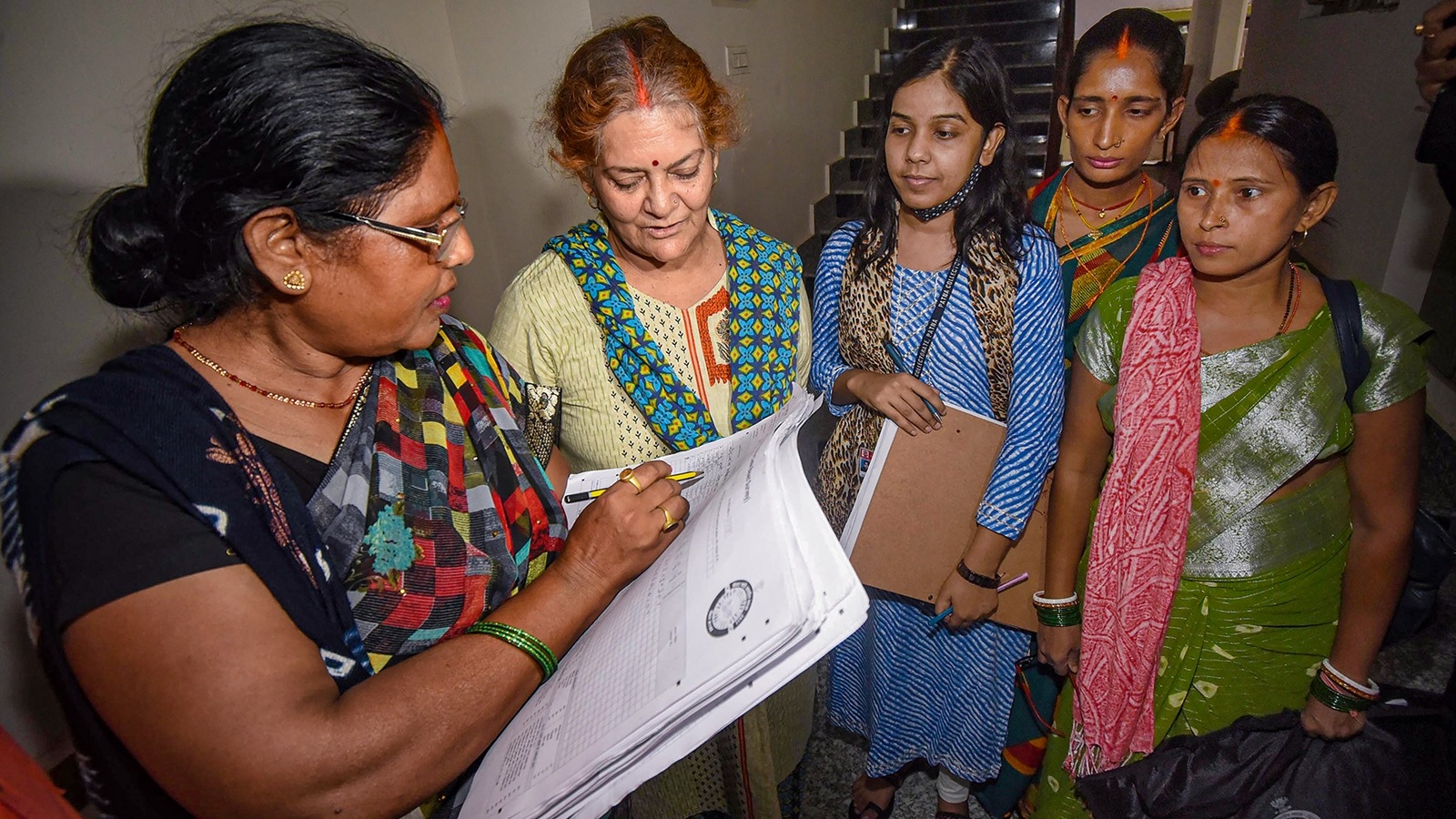
The Telangana caste survey had covered 3.55 crore people and collected information about 75 fields, including “social, economic. educational, identity, occupational and living aspects of their daily lives,” the statement said.
According to the expert group, once the disparity is studied, the next phase would include the drafting of a report. “We expect to submit the report to the government of Telangana in a month’s time or before,” the statement read. “The report will present as ordinal ranking of relative backwardness of each subcaste based on the CBI (Composite Backwardness Index) score as well as ranking of each subcaste on each of the seven categories and parameters used for evaluation.”
The next meeting of the expert committee will be held soon to discuss and approve the final report, the statement said.
Nikhila Henry is an Assistant Editor at The Indian Express, based in Hyderabad. With a career spanning 17 years, she has established herself as an authoritative voice on South Indian affairs, specialising in the complex intersections of politics, education, and social justice.
Experience & Career: Nikhila commenced her journalism career in 2007 as an education correspondent for The Times of India in Hyderabad,where she gained recognition for her coverage of student politics. Her professional trajectory includes a four-year tenure at The Hindu, where she focused on minority affairs and social welfare. In 2019, she took on a leadership role as the South Bureau Chief for The Quint, where she directed regional coverage across all five South Indian states. Her expansive career also includes a tenure at the BBC in New Delhi and contributions to prestigious international outlets such as The Sunday Times (London) and HuffPost India.
Expertise & Focus Areas
Nikhila’s reportage is marked by a deep-seated understanding of grassroots movements and institutional policy. Her core focus areas include:
Regional Politics: Comprehensive analysis of the socio-political dynamics across South India.
Education & Student Movements: Chronicling the evolution of Indian academics and the rise of youth activism.
Minority Affairs: Rigorous reporting on the welfare, rights, and challenges facing marginalized communities.
National Beat: Elevating regional stories to national prominence through investigative and on-ground reporting.
Authoritativeness & Trust
A respected figure in Indian media, Nikhila is not only a seasoned reporter but also an accomplished author and editor. She authored the critically acclaimed book The Ferment: Youth Unrest in India and edited Caste is Not a Rumour, a collection of writings by Rohith Vemula. Her dual background in daily news reporting and long-form authorship allows her to provide readers with a nuanced, historically-informed perspective on contemporary Indian society.
Find all stories by Nikhila Henry here. ... Read More


 3 min read