Premium
This is an archive article published on June 15, 2024

Chhattisgarh: 8 Maoists, one cop killed in encounter

Our resolution has changed, it matters, says state Home Minister Vijay Sharma

Chhattisgarh MaoistsThe gunfight broke out this morning in the forest of Abhujmad. (Representational/Express Archives)

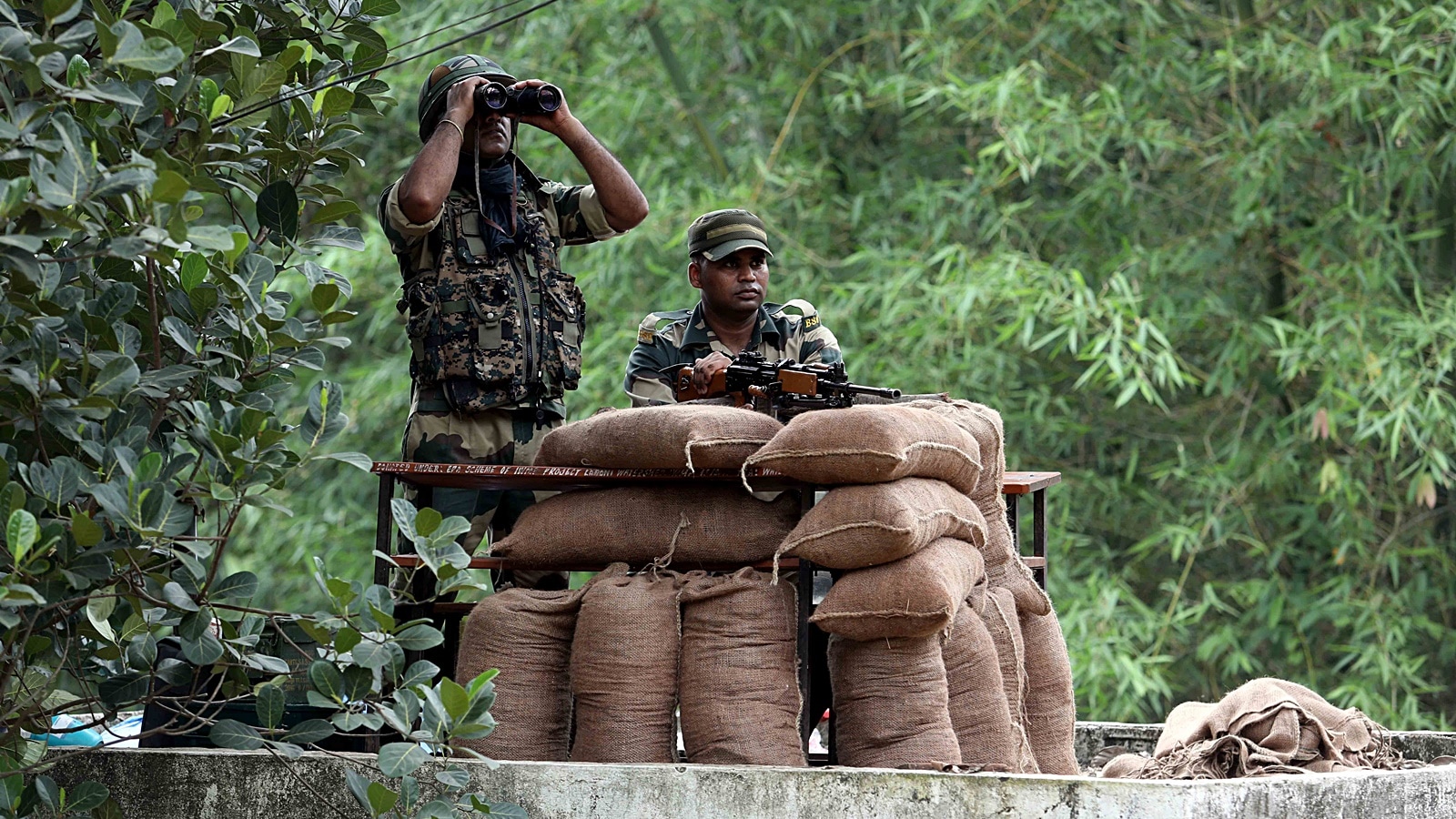
Eight Maoists were killed during an encounter in Chhattisgarh’s Narayanpur district on Saturday – the latest in a series of anti-Naxal operations that have picked up pace since the BJP won the assembly elections in December last year. A security force personnel also died in Saturday’s encounter after sustaining a bullet injury.

According to a senior police officer, security forces have been engaged in an anti-Naxal operation in Abujhmad since June 12.

The operation was undertaken based on inputs about the presence of members of the Maad Division and the People’s Liberation Guerrilla Army of the banned CPI Maoist in the forest of Kutul, Farsabeda and Kodameta.

In the encounter, which started at 7 am, constables Nitesh Aekka (27), Kailash Netam (33) and Lekhram Netam (28) sustained injuries. Nitesh died during treatment.

The operation was jointly undertaken by the District Reserve Guards (DRG) and the Special Task Force from four districts – Narayanpur, Kondagaon, Kanker and Dantewada. The task force also includes personnel from the Indo Tibetan Border Police (ITBP) 53rd Corps.

Security personnel have seized an INSAS rifle, a .303 rifle, and a barrel grenade launcher from the Maoists.

Story continues below this ad

This year could see the highest number of Maoist casualties in Chhattisgarh’s history. According to officials in the security establishment, 131 Naxals have been killed in anti-Maoist operations in 2024 so far, while 22 civilians and 10 security personnel have lost their lives. This is significantly higher than 2023, when 24 Maoists were killed.

This figure was the highest in 2016, when 134 Maoists were killed. In 2018, 112 Maoists were killed, while in 2009, this figure was 107.

Out of the 131 Naxals killed so far this year, 51 were in Bijapur, 34 in Kanker, 26 in Narayanpur, and 20 in other districts of Bastar region.

Sources in the central security establishment said the increased number of encounters and the greater success against Maoists is the result of the state police force taking the lead, better coordination between state police and central forces, work done in the past few years to open camps deep in Maoist core areas, and the Centre making a final push to eliminate left-wing extremism.

Story continues below this ad

Speaking on the fight against Naxalism in an interview to The Indian Express, Home Minister Amit Shah had said last month, “Today, it’s confined to three districts; the fight slowed down during five years of the Congress rule in Chhattisgarh. In five months since we have been there, 125 Naxalites have been killed, 350 have surrendered; 250 have been arrested. Naxalism won’t live for more than two years.”

A central security establishment officer said that “the state police have got their act together”. “Most of these successful encounters have been conducted either solely by the special forces of the state police or led by them. Also, the DRG have come of age and are now operating with full force. Historically, all Maoist insurgencies have been defeated by state police and not central forces.”

A home ministry official said a multi-pronged approach being pursued for the past few years is finally bearing fruit.

“Along with strengthening the security grid, the Centre has laid stress on improving infrastructure and connectivity in terms of taking roads to Maoist bastions and installing telecom towers. More than 20 security force camps have been opened deep in Maoist core areas, including Abujhmaad, in the past six months alone. All of this has helped with generation of better intelligence, swift movement of forces and hot pursuit of Maoist in their core areas,” the official said.

Jayprakash S Naidu is a Principal Correspondent for The Indian Express, currently serving as the state correspondent for Chhattisgarh. With an extensive career in frontline journalism, he reports on the political, security, and humanitarian landscape of Central India. Expertise and Experience Specialized Conflict Reporting: Jayprakash is a leading voice on the Maoist/Naxalite conflict in the Bastar region. His reporting provides a critical, ground-level view of: Internal Security: Tracking high-stakes encounters, surrender programs for senior Maoist leaders, and the establishment of security camps in formerly inaccessible "heartland" villages. Tribal Rights & Displacement: Investigative reporting on the identity and land struggles of thousands of displaced tribals fleeing conflict zones for neighboring states. Governance & Bureaucratic Analysis: He consistently monitors the evolution of Chhattisgarh as it marks 25 years of statehood, covering: Electoral Politics: Analyzing the shift in power between the BJP and Congress and the impact of regional tribal movements. Public Policy: Reporting on landmark infrastructure projects (e.g., mobile connectivity in remote zones) and judicial interventions, such as High Court rulings on civil and family law. Diverse Investigative Background: Prior to his current focus on Chhattisgarh, Jayprakash held reported from Maharashtra, where he specialized in: Crisis & Disaster Management: Notable for his extensive coverage of the Cyclone Tauktae barge tragedy (P-305) and the COVID-19 pandemic’s impact on frontline personnel. Legal & Human Rights: Investigative pieces for platforms like Article-14, focusing on police accountability and custodial deaths across India. Environmental & Social Justice: Authoritative reporting on the Hasdeo Aranya forest protests and the approval of major tiger reserves, highlighting the tension between industrial mining and environmental preservation. ... Read More

Stay updated with the latest - Click here to follow us on Instagram

Latest Comment
Post Comment
Read Comments
Advertisement
Advertisement
Loading Taboola...
Advertisement