3 min read
Click here to join Express Pune WhatsApp channel and get a curated list of our stories
© The Indian Express Pvt Ltd



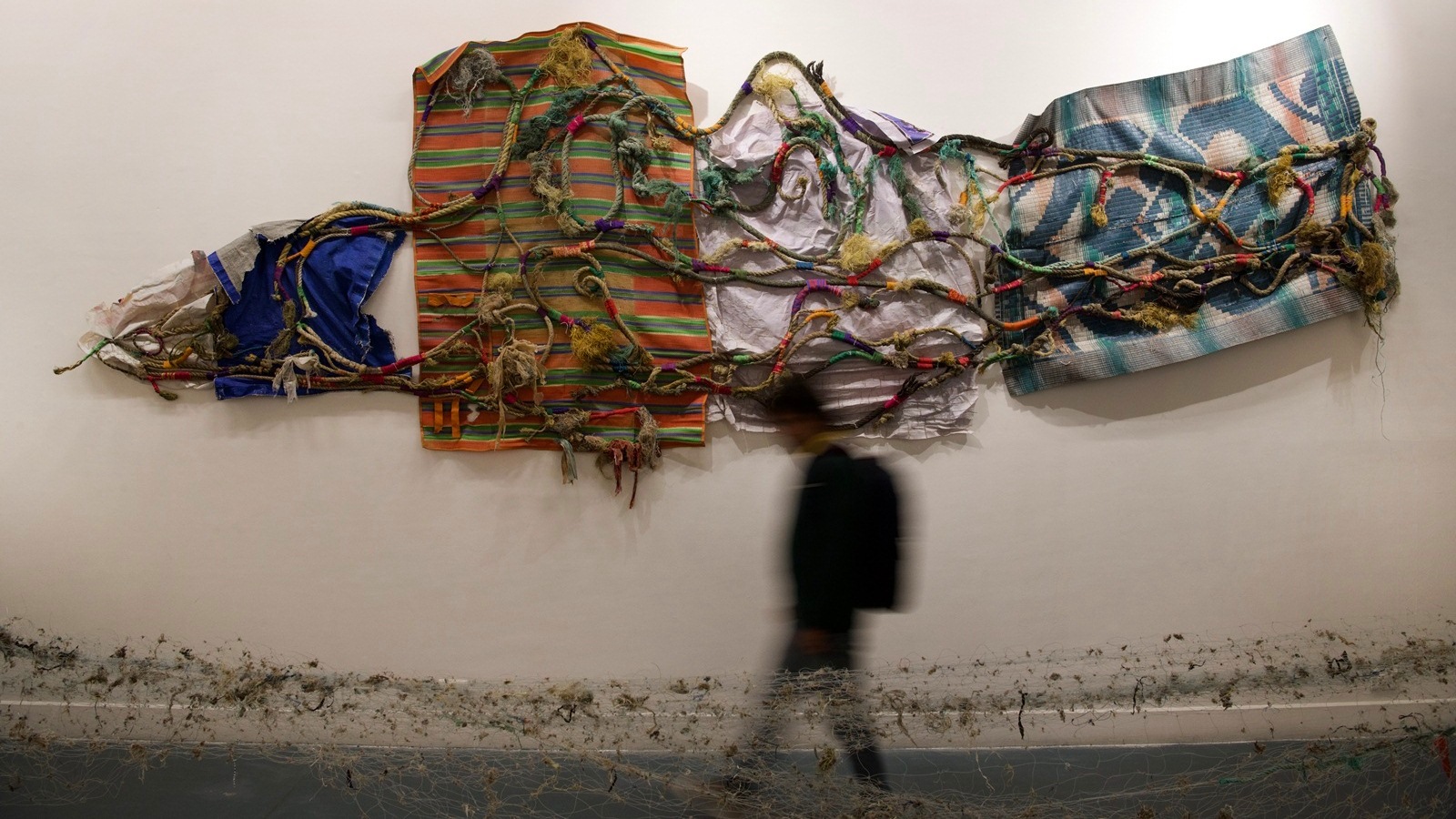 “Everyday we would say we are going on a treasure hunt to find ‘khazana’ because some of the fabrics like saris would be buried deep in the sand and we would really have to dig them out!” said Toshniwal. (Express Photo)
Rachna Toshniwal’s everyday walks on the beach involve picking up shells and photographing their textures and markings on the shore. But while at it, there is of course no way to escape the litter around the ocean. So Toshniwal started picking these discarded materials and decided to weave them into a tapestry. “I wanted to show how much and what different kinds of materials we carelessly throw and dump into the ocean,” said Toshniwal.
But she wasn’t the only one involved in this endeavour. Toshniwal worked with women from the fishing community of Navkar village. “It was their personal narratives and stories that informed the work. Their skills in making ‘godharis’, net making, macrame, and sewing added to how we used the materials,” said Toshniwal. Together, they created an artwork representing elements of ocean life: food, sea creatures, nets, a part of their daily existence.
It was crafted out of 75 bags of trash collected at Saral beach which included — fabric, nylon rope, nylon net, soft plastics, thermocol, styrofoam, etc. “Everyday we would say we are going on a treasure hunt to find ‘khazana’ because some of the fabrics like saris would be buried deep in the sand and we would really have to dig them out!” said Toshniwal.
The artwork was displayed at Sustaina India exhibition which aimed to inspire collective climate action. It was displayed on the sidelines of India Art Fair between February 2 and 15 at Bikaner House. The project was assisted by the Sustaina India Fellowship by Thukral and Tagra and The Council on Energy, Environment and Water.
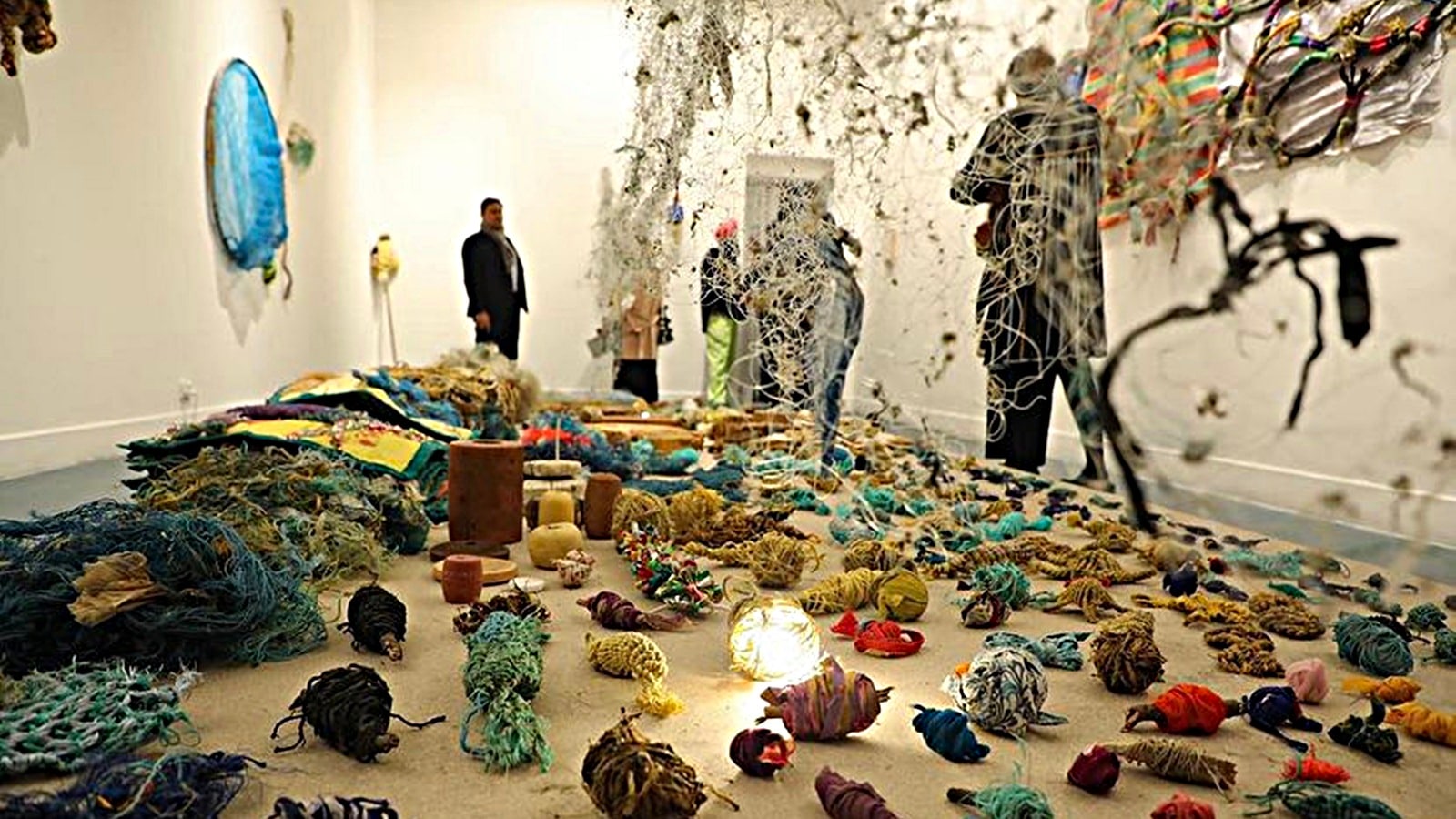 Toshniwal worked with women from the fishing community of Navkar village. (Express Photo)
Titled, ‘There is no such thing as waste’, it tries to highlight that waste is a human created concept. “In nature there is no such thing as waste, so how can we as humans also think about closed and circular economies of the materials we produce,” asked Toshniwal.
But there is yet another layer of messaging behind this artwork. “In a way we restored dignity to the discarded materials and also the environment, places we live and depend upon for our livelihood. And also restored dignity to ourselves as women working with our hands and taking care of what is in our power,” said Toshniwal.
But the work is not over yet. Toshniwal has spent over 15 years in eco-activism and is still looking into ways to recycle or repurpose materials like bottles, thermocol, and hard plastics found on the coastline. She is also trying to reach more villages along the coast.
Through the project, she says, the perception around the idea of waste has shifted in the locals, “now they collect most of the materials that they would have otherwise thrown away”.