6 min read
Click here to join Express Pune WhatsApp channel and get a curated list of our stories
© The Indian Express Pvt Ltd



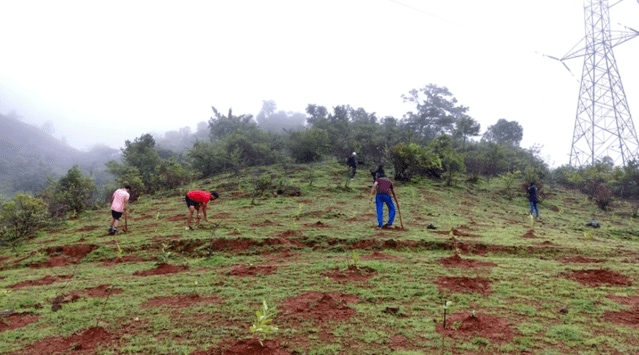 Jayant Kulkarni, a retired forest officer and executive director (organisation) of the WRCS, said, “In 2014, the tree plantation in the Koyna Chandoli wildlife corridor set off after abandoned land tracts, which were not being cultivated, were chosen consciously.” (Source: WRCS website)
 Anyone visiting Pune is bound to hear about the beautiful trailing routes and treks this city offers. Flanked by the Sahyadris, Pune has always boasted of a significant green cover. Many fear this green cover is dwindling and sliding down fast regarding vegetation quality. Some organisations are coming up with a unique approach to contribute to the green cover in the city by developing private/‘malki’ forests in the region.
What are private forests?
Private forests are defined in the Maharashtra Private Forests Acquisition Act, 1975, as “any forest which is not the property of the government and includes any land declared before the appointed day to be a forest under section 34A of the Forest Act”. The private forests were then acquired by the state government and deemed to be a reserve. Consequently, the Act was amended in 1978 so that for a piece of land less than 12 hectares, the district collector had the authority to revest such land to the original owner after seeking permission from the Centre.
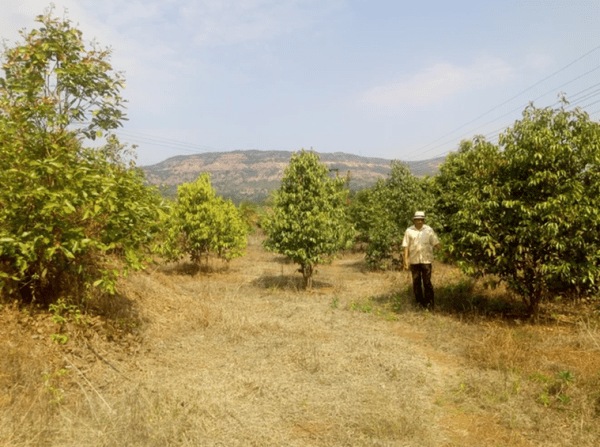 Plantation site at Devghar (Source: WRCS website)
In Maharashtra, private forests can be bought and sold freely. However, the use of the forest land should not be for non-forest purposes as specified under the Forest Conservation Act, 1980, which include clearing of forest land for the cultivation of tea, coffee, spices, rubber, palms, oil-bearing plants, horticultural crops or medicinal plants; any purpose other than reafforestation.
Koyna Chandoli corridor in Sahyadri mountain range
The Sahyadri ranges form a common boundary between Maharashtra, Goa and Karnataka. These reserved forest areas include rich evergreen, semi-evergreen and moist deciduous forests. It is the fourth tiger reserve of Maharashtra, spread over two protected areas, those of Chandoli National Park and Koyna Wildlife Sanctuary of 741.22 sq km and an adjoining area of 424.35 sq km. The area is spread over Satara, Kolhapur and Ratnagiri.
The Wildlife Research Conservation Society (WRCS), established in 2005 in Pune, has come up with a unique approach to contribute to the green cover in the city by developing private forests in the region.
Jayant Kulkarni, a retired forest officer and executive director (organisation) of the WRCS, said, “In 2014, the tree plantation in the Koyna Chandoli wildlife corridor set off after abandoned land tracts, which were not being cultivated, were chosen consciously.”
 Field visit at Birlasholf. (Source: WRCS website)
After careful observation and assessment, they selected 15 native species of trees to be grown in the region — hirda, bevda, katesawar, amla, mango, narkya and bamboo. The trees selected also had to pass the double criteria for providing some economic benefits to the local residents and giving them an impetus to care for the trees. Now the organisation receives applications from individuals or families with private land in the corridor who want to develop it in a forest.
Dr Prachi Mehta, a PhD in wildlife science and executive director of the organisation, said some other initiatives in the region, like handicraft making, beekeeping, training men as local guides in birdwatching, and establishing homestay, also helped sustain this model. “The family needs to be involved as a whole for this model’s sustenance. Women in the region were trained in handicraft, inspired by nature around them with hornbills, shekharu (flying squirrels), owls and elephants, and produced excellent coasters, purses and other products they sold later. Homestays started in the region were also registered under MTDC, which helped secure economic livelihood for people,” said Mehta.
“In 2016/17, two dehydrators were secured to help manufacture products from local produce like amba poli (mango dried sheet) and fanas poli (jackfruit dried sheet). Pickle production from local produce like karvanda (berries) was also started on a small scale. Nurseries were developed, and about 12-13 women were employed there,” said Mr Sunil Kale, the project manager for the Koyna Chandoli project.
With 1,36,000 trees planted by now over 210 hectares of land, according to a WRCS report, Kulkarni said they are trying to make it a self-sustaining model. “The plantations still require fencing to keep out the livestock reared locally, and weeds are removed periodically. We have maintained a fire line around plantations in case of a forest fire. Some parts of the forest are increasing independently due to natural seeding now,” said Kulkarni.
What is the importance of the Koyna Chandoli corridor?
‘Connecting Tiger Population for Long-Term Conservation’, published in 2014 by National Tiger Conservation Authority (NTCA), estimates the tiger population in the Sahyadri-Radhanagari-Goa, which has three wildlife corridors of Koyna-Chandoli, Chandoli-Radhanagari and Radhanagari-Madel area, to be around 20-22.
Kulkarni said the corridor is significant from the biodiversity conservation perspective as wildlife populations here can die out if isolated due to inbreeding. “We need to connect the source population in both wildlife reserves and encourage genetic exchange to maintain the wildlife population,” Kulkarni said.
Neha Singh, the founder of Forrest Organisation, an environmental NGO based in Pune, said that developing private forests is more important now, considering that the buffer zone of reserved wildlife forests has been reduced. “The private lands around these reserved forests need to be rich in biodiversity to foster and support animal and plant life in the vicinity of these reserved forest areas, too, as the infrastructure and network of highways is increasing,” said Singh, who stresses the diversity of species of trees in private forests.
“A timber or coffee plantation cannot sustain wildlife. The more diversity of trees you have in a region, the more wildlife, water retention and lesser soil erosion it can contribute to,” said Singh.
Another benefit of developing these private forests in the Koyna-Chandoli corridor is that it falls in the Koyna catchment area, so natural streams can become perennial once the plantation is developed. “This can also help regulate underground water levels in the region,” said Kulkarni.