

Journalism of Courage

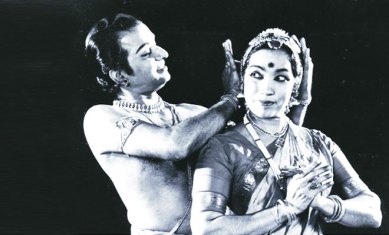
Classical dance in India was never reserved for women. From the Nataraja,the symbol of natya in India,to the codification and construction of most classical styles attributed to male dancers and academicians,the world of Indian classical dance has seen illustrious dancers such as VP Dhananjayan,Uday Shankar,Kelucharan Mohapatra and Birju Maharaj. But the stage is not without its prejudices,including those of homosexuality and feminity. Master of Arts- A Life in Dance (Hachette,Rs 599) is a book about the illustrious dancer duo VP Dhananjayan and Shanta Dhananjayan. As the world celebrated World Dance Day on April 29,Bharatanatayam dancer and author of the book Tulsi Badrinath says that the status of the male dancers in India continues to be marginalised
You have tried to intersperse your gurus story,put yourself in there as the shishya and juxtaposed it with the stories of other male dancers. What triggered the process of writing this book?


Tell me your story of entering the world of Bharatanatyam.
My mother casually asked me if I wanted to learn dance and I said yes. My gurus abhinaya transfixed me and made me want to become a dancer. His expressions reached into me,made me feel each one of them. I loved the expressive possibilities of abhinaya.
Tell me a little about those times and what it meant to subvert the system.
VP Dhananjayan began performing at a time when Bharatanatyam was a womans domain and male dancers were looked down upon. In Kalakshetra,his alma mater,there was always a space for men to dance,because Rukmini Devi had trained them specially for her dance dramas. When Dhananjayan quit Kalakshetra,he faced many prejudices. The sabhas,or organisations promoting art,did not think anyone was interested in watching a man dance. It wasnt paying enough to support a family. His main streams of income came from alternate sources such as performing for tourists,at conferences and at weddings. Teaching brought in a tiny income. He performed with his wife,as a couple was more acceptable than a solo male dancer. Slowly,as his talent came to the fore,he became a renowned dancer. His international collaborations with Ravi Shankar and the Ohio Ballet among others,showed how much more a classical artist could do,when given the right funding and infrastructure. My guru came from a poor family and by sheer hardwork and talent became the most renowned male Bharatanatyam dancer,managing to make a living from the arts.
What do you think is the condition of the male dancer in the present day?
That really is the subject of my book. But the prejudice and stigma still exists,though there are greater numbers of male Bharatanatyam dancers,and it is tough to make a living as a dancer.
Do you think prejudices exist among the audience as well?
Yes,but at the same time,when the best of men danced such as Kelucharan Mahapatra,Birju Maharaj,or my own guru,those prejudices were overcome.


