State govt mandates ‘Disha’ curriculum for special schools from next academic year
Starting from the 2026-27 academic year, the government will also provide standardised handbooks for teachers and workbooks for students, based on the Disha curriculum.
Written by Pallavi Smart
Mumbai | December 20, 2025 11:37 PM IST
4 min read
Whatsapp
twitter
Facebook
Reddit
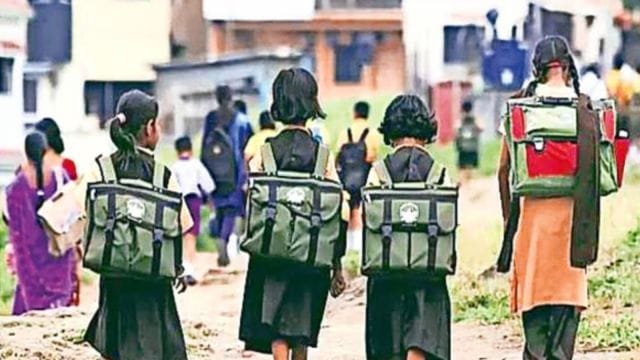
All special schools catering to children with ID will now have to onboard on the Disha portal. (File photo)
The state government has made it mandatory for all special schools catering to children with intellectual disabilities (ID) to implement a uniform curricular framework called ‘Disha’, which is specially developed to bring uniformity in educational framework focusing on life-skills, academics, and vocational readiness for children with ID between the ages of three and 18 years.
Starting from the 2026-27 academic year, the government will also provide standardised handbooks for teachers and workbooks for students, based on the Disha curriculum. All special schools catering to children with ID will now have to onboard on the Disha portal, which is centralised documentation of the progress of each child based on the individualised education program (IEP).
Although the curriculum existed for a few years, for the first time, Maharashtra’s Persons with Disabilities Welfare department has formally issued guidelines on its effective implementation to ensure uniformity and quality. In a Government Resolution (GR) issued in this regard on Friday, the government states that schools following it will be certified as ‘Disha-implementing schools’, whereas those failing to implement it may face actions such as suspension of grants or cancellation of the no-objection certificate (NOC) from the state required for the institute’s recognition.
An assessment checklist based on the IEP and Individualised Therapy Program (ITP) is a key component of this curriculum, which has to be identified soon after admission of a child. This multisensory curriculum utilises visual, auditory, kinaesthetic and tactile (VAKT) methods of engaging in learning for goals fixed for each child under the IEP – which can be academic as well as daily-life-skill goals, as per individual needs. Teachers and school principals will be given required training for effective implementation of the curriculum. Apart from periodic assessment (twice per academic year), schools will have to upload progress reports on the Disha portal. Apart from building uniformity in education imparted at special schools, this curriculum integrates academics with functional and vocational training to develop cognitive, self-help and social skills for children with ID with an aim to support them in leading an independent life.
The curriculum is developed by Mumbai-based Jai Vakeel Foundation, which has over 80 years of experience in supporting individuals with intellectual disabilities. Following certification from the National Institute for the Empowerment of Persons with Intellectual Disabilities (NIEPID)—a national body dedicated to provide quality service to persons with ID, the state government partnered with Jai Vakeel Foundation to promote the uniform curriculum among special-schools catering to children with ID. According to the government, after witnessing the value in this uniform curriculum, it has now decided to make it mandatory.
Stating that Maharashtra has become the first state to make the uniform curriculum mandatory in special schools catering to children with ID, Tukaram Mundhe, Secretary for Persons with Disability Welfare department, said, “The objective is to achieve measurable, outcome-oriented results. That is possible only when there is transparency and clearly defined accountability. While mandating of the curriculum ensures uniformity, through the portal, we are building a transparent system that does not leave implementation to the discretion of individual schools. The curriculum and its implementation will be a collaboration of all stakeholders—teachers, parents, students, the government and the wider community.”
Stating that this is a great step forward, CEO of Jai Vakeel Foundation Archana Chandra,, said, “With this step the Government has endorsed the NIEPID Disha Curticulum as a sustainable solution for the much needed uniiformity in assessing and working with children with intellectual disability
Story continues below this ad
She explained, “This curriculum has been built for the entire spectrum of intellectual disability and addresses the unique needs to the children- be it activities of daily living or functional academics, with the larger aim of Inclusion of the children in our society.”
Today, it is already being used by over 400 schools, 2700 special educators have been trained and over 20,000 students are benefitting from using it.
Pallavi Smart is a Principal Correspondent with The Indian Express, Mumbai Bureau. Her reporting is singularly focused on the education sector, demonstrating exceptional Expertise and Authority across the entire spectrum of learning, from foundational schooling to advanced higher education. She is a highly Trustworthy source for policy, institutional developments, and systemic issues affecting students, teachers, and parents in Maharashtra.
Expertise
Senior Role: As a Principal Correspondent at The Indian Express, her designation reflects her seniority, specialized knowledge, and the editorial rigor applied to her reporting.
Core Authority & Specialization: Pallavi Smart is the definitive voice for Education news in the region. Her coverage scope is comprehensive:
Policy and Regulatory Changes: Reports on major shifts in educational policy, including the restructuring of entrance exams (e.g., MHT-CET adopting the JEE Main model), the draft regulatory framework for coaching classes, and revised teacher recruitment processes.
Higher Education Institutions (HEIs): Provides in-depth reporting on prestigious institutes like IIT Bombay and TISS (Tata Institute of Social Sciences), covering institutional initiatives, administrative debates (e.g., renaming IIT Bombay), and student welfare programs (e.g., mandatory mental health courses).
Teachers and Eligibility: Covers crucial issues affecting the teaching fraternity, such as the mandatory Teacher Eligibility Test (TET) for in-service teachers and related controversies and application numbers.
Student Welfare & Rights: Focuses on issues concerning students, including the rollout of government scholarships, the financial strain on schools due to midday meal reimbursement delays, and instances of child rights violations (e.g., the Powai studio hostage crisis).
Admissions and Vacancy: Tracks the outcome of centralized admission processes (e.g., MBBS, BPharm) and analyzes vacancy concerns, providing essential data-driven insights for parents and students.
Credentials & Trustworthiness
Dedicated Beat: Her consistent focus on the "KG to PG" education beat allows her to develop unparalleled subject matter knowledge, ensuring her reports are accurate, detailed, and contextualized.
Proactive Reporting: Her articles frequently break news on policy and institutional planning, providing the public with timely, essential information about a sector that directly impacts millions of families.
She tweets @Pallavi_Smart ... Read More


 4 min read