3 min read
Stay updated with the latest - Click here to follow us on Instagram

Journalism of Courage



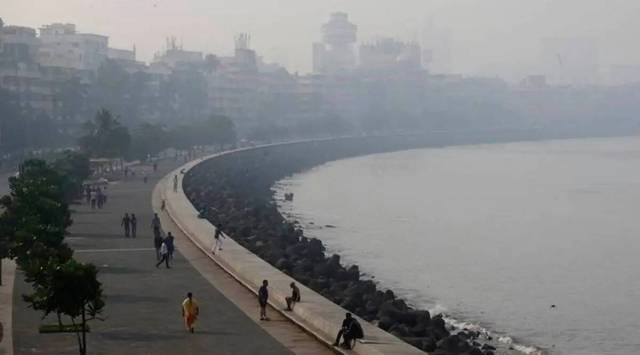 During monsoon, with high wind speed, Mumbai records clean air between June and August every year.
(Express file photo)
During monsoon, with high wind speed, Mumbai records clean air between June and August every year.
(Express file photo)Mumbai continued to witness low pollution levels on Tuesday with the city recording an Air Quality Index (AQI) of 37, which falls in the ‘good’ category. On Monday, the city recorded the best AQI of the year at 28.
An AQI between 0 and 50 is considered ‘good’, 51 to 100 ‘satisfactory’ and 101 to 200 ‘moderate’. An AQI between 201 and 300 is considered ‘poor’, 301 to 400 ‘very poor’ and 401 to 500 ‘severe’, while an AQI above 500 falls in the ‘severe plus’ category.
Officials said that with high moisture content in the air and high-speed winds in the form of westerlies (north westerly winds), pollutants have dispersed. “Intermittent rain spells are expected in Mumbai causing wet deposition of air pollutants and improvement of air quality. AQI of Mumbai indicates ‘good’ and likely to be within ‘good’ for the next 2 days,” read the forecast from System of Air Quality and Weather Forecasting And Research (SAFAR).
During monsoon, with high wind speed, Mumbai records clean air between June and August every year.
Meanwhile, the seven lakes that provide drinking water to the city have 1,82,485 million litres of water or 12.61 per cent of the total capacity of 14,47,363 million litres as of June 14. The current water stock will last the city for 49 days.
Mumbai gets about 3,900 million litres of water daily from the seven lakes. The city draws water from Bhatsa, Middle Vaitarna, Upper Vaitarna, Tansa and Modak Sagar, which are in Thane and Nashik districts. Tulsi and Vihar are two lakes located within city limits in Sanjay Gandhi National Park.
In three days since the onset of the monsoon over Mumbai, the seven lakes have received light rainfall.
In 2021, following heavy rainfall in the first week of June, the water stock on June 14 was just slightly better than this year at 12.85 per cent. The BMC takes stock of the lake level on October 1 annually. If by the end of monsoon season, i.e., by the end of September, the seven lakes are 100 per cent full, water cuts are unlikely in the city for the year.
In August 2020, Mumbai faced water cuts as water levels in catchment areas of the lakes were low due to lack of rainfall. No water cut was imposed in 2019, owing to good rainfall in catchment areas. The BMC had imposed a 10% water cut in 2018, a 20% cut in 2016 and a 25% cut in 2014.
Bhatsa lake is the major supplier of water to the city and is at 22.92 per cent (88,168 million litres) of its capacity. Bhatsa also supplies water to neighbouring cities of Thane and Bhiwandi.
Stay updated with the latest - Click here to follow us on Instagram